
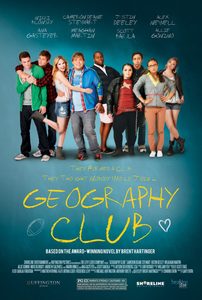
Geography Club (2013)

I first watched this film on March 18, 2020, during the NYC lockdown of the Covid-19 pandemic. It became the first of a larger project, where I ended up watching over 800 queer films, with 340 of them in 2020 alone! If I was awake I was watching a movie. It wasn’t healthy, but it did keep me sane. And it was fun. I was entertained and engaged. But, when I started, I just wanted to watch a movie and this was what I watched.

I decided the other day that I should revisit some of these titles that I never really reviewed, and give them some more attention. I remembered that this was the first I’d watched and that I hadn’t loved it, but I couldn’t remember why. So here we are.

“Geography Club” is a 2013 American comedy drama film directed by Gary Entin from a screenplay by Edmund Entin, based on the 2003 novel of the same name by openly gay American author Brent Hartinger. And yes, I know that some people object to the term “openly gay”, but for me, it’s still a sign of the progress we’ve made, and is something to note. YMMV. The novel has at least 6 sequels.

The film centers on Russell Middlebrook (Cameron Deane Stewart), who falls for his high school’s football quarterback, Kevin Land (Justin Deeley) which leads him to the school’s Geography Club, which is actually a group of queer kids, leading to the creation of a Gay Straight Alliance. Sounds good right? And it features Alex Newell and reliable ally Scott Bakula…so why don’t I like it? Well, I wondered the same thing as I was watching. Not all of the acting is great, but there are movies with worse acting that I adore, so that’s not it. What I can say is that my problems with the movie have less to do what is there, than what is not. The movie feels rushed, and like either a lot was cut from it, or like maybe they ran out of money and just never filmed everything they needed? Sometimes the plot just jumps forward in a way that seems unjustified, nonsensical and / or totally random. Less annoying, but still problematic, there are some humor elements that just don’t work. Whole sections that I’m aware the movie wants me to laugh, but they just aren’t funny. And I wish there was more to discuss, but there isn’t. And if this was the only film to cover this kind of story, that would be fine, but it’s not, and so it just feels tired and, incomplete. That’s the word I’d use for the movie if I was asked. It’s an incomplete experience, despite watching the entire film twice.

Before it was a movie, the novel was adapted as a play. I wonder if that’s better? Speaking of which, maybe the novel is better? The novel has at least 6 sequels and assorted spin-offs, so even if the movie is exactly like the book, you get more time with the main characters for sure. Watching the movie I wasn’t tempted to read the book, which isn’t like me. Maybe I will someday? I’m just not sure it would be worth my time. But I’m also probably not the target audience either…because I’m old! lol
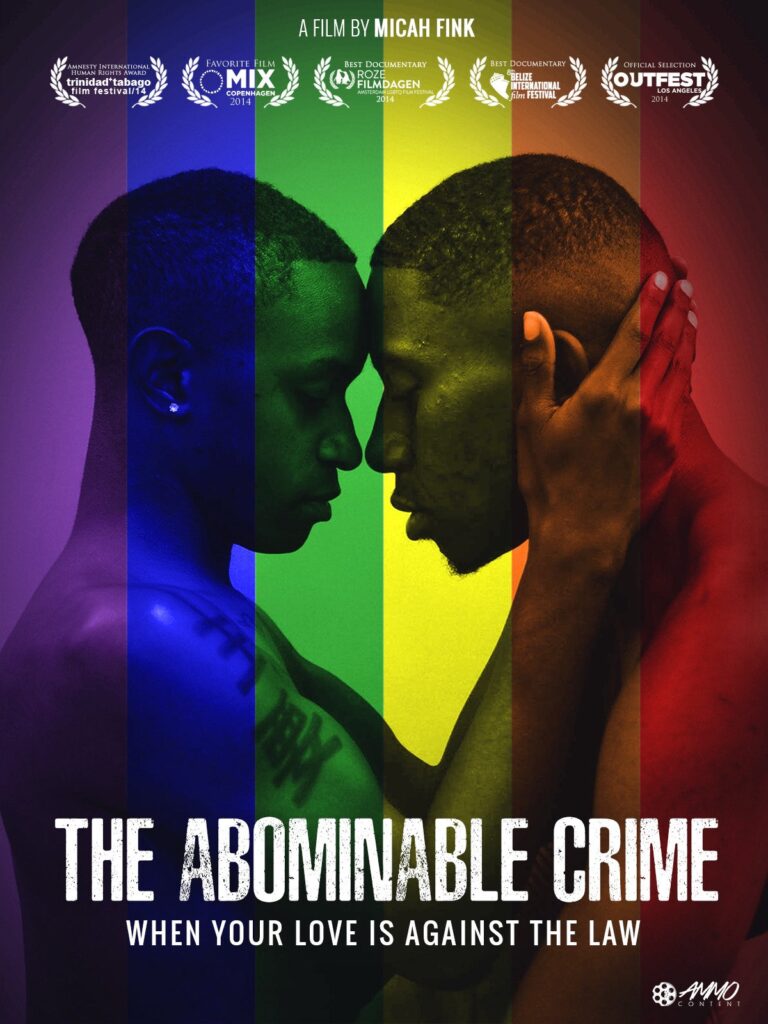
The Abominable Crime (2013)

2022 Entry #021 02-01-22 “The Abominable Crime” is a 2013 documentary which was directed by award winning producer Micah Fink. The film explores the impacts of homophobia through the eyes of two Jamaicans who are forced to choose between their homeland and their lives. Simone, a young lesbian mother, survives being shot outside of her home by anti-gay gunmen; her gay brother escaped. She must choose between living in hiding with her daughter in Jamaica or traveling alone to seek safety and asylum abroad. Maurice, Jamaica’s leading gay-rights activist, is outed shortly after filing a lawsuit to overturn Jamaica’s anti-sodomy law.

This was really well done; very impressive work. The film covers several years in the lives of these brave souls who not only make incredibly powerful and brave choices in their lives but also have the courage to allow their story to be told. The piece opens with a stylized prologue telling of the shooting that haunts Simone and drives her to action. We see her and her young daughter Khalya. We meet her brother Albert “Carl” Edwards and hear how their stories interconnect. And it’s all so heartbreaking and eventually inspiring. It wasn’t always easy to watch – I was very concerned about what would happen – and in the end I was happy to have watched this.

Maurice’s story is just another piece of this broken story. Having been outed after fighting for LGBT equality in Jamaica, Maruice and his husband are forced to flee to Canada. And yet Maurice continues to fight for his country and those he left behind by returning and seeking change.

I really liked this and I recommend watching it.

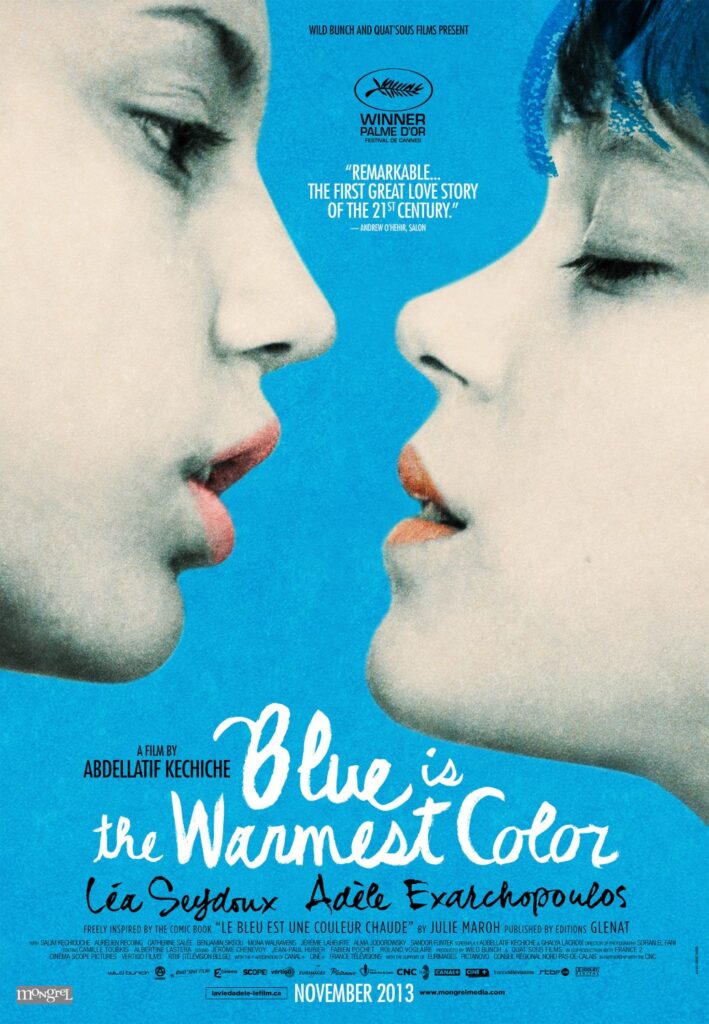
Blue is the Warmest Color (2013)

2022 Entry #018 01-31-22 “Blue is the Warmest Color” is a an award winning 2013 romantic French drama film co-written, co-produced, and directed by Abdellatif Kechiche starring Léa Seydoux (“Spectre”, “No Time to Die”) and Adèle Exarchopoulos. The film follows Adèle (Exarchopoulos), a French teenager who discovers desire and freedom when an aspiring painter named Emma (Seydoux) enters her life. It charts their relationship from Adèle’s high school years to her early adult life and career as a school teacher. The premise of the film is based on the 2010 graphic novel of the same name by Jul Maroh.

I’ve been meaning to see this film for years. And though I considered skipping it today due to it’s nearly three hour run time, I accidentally started it and found that I couldn’t bring myself to stop. The film is very good, yet isn’t without some serious problems. The performances are all wonderful and the filmmaking is top notch but the movie features graphic, extensive sex scenes which are often, unfortunately, hard to take seriously. The graphic nature isn’t necessarily the problem, and that sex is featured in a film about sexual awaking and exploration of sexual identity is hardly surprising, yet the nature of the sexual acts, how they are viewed and explored is almost comical at times and uncomfortable at others. At first I thought this might only be my response to the piece but just skimming reactions online revealed that reams of clinical analysis featured much of the same feedback. Tellingly, Jul Maroh, the author of the graphic novel upon which the film was based, said, “It appears to me this was what was missing on the set: lesbians.” It is unfortunate that such a central part of the story is flawed, yet I think it is undeniably a film worth seeing and one that is also worthy of praise.

error: Content is protected !!