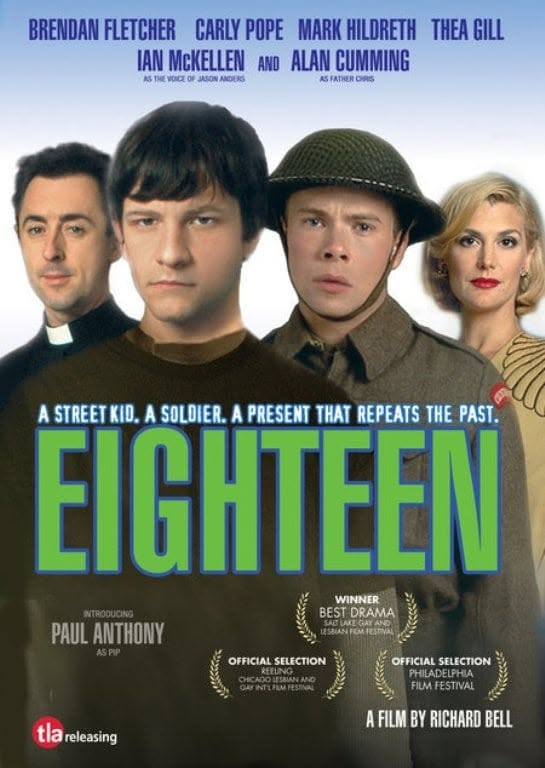
Eighteen (2005)

Eighteen is a 2005 Canadian drama film written and directed by openly gay Vancouver filmmaker Richard Bell (“Two Brothers” / “Two Brothers and Two Others”) which centers on Pip Anders (Paul Anthony) & his grandfather, Private Jason Anders (Brendan Fletcher) as the gift of a cassette tape allows Pip to experience his grandfather’s eighteenth birthday as Pip experiences his own. Both of these central characters are straight but both storylines feature dignified respectful relationships with other men, one of whom, Clark (Clarence Sponagle), is a gay hustler.

At the time I first saw this, I mostly knew Brendan Fletcher from a series of queer inclusive films, including: “The Five Senses” (1999), “Rollercoaster” (1999), “Anatomy of a Hate Crime” (2001), “Touch” (2022) & “Everyone (2004)”, which is what caught my eye at the video store. When I picked it up I also saw that the film featured Thea Gill (from the second iteration of “Queer as Folk”), with openly queer legends Alan Cumming and Ian McKellen. I rented it and enjoyed it. I bought it for my collection, which I finally revisited on November 7, 2024.

However, I wasn’t feeling well at the time and I didn’t make a lot of notes or write anything resembling a review. What I remember is that I enjoyed this just as much as I did the first time, which was a lot. It is a very quirky, very emotional, very interesting film. And someday I’ll have to give it another go so I write something more substantial than this.
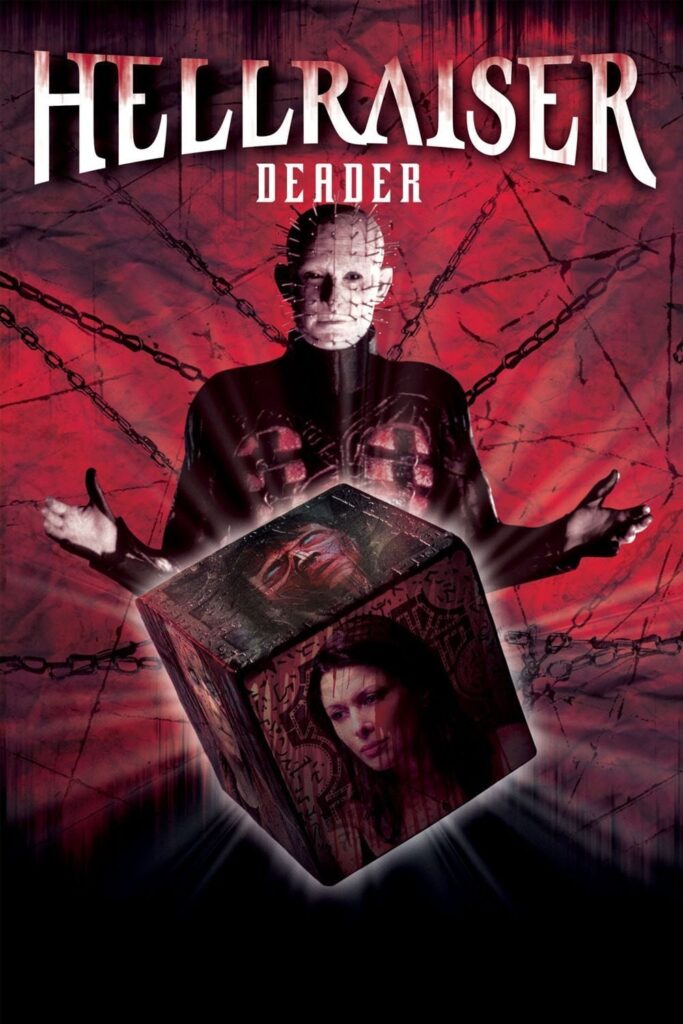
Hellraiser: Deader (2005)

2024 Entry #57 08-13-24 “Hellraiser: Deader” is a low budget 2005 American supernatural horror film; it was the seventh installment released in the Hellraiser series. Directed by Rick Bota, the original script was written by Neal Marshall Stevens. As with “Hellraiser: Hellseeker” (Hellraiser VI) it began as an unrelated spec script, which was subsequently rewritten (by Tim Day) as a Hellraiser film. Like “Hellraiser: Inferno” (Hellraiser V), series gay creator Clive Barker did not have any involvement in the production.

This movie barely rates a mention, but the point of me reviewing LGBTQ+ inclusive material stems from a childhood in which there was almost no representation – so childhood me (who collected horror movies, many of them low budget shlock like this one, and who was a fan of gay author Clive Barker, without knowing he was gay) would have enjoyed this movie. It’s not a happy movie and it’s not necessarily a good movie, but considering some of the Hellraiser sequels that have been spit out over the years, this one isn’t that bad. It also has several interesting concepts within it, which never quite gel, but raise some interesting questions, just the same. The film features a graphic topless girl on girl makeout scene in a bizarre, sex positive side plot – which may or may not be everyone’s cup of tea. And then there’s the human villain Winter, as played by Paul Rhys (“Food of Love”, “Saltburn”), who is revealed to be a descendant of Phillip LeMarchand, a French toymaker who was revealed to have been commissioned to make the Lament Configuration, the puzzle box which summons the Cenobites. His character is somehow able to bring people back to life with a kiss, which he demonstrates with both a woman and then a man. Some equal opportunity homoeroticism. Also, there’s some blink and you’ll miss it full frontal male nudity. So again, I’m pretty sure that little boy me would have loved this movie. But as an adult, it’s well below average. But horror fans might want to give it a go.

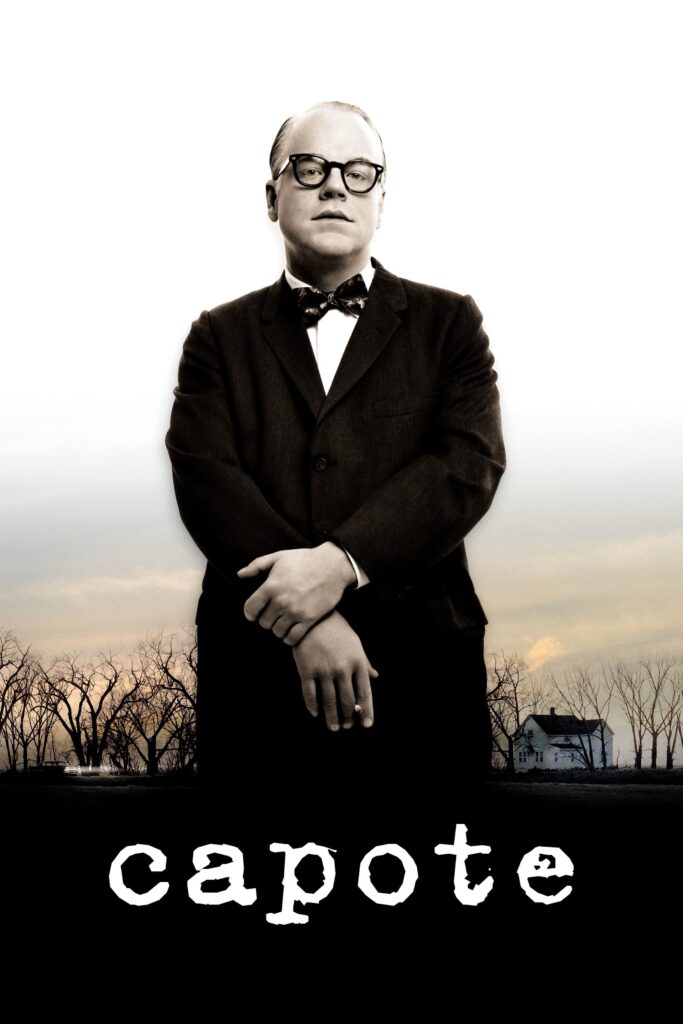
“Capote” (2005)

2024 Entry #009 01-04-24 “Capote” is a 2005 biographical drama film about gay American novelist Truman Capote directed by Bennett Miller, from a screenplay by Dan Futterman (“The Birdcage”, “Sex and the City”, “Urbania”, “Will & Grace”, “Political Animals”). The film stars Philip Seymour Hoffman (“Boogie Nights”, “Flawless”, “The Talented Mr. Ripley”), Catherine Keener (“Thelma & Louise”, “Being John Malkovich”, “Adaptation”, “Modern Love”), Clifton Collins Jr. (“Light It Up”, “The Rules of Attraction”, “American Girl”, “Scott Pilgrim vs. The World”, “Red, White & Royal Blue”), Chris Cooper (“This Boy’s Life”, “American Beauty”, “Adaptation”) & Bob Balaban (“Midnight Cowboy”, “Three to Tango”, “Howl”).

The film primarily follows the events during the writing of Capote’s 1965 nonfiction book In Cold Blood. The film was based on Gerald Clarke’s 1988 biography Capote. It was released on September 30, 2005, coinciding with what would’ve been Capote’s 81st birthday.

The film was successful at the box office, was well reviewed and the film was nominated for 5 Academy Awards including Best Picture, Best Director for Miller, Best Supporting Actress for Catherine Keener, and Best Adapted Screenplay, with Hoffman winning the Academy Award for Best Actor.

In truth, I’ve avoided this film for nearly 20 years. I was aware that the central character was famously gay, and that at least one other gay man was portrayed (Truman Capote’s partner, Jack Dunphy) and I now know that there are others mentioned (including James Baldwin), but I also knew that while the film centered on a homosexual character, that it was essentially sexless and I found this problematic. While films featuring queer sexuality were being celebrated, it seemed that only the most non-threatening portrayals were award worthy at that particular time – and this film’s Oscar win in the same year in which “Brokeback Mountain” was denied (while meeting every standard which historically had led to a Best Picture win) hurt me. Indeed, I’ve never watched the Oscars ever again, despite loving them up to that point. It still angers me. But here we are.

Although I’d never seen this before, I was familiar with a great deal of the subject matter, having seen the 2006 film about the same topic (“Infamous”) also having read a novel by Kim Powers called “Capote in Kansas: A Ghost Story”. It was fascinating seeing how “Infamous” and “Capote” chose to tackle the same events with very different results. Of the two films I’d say that “Capote” hit me harder, and the final act of the film was tortuous (in a complimentary way), but that I was more entertained by “Infamous”, it was more fun.

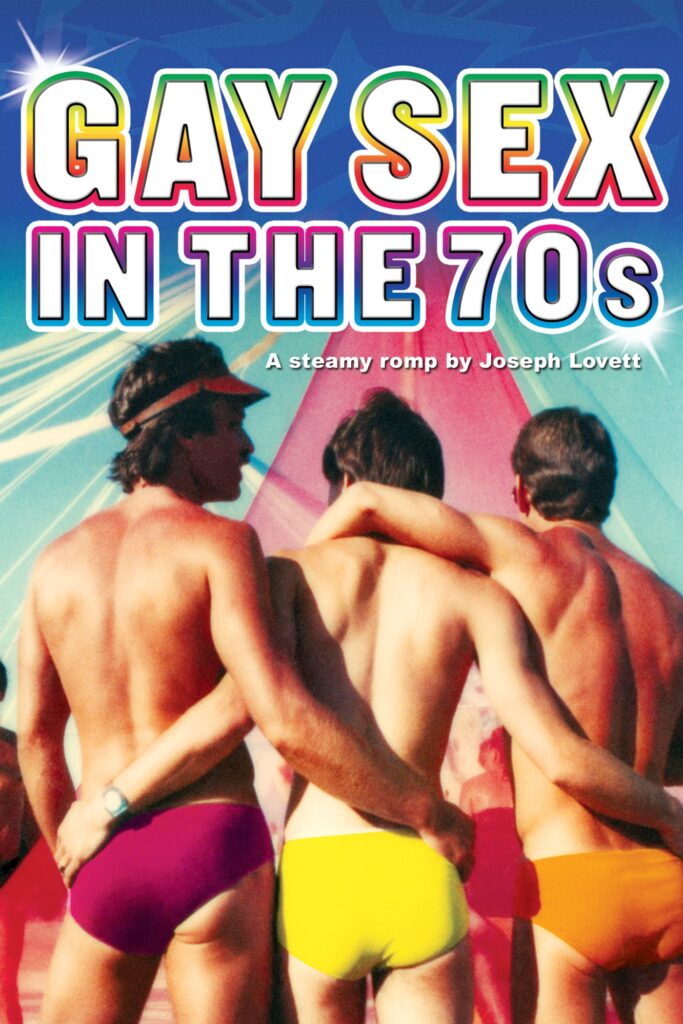
Gay Sex in the 70s (2005)

2022 Entry #015 01-30-22 “Gay Sex in the 70s” is a 2005 American documentary film about gay sexual culture in New York City in the 1970s; which specifically focuses on the years between Stonewall and AIDS (roughly 1969 – 1981). The film was directed by Joseph Lovett, who produced the documentaries “In a New Light: A Call to Action in the War Against AIDS” & “Rock Bottom: Gay Men & Meth”. The film uses archival footage and interviews to illuminate the world of gay anonymous and casual sex in various settings, such as dance clubs, bathhouses, bars, Fire Island, etc. Interviewees include Larry Kramer, Tom Bianchi, Barton Lidice Beneš, Rodger McFarlane, and many others.

I purchased this when it was a new DVD release and though I only watched it once back then, I remembered that I enjoyed it. I specifically remembered that the documentary did a good job with framing this time of sexual liberation and explaining why such personal freedom was revelatory and only made sense. Watching it again now, like other films in this project, I have a greater insight into much of the New York setting. I’ve lived in New York for almost 10 years. I’ve been to Fire Island multiple times. I’ve seen what’s left of the piers depicted in the film and I’ve marched in the Pride Parade 4 times.

This is a very good documentary.

error: Content is protected !!