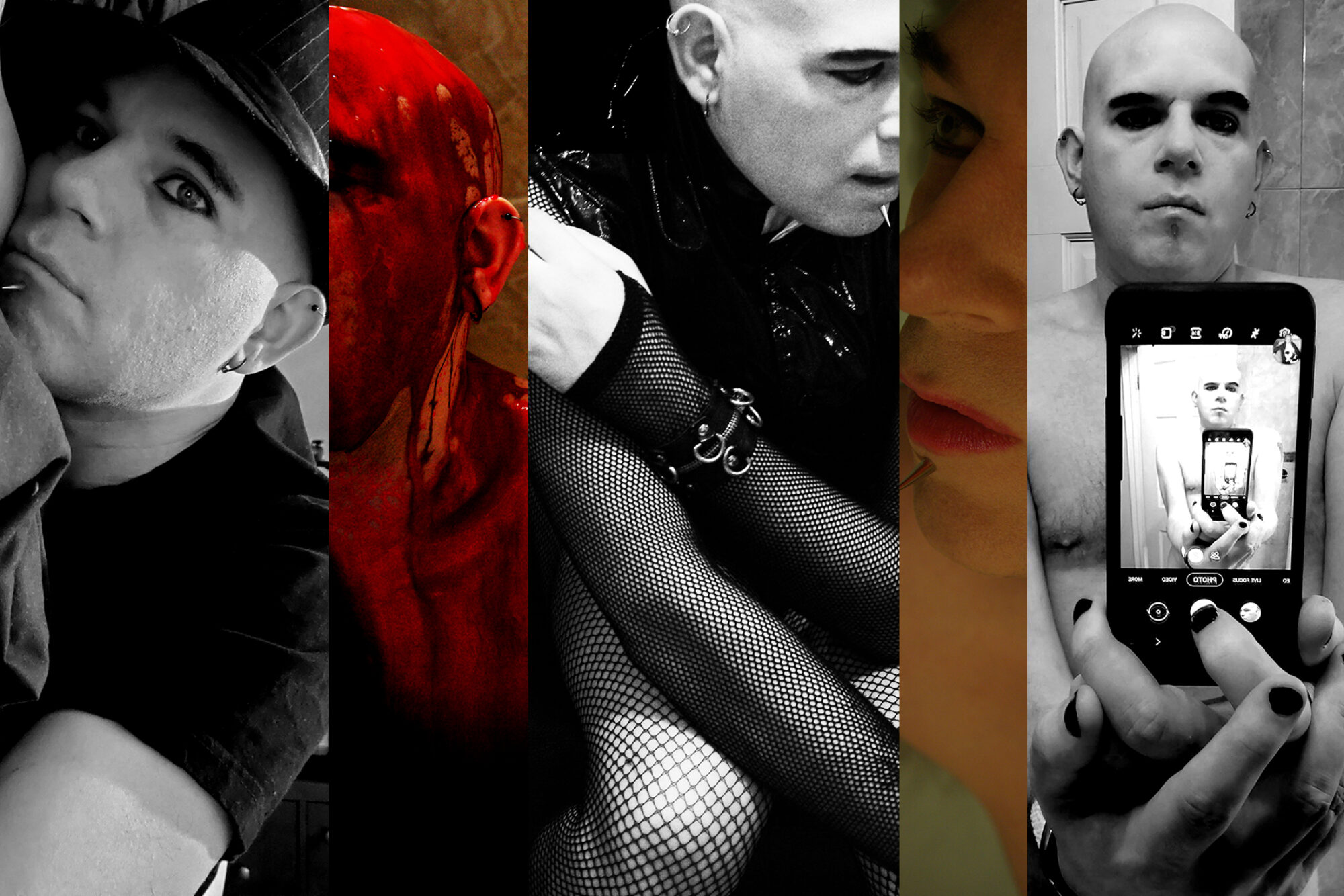
This is the 800th title I’ve watched as part of this project I started in 2020; I’d have watched more but I took 2023 off. Still, I wanted to note the progress with something special and this is what I chose and why.
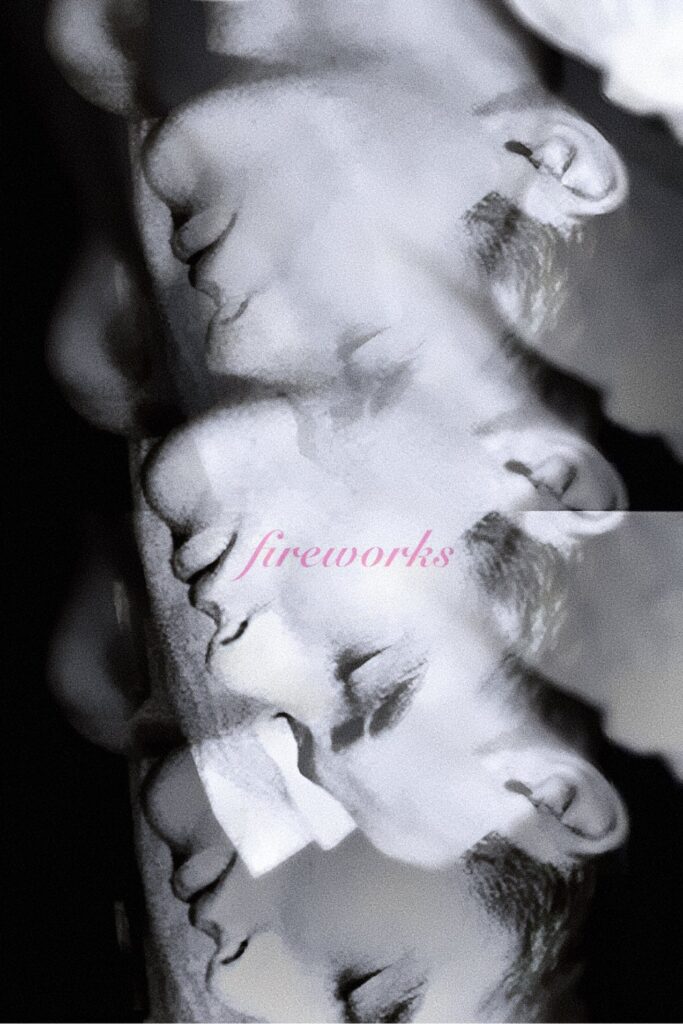
2024 Entry #021 01-16-24 “Fireworks” is a 20 minute 1947 homoerotic experimental short by gay filmmaker Kenneth Anger, who also stars, in what is reportedly the first known gay narrative film in the United States. While quite tame by today’s standards, it was quite daring for the time, featuring themes of homosexuality and sadomasochism. The film was perceived by some as obscene and a screening of the film led to a case that made it all the way to the California Supreme Court, which ruled that homosexuality was a valid subject of artistic expression and that overt reference to it could not be considered obscenity. This ruling became a landmark decision for freedom of speech in the United States.
So, a very important little film which expresses a lot while saying very little. Indeed, most of the film is silent. The film contains no nudity but when the film was attacked, the prosecution persistently referred to “the penis scene”, which famously features a sailor unbuttoning the crotch of his pants to reveal a Roman candle, which shoots sparks into the air. I’d heard much about this title over the years as it is mentioned in several documentaries that I’ve enjoyed, but before today I’d never had access to it. It is fascinating that this seemingly harmless footage was once cause for such alarm. I honestly didn’t think much of it on its own, but its historical significance can’t be underestimated and thus, I’m extremely grateful the film was made.
2024 Entry #021 01-16-24 “Atomic Blonde” is a 2017 American action thriller film directed by David Leitch (in his feature directorial debut – he later directed “Deadpool 2” and performed in “V for Vendetta”) from a screenplay by Kurt Johnstad (“300”), based on the 2012 graphic novel The Coldest City by Antony Johnston and Sam Hart. The film was co-produced by the film’s star Charlize Theron (“Sweet November”, “Monster”, “Head in the Clouds”, “The Old Guard”, “Doctor Strange in the Multiverse of Madness”), and also features James McAvoy (“Bright Young Things”, “Wimbledon”, “Deadpool 2”, “It Chapter Two”), John Goodman (“Revenge of the Nerds”, “Roseanne”, “ParaNorman”, “Love the Coopers”, “The Conners”), Til Schweiger (“Intimate Affairs”), Eddie Marsan (“EastEnders”, “V for Vendetta”, “Deadpool 2”), Sofia Boutella (“Star Trek Beyond”, “Modern Love”, “Rebel Moon”), and Toby Jones (“Orlando”, “Mrs. Henderson Presents”, “Infamous”, “Doctor Who”, “Christopher and His Kind”, & the Harry Potter films as Dobby). The story revolves around an undercover MI6 agent who is sent to Berlin during the Cold War to investigate the murder of a fellow agent and recover a missing list of double agents.
I really like Charlize Theron and she’s incredible here as Lorraine Broughton, the film’s central character. I wasn’t sure I was into this movie when it started but I got much more into it as it continued – until something happened that spoiled that for me. Spoilers follow. The film features a lesbian subplot that was not in the original book. This reportedly came from writer Kurt Johnstad, who suggested it after Theron was “thinking about how do you make this different from other spy movies”. Leitch has insisted that the scenes are not there to be “provocative”, but “more about if you are a spy you will do whatever it takes to get information” and how the main character “find[s] her intimacies and her friendships in small doses”. All of that is fine – it’s welcome, until the film’s villain murders the undercover French agent lesbian love interest, played by Sofia Boutella. The kill happens relatively late in the film and I kept hoping the character wasn’t dead, and while the dangers of their jobs make the death a likely outcome and we have Theron’s character avenging her lover, the ick of another lesbian character dead hurt my enjoyment of the movie and took a film that I initially thought I’d be recommending to friends and turned it into something I will likely never view again.
On the flip side, I’d be remiss if I didn’t mention the film’s excellent soundtrack which features: David Bowie, Siouxsie and the Banshees, A Flock of Seagulls, ‘Til Tuesday, The Clash, Peter Schilling, HEALTHY, Tyler Bates, Nena, Ryal, Robert Ponger & Falco, Re-Flex, Kaleida & Marilyn Manson.
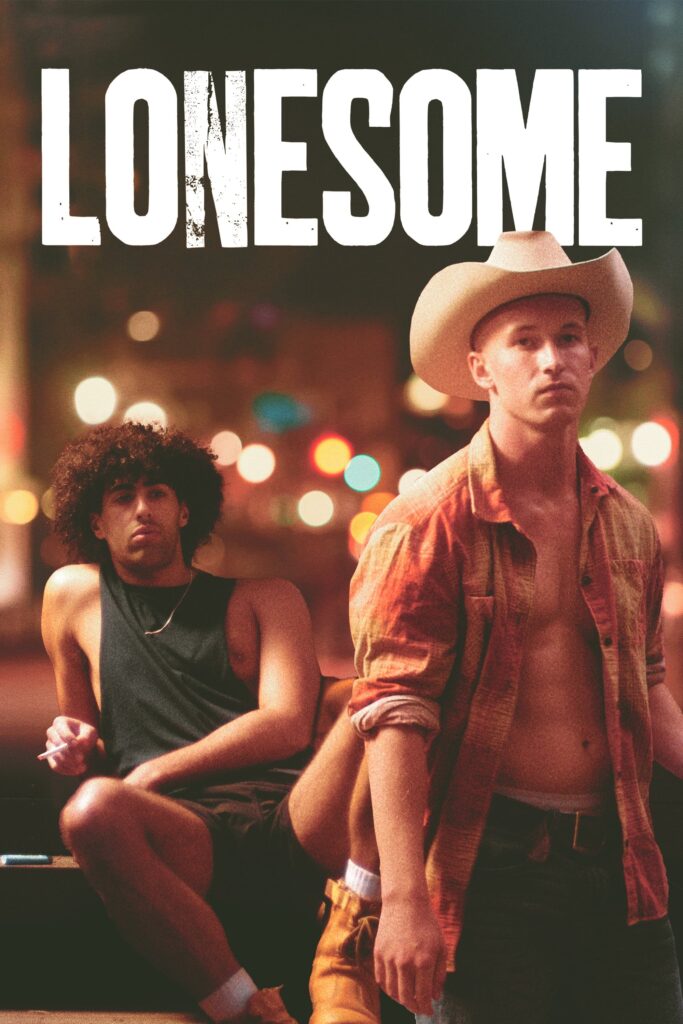
2024 Entry #020 01-16-23 “Lonesome” is a 2022 Australian drama film which was written and directed by Craig Boreham (“Blow”, “Seaman”, “Booth”, “Pink Sheep”, “Transient”, “Love Bite”, “Drowning”, “William Yang: The Art of Seduction”, “Ostia: The Last Night”, “Gay4Pay”, “Teenage Kicks”). The film stars Josh Lavery (“Tasty”, “Bender”, “Lured”, “Perfect Boy Next Door”) & Zarif / Daniel Gabriel (“Right Here”, “Cut”) as Casey & Tib, two young men who make a connection neither of them expects or knows how to navigate.
I wasn’t sure what to expect when I watched this. I’d never seen a trailer but it had featured on my list of recent releases that I wanted to check out. I’d seen a single short film made by Craig Boreham (“Drowning”), which he later turned into a feature film (“Teenage Kicks”) which I never got around to seeing. But I thought this film was well made, with some memorable imagery and some impressive lead performances. The supporting cast felt hit or miss to me, but they tend to not be around long so they don’t distract too much from the story. And while most of the story beats have been told before, the story of queer youth struggling to survive without the support of their families is sadly still relevant.
For a minute I thought this was going to be a very sad movie with a very sad ending, but the film surprised me several times which several sequences of joy and we got what is probably the closest thing to a happy ending that this story would allow for, which feels more refreshing than unrealistic – indeed, for those who want a darker ending, one can easily imagine that the ending is a dream of some kind. YMMV.
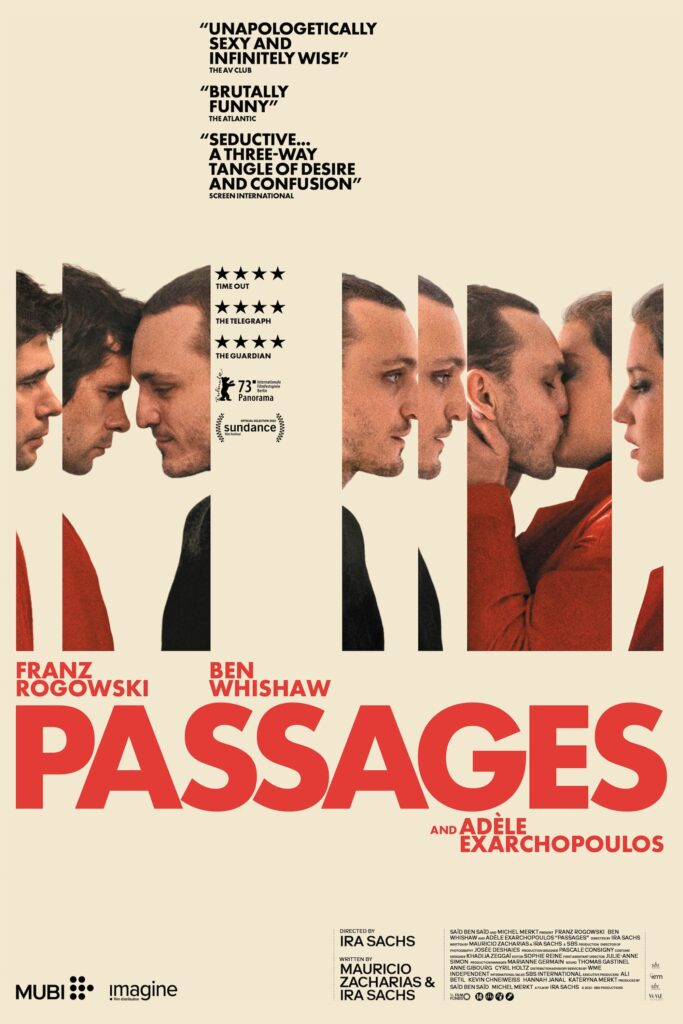
2024 Entry #019 01-14-24 “Passages” is a 2023 French romantic drama film by openly gay director Ira Sachs (“The Delta”, “Keep the Lights On”, “Love Is Strange”, “Little Men”, “Frankie”) and starring Franz Rogowski (“Great Freedom”), openly gay actor Ben Whishaw (“Enduring Love”, “Perfume: The Story of a Murderer”, “Brideshead Revisited”, “Skyfall”, “Cloud Atlas”, “The Danish Girl”, “Spectre”, “No Time to Die”), and Adèle Exarchopoulos (“Blue Is the Warmest Colour”). The story follows a gay couple, Tomas (Franz Rogowski) & Martin (Ben Whishaw), whose marriage encounters a crisis when the emotionally manipulative Tomas begins a passionate affair with a young female school teacher named Agathe (Adèle Exarchopoulos).
This was quite good. All of the performances here were either good or great; not a weak link in the chain. I disliked Franz Rogowski’s character Tomas immediately, but he felt true to life; indeed, I’ve dated men like him. And in some ways, I’ve even been like him. The one time I cheated on a partner (many, many years ago), it was with a woman. And similarly to Tomas, I told my lover about it right after it happened, but for me I had so much guilt that I couldn’t enjoy it – which is why it has never happened again in any of my other relationships. But this may be part of why I hated him so much. But the film seems to hate him as well, or at least it shows the consequences for his repeated carelessness with the lives of those he claims to love. It’s just a game for him; he wants everything, so it is nice to see him end up with nothing. There were times when I was angry at Martin and Agathe as well, but their imperfect responses are measured and wholly believable. There’s a motif in the film, a side story about a book that an attractive author named Amad (Erwan Kepoa Falé) has written – he has connections to each of the main characters, and I believe his purpose here is in some ways thematic. Each of the main characters are a passage in the story of the lives of their fellow leads. Some of those books may have a happy ending – but this film just gives us these chapters to ponder. Nicely done.
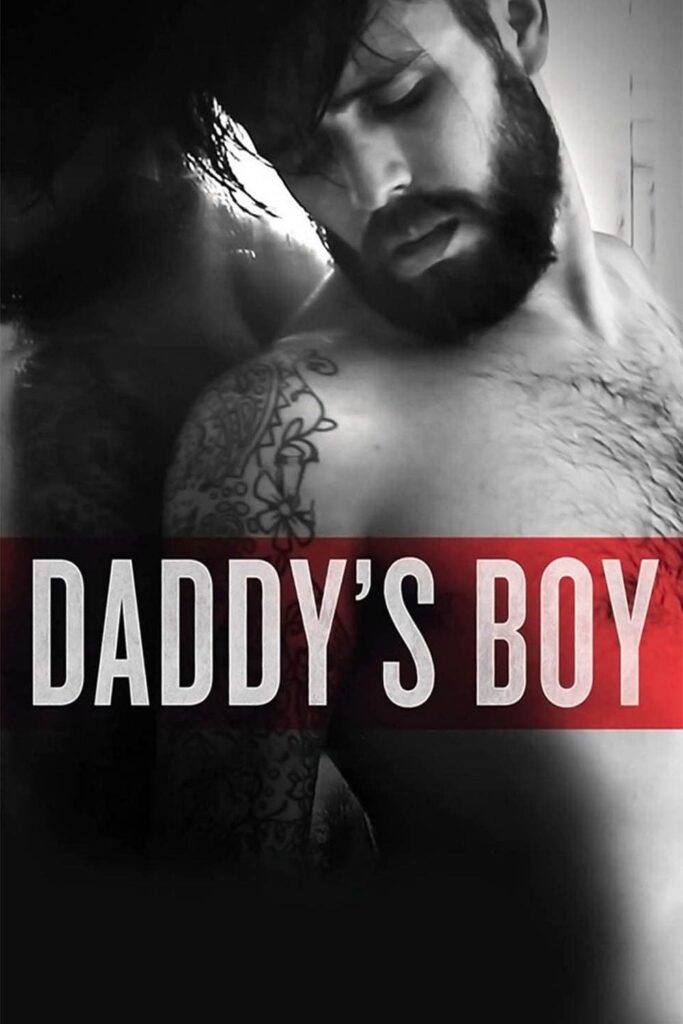
2024 Entry #018 01-13-14 “Daddy’s Boy” is a 2016 black and white drama film which was written and directed by Daniel Armando (“Boys Like You”, “What It Was”, “Love Me Anyway”, “Self-Tape”, “A Boy Like That”, “Collar Confessions”, “Go Go”). The story follows the lives of several men, all sons, some of them fathers, whose stories are interconnected via interwoven sexual encounters and complex family dynamics.
This was a surprise. I’m not certain that I completely understand what I just watched, but I was fully engaged with the material. The story seems to be non-linear in nature, saying much with very little. The film, set in New York City, is beautifully photographed, giving it a timeless quality. The soundtrack was repetitive at times, yet effectively melancholy. And while I don’t quite grasp everything here (which may or may not be a problem with the film), I appreciated that the answers were not spoon fed to me.
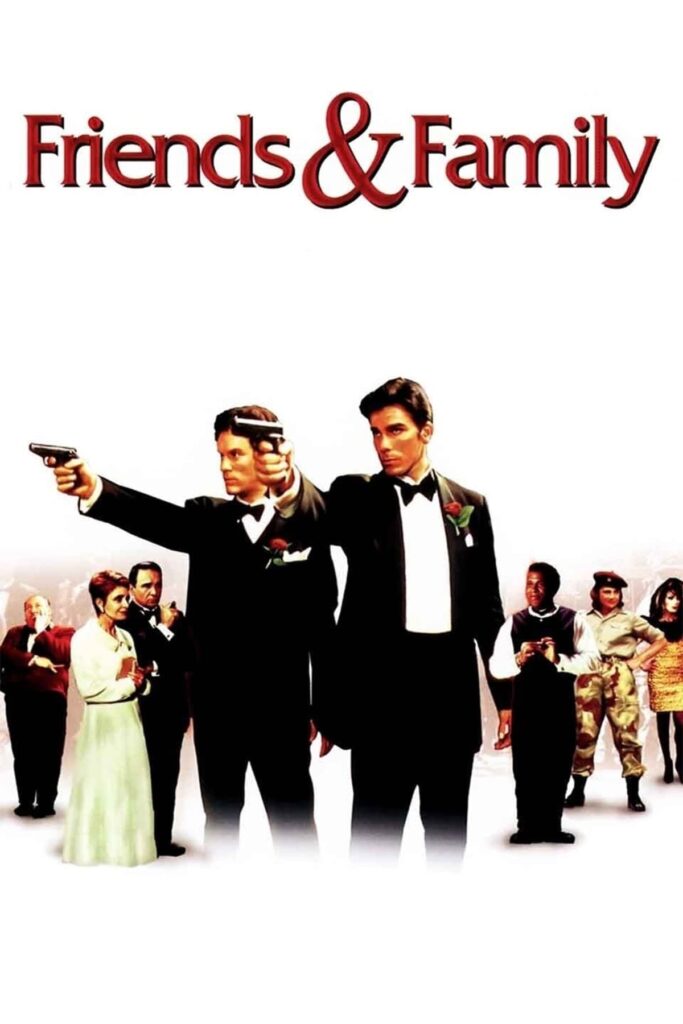
2024 Entry #017 01-13-14 “Friends and Family” is a 2001 gay-themed comedy film written by Joseph Triebwasser and directed by Kristen Coury. The film follows Stephen Torcelli (Greg Lauren) & his partner, Danny Russo (Christopher Gartin), as they struggle to keep Stephen’s parents from discovering that they’re enforcers for the Patrizzi crime family.
The film plays on stereotypes, but being a silly comedy, there are a lot of stereotypes here – and most of it isn’t all that funny; I can see why the writer and director (apparently) never worked on another film ever again. You have the butch gay couple (who never kiss or show much affection for one another). You have the supportive mafia characters, who pretend to be gay in support of the couple. You have the Don’s straight sons, one of which wants to be a fashion designer and the other a cook. And you have another character’s parents who are members of an anti-government militia. There’s also an annoying and rather abrupt ending. Most of this didn’t land for me, but it wasn’t quite as bad as I thought it was going to be after the first half of the film left me wishing I could just shut it off. It’s not great, or even particularly good, but it could have been far worse, which is all the praise that I’ll give it.
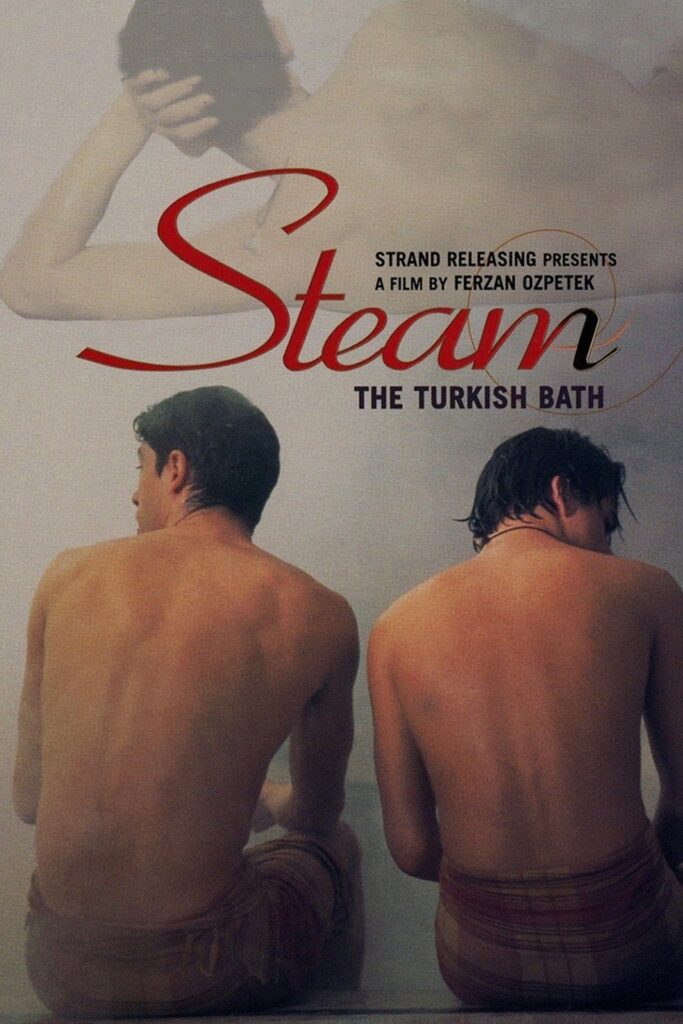
2024 Entry #016 01-12-24 “Steam: The Turkish Bath” (aka “Hamam”) is a 1997 Italian-Turkish-Spanish film by openly gay writer and director Ferzan Özpetek (“The Ignorant Fairies”, “Facing Windows”, “Saturn in Opposition”, “Loose Cannons”, “Magnificent Presence”, “Fasten Your Seatbelts”, “Red Istanbul”, “The Goddess of Fortune”, ““Nuovo Olimpo”). Özpetek’s debut film, the story concerns how certain places can cause powerful transformations for the people that find themselves there.
The film is centered on Francesco (Alessandro Gassman) and Marta (Francesca d’Aloja), who run a husband-and-wife design company in Rome. Both are struggling in their marriage as Francesco is bi-curious and possibly gay, while Marta is having a serious affair. When Francesco’s aunt dies in Istanbul he travels there to sort out the hamam Turkish steam bath that she left him. But Francesco and later Marta both find a love and warmth in his relatives’ Istanbul home that has been missing from their lives in Italy.
I had seen this once before in the mid aughts. I remembered very little of it except that I had enjoyed it. The film has an interesting structure and an ending that I wouldn’t have guessed, but I think this is in part because I’m not sure the film truly supports the finale and it feels a bit rushed. It could have been an exceptional ending had it taken a bit more time to get there, but as it is, it feels slightly flawed. When I originally watched the film it was part of a massive viewing of various LGBTQ+ themed films, just as I’m doing now, but then I feel I was slightly more impressed to see elements here that I’ve grown accustomed to and that I’m a little less impressed by now. The film still has a lot going for it, including an impressive cast, beautiful scenery and like other Özpetek films I’ve seen, a memorable soundtrack.
2024 Entry #015 01-12-24 “Star Trek: Discovery” is an American science fiction television series created by Bryan Fuller and Alex Kurtzman for the streaming service CBS All Access (later rebranded as Paramount+). It is the seventh Star Trek series overall and the second series chronologically; it debuted in 2017. The series follows the crew of the starship Discovery beginning 101 years after “Star Trek: Enterprise” and 9 years before the introduction of Kirk in “Star Trek: The Original Series”.
For LGBTQ+ Star Trek fans who wished to see themselves presented in Star Trek, this was the first series to feature such characters prominently. Other series had flirted with the idea of LGBTQ+ representation (most notably “Star Trek: Deep Space Nine”), but these storylines were mostly relegated to analogies or random episodes. DISCO was the first Trek series to truly bring LGBTQ+ equality to the franchise. The first season of the series runs 15 episodes and features familiar Trek staples like the Federation, Klingons, Vulcans, Andorians, Tellarites, the Mirror Universe, the Enterprise, etc. But the series is accessible to new fans.
Having just binged watched the first season again, partially in preparation for the streaming premiere of the final season in April, I reaffirmed this series as my current favorite Trek series, and I enjoy them all to some degree. There are so many elements of this series that I love that I doubt I could do them justice here, though I could ramble on about it for hours. Suffice it to say that I love it and I recommend it.
Having said that, I do feel that I need to talk about one aspect of the series, specifically for queer fans, a kind of trigger warning – and a bit of a spoiler, but this was something that the creative team were quick to reveal to the audience in real time and with good reason. So SPOILER, one member of the gay male couple featured in this season (both of whom are played by openly gay actors) dies in the course of this season in a brutal murder. However, this is NOT meant to be part of the “Bury Your Gays” TV trope, but instead is actually part of a Star Trek trope in which characters often don’t stay dead. Indeed, the couple are reunited in Season 2 and keeping other spoilers to a minimum, are alive and well through at least the start of the upcoming season. And I would also like to mention that while they’re the most prominent queer characters in season 1, others are seen in ways that were new to Trek, and this is expanded on in the following seasons with prominent lesbian, bisexual, non-binary and transgender characters all being represented.
2024 Entry #014 01-11-24 “The Trace of Your Lips” (aka “La huella de unos labios”) is a 2023 Mexican drama directed by gay cinema icon Julián Hernández, who co-wrote the film with Gustavo Hernández de Anda. The film centers on Aldo (Mauricio Rico) & Román (Hugo Catalán), gay men who live in the same apartment complex who have never been formally introduced. Aldo works in a store with some tricking on the side while Román is an actor in B-movies. The story takes a turn as the men are isolated in their apartments due to the Covid-19 pandemic and the lockdowns that ensued. They trade messages and phone calls, becoming emotionally entangled as well as increasingly sexually explicit in conversation and fantasy.
Watching this film today proved to be extremely ironic. Firstly, I started this LGBTQ+ viewing and reaction project in 2020, in part to keep myself sane during the Covid-19 NYC lockdown. Additionally, I’ve now been alerted by Facebook that three years ago today I watched and reviewed “Mexican Men”, a collection of short films which first exposed me to Julián Hernández’s work. I’ve always intended to view more and I have tried, but my copy of one film (“A Thousand Clouds of Peace”) was damaged and I started another which I never finished (because I couldn’t get back to it in a timely manner).
As for this film, it is far more tragic than I was expecting, but it was also visually stunning, with a great soundtrack and a subject matter I could clearly relate to. The film’s opening, during the making of one of Román’s B-movies, where he first crosses paths with Aldo, goes on a bit too long; it was clear what the gimmick was but it took a long time to get to the “reveal”. Beyond that, the film played like an AIDS film, but with Covid-19 instead. I don’t highly recommend it, but I wasn’t bored and I don’t regret watching it. And I still want to see more of this director’s work.
2024 Entry #013 01-08-24 “The Black Dahlia”is a 2006 American neo-noir crime thriller film directed by Brian De Palma (“Dressed to Kill”, “Body Double”) and written by Josh Friedman, based on the 1987 novel of the same name by James Ellroy, the first book in his celebrated “L.A. Quartet”, the others being “The Big Nowhere” (1988), “L.A. Confidential” (1990) & “White Jazz” (1992). The novel on which this film is based was inspired in part by the widely sensationalized murder of Elizabeth Short, a figure of great interest to Ellroy. The novel features both historical and fictional elements. The film stars Josh Hartnett (“Sin City”, “Penny Dreadful”), Scarlett Johansson (“Vicky Cristina Barcelona”, “Avengers: Endgame”), Hilary Swank (“Quiet Days in Hollywood”, “Boys Don’t Cry”), Mia Kirshner (“Exotica”, “Not Another Teen Movie”, “Party Monster”, “The L Word”, “Lost Girl”, “Star Trek: Discovery”, “Star Trek: Strange New Worlds”), Mike Starr (“Cruising”, “Last Exit to Brooklyn”, “Miller’s Crossing”, “A River Made to Drown In”, “Law and Order: Special Victims Unit”, “Glee”, “Shameless”), John Kavanagh (“Braveheart”, “Alexander”), Rachel Miner (“Bully”, “Sex and the City”), Rose McGowan (“The Doom Generation”, “Nowhere”, “Nip/Tuck”, “RuPaul’s Drag Race”), Patrick Fischler (“Mulholland Drive”, “Pushing Daisies”, “Law and Order: Special Victims Unit”, “Shameless”) openly lesbian Fiona Shaw (“Dorian Gray”, “True Blood”, “Killing Eve”, “Fleabag”, “Colette”, “Ammonite”, “Andor” & the Harry Potter films) & Aaron Eckhart. Openly lesbian musician k.d. lang has an uncredited cameo as the floor show performer at the lesbian nightclub Laverne’s Hideaway.
The convoluted plot follows two Los Angeles Police Department detectives investigating Short’s murder, leading them through a series of shocking discoveries.
Wow. Okay.
To start with, I’m going to out myself and just admit that I’m not a huge Brian De Palma fan. And while that is often considered heresy within certain circles that I frequent, there are lots of well known and beloved film directors that I just don’t enjoy; Stanley Kubrick is a good example, or Woody Allen (and not just because he’s creepy – I just really don’t enjoy what I’ve seen of his stuff). With Brian De Palma, I like “Carrie” and “The Fury”, but I don’t love “Scarface” (sorry) and I hate “Mission: Impossible” , and even when I do enjoy De Palma’s films, I find his renowned flourishes to be too showy and a bit obnoxious. So keep that in mind.
Having said that, I’m trying to step out of my comfort zone while exploring LGBTQ+ inclusive cinema and I thought I’d give this one a shot. When I was over half way through the film, I stopped to read a synopsis (up to the point in the film I’d stopped) because I thought I’d missed something. Only I hadn’t. David Denby’s review in The New Yorker summed up my reaction when the film had ended: “It’s overrich and fundamentally unsatisfying… There are scenes that display De Palma’s customary visual brilliance… but the movie is so complicated, the narrative so awkward, that when the pieces of the puzzle fall into place we get no tingle of satisfaction.”
That. The movie wasn’t short but it felt like it was missing a lot. Apparently it was originally 3 hours long and cut down to two and it shows. What should be big aha moments are either telegraphed so far in advance or sprung out of nowhere – and these failings are made worse by some really horrible acting choices by just about everyone. Ick. No. It’s bad. For a minute or two I thought it would be good, but then it wasn’t.
As for LGBTQ+ content, there are lots of lesbians, but none of them are central to the plot. There’s a lovely cameo by k.d. lang in a lesbian bar with lots of lesbians surrounding her, which is sadly, the highpoint of representation here. There’s a bisexual woman, but she’s a murderer – who is apparently sexually involved with a despicable man that we think is her father. And there’s another bisexual / lesbian woman who is the central victim of the story, but since she was brutally murdered, she’s barely in the film. There just aren’t a lot of positive depictions here. And while that’s not always necessary for me to enjoy something (for example, I love “Basic Instinct” in which all the women are bisexual murderers), the ladies here don’t get much to work with, and what they do get isn’t supported by anything especially exciting. This is not a very good movie. This wasn’t even a very entertaining movie. And those are my thoughts. YMMV.