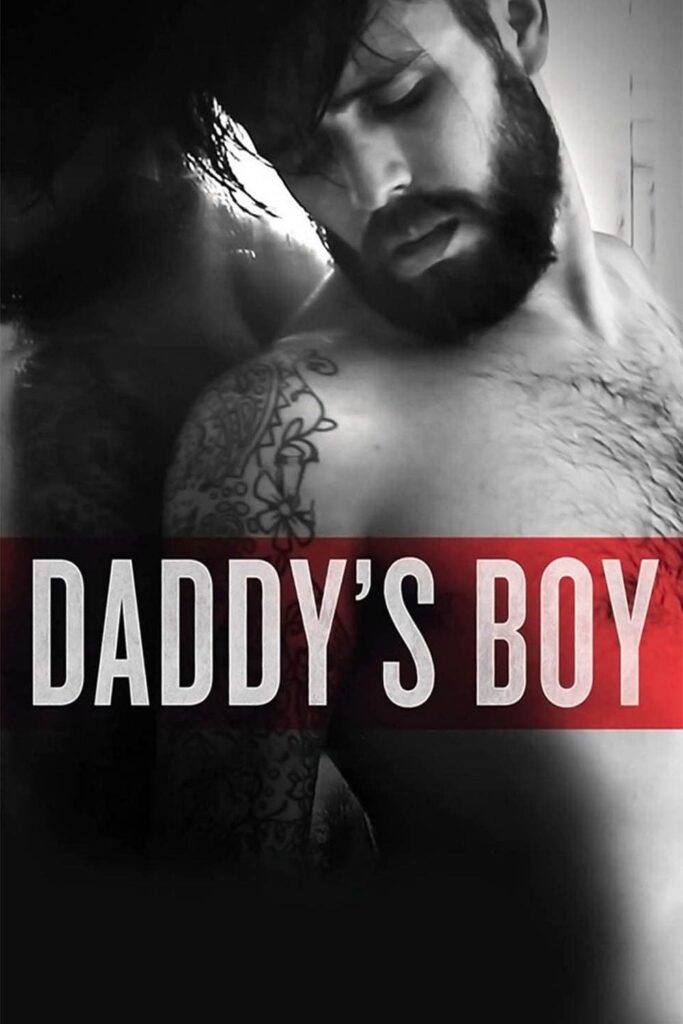
2024 Entry #018 01-13-14 “Daddy’s Boy” is a 2016 black and white drama film which was written and directed by Daniel Armando (“Boys Like You”, “What It Was”, “Love Me Anyway”, “Self-Tape”, “A Boy Like That”, “Collar Confessions”, “Go Go”). The story follows the lives of several men, all sons, some of them fathers, whose stories are interconnected via interwoven sexual encounters and complex family dynamics.
This was a surprise. I’m not certain that I completely understand what I just watched, but I was fully engaged with the material. The story seems to be non-linear in nature, saying much with very little. The film, set in New York City, is beautifully photographed, giving it a timeless quality. The soundtrack was repetitive at times, yet effectively melancholy. And while I don’t quite grasp everything here (which may or may not be a problem with the film), I appreciated that the answers were not spoon fed to me.
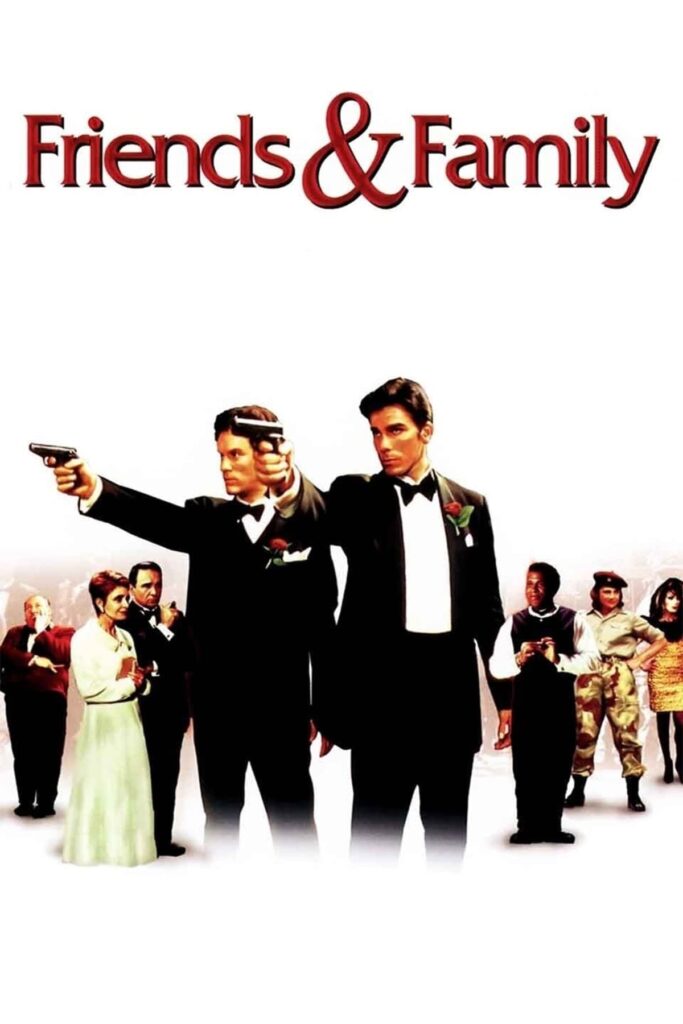
2024 Entry #017 01-13-14 “Friends and Family” is a 2001 gay-themed comedy film written by Joseph Triebwasser and directed by Kristen Coury. The film follows Stephen Torcelli (Greg Lauren) & his partner, Danny Russo (Christopher Gartin), as they struggle to keep Stephen’s parents from discovering that they’re enforcers for the Patrizzi crime family.
The film plays on stereotypes, but being a silly comedy, there are a lot of stereotypes here – and most of it isn’t all that funny; I can see why the writer and director (apparently) never worked on another film ever again. You have the butch gay couple (who never kiss or show much affection for one another). You have the supportive mafia characters, who pretend to be gay in support of the couple. You have the Don’s straight sons, one of which wants to be a fashion designer and the other a cook. And you have another character’s parents who are members of an anti-government militia. There’s also an annoying and rather abrupt ending. Most of this didn’t land for me, but it wasn’t quite as bad as I thought it was going to be after the first half of the film left me wishing I could just shut it off. It’s not great, or even particularly good, but it could have been far worse, which is all the praise that I’ll give it.
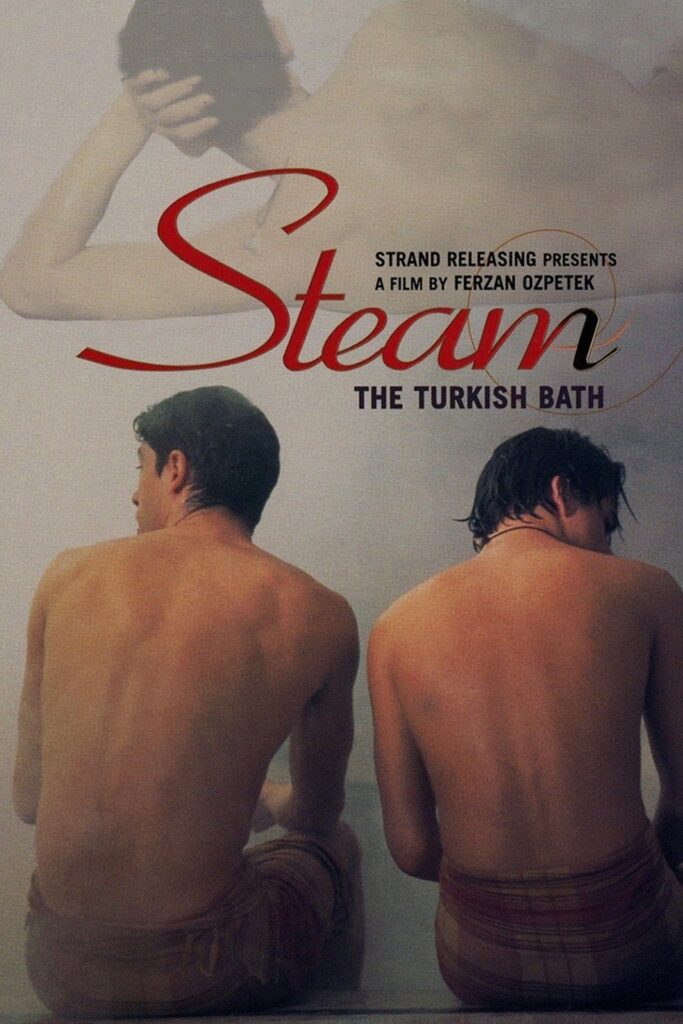
2024 Entry #016 01-12-24 “Steam: The Turkish Bath” (aka “Hamam”) is a 1997 Italian-Turkish-Spanish film by openly gay writer and director Ferzan Özpetek (“The Ignorant Fairies”, “Facing Windows”, “Saturn in Opposition”, “Loose Cannons”, “Magnificent Presence”, “Fasten Your Seatbelts”, “Red Istanbul”, “The Goddess of Fortune”, ““Nuovo Olimpo”). Özpetek’s debut film, the story concerns how certain places can cause powerful transformations for the people that find themselves there.
The film is centered on Francesco (Alessandro Gassman) and Marta (Francesca d’Aloja), who run a husband-and-wife design company in Rome. Both are struggling in their marriage as Francesco is bi-curious and possibly gay, while Marta is having a serious affair. When Francesco’s aunt dies in Istanbul he travels there to sort out the hamam Turkish steam bath that she left him. But Francesco and later Marta both find a love and warmth in his relatives’ Istanbul home that has been missing from their lives in Italy.
I had seen this once before in the mid aughts. I remembered very little of it except that I had enjoyed it. The film has an interesting structure and an ending that I wouldn’t have guessed, but I think this is in part because I’m not sure the film truly supports the finale and it feels a bit rushed. It could have been an exceptional ending had it taken a bit more time to get there, but as it is, it feels slightly flawed. When I originally watched the film it was part of a massive viewing of various LGBTQ+ themed films, just as I’m doing now, but then I feel I was slightly more impressed to see elements here that I’ve grown accustomed to and that I’m a little less impressed by now. The film still has a lot going for it, including an impressive cast, beautiful scenery and like other Özpetek films I’ve seen, a memorable soundtrack.
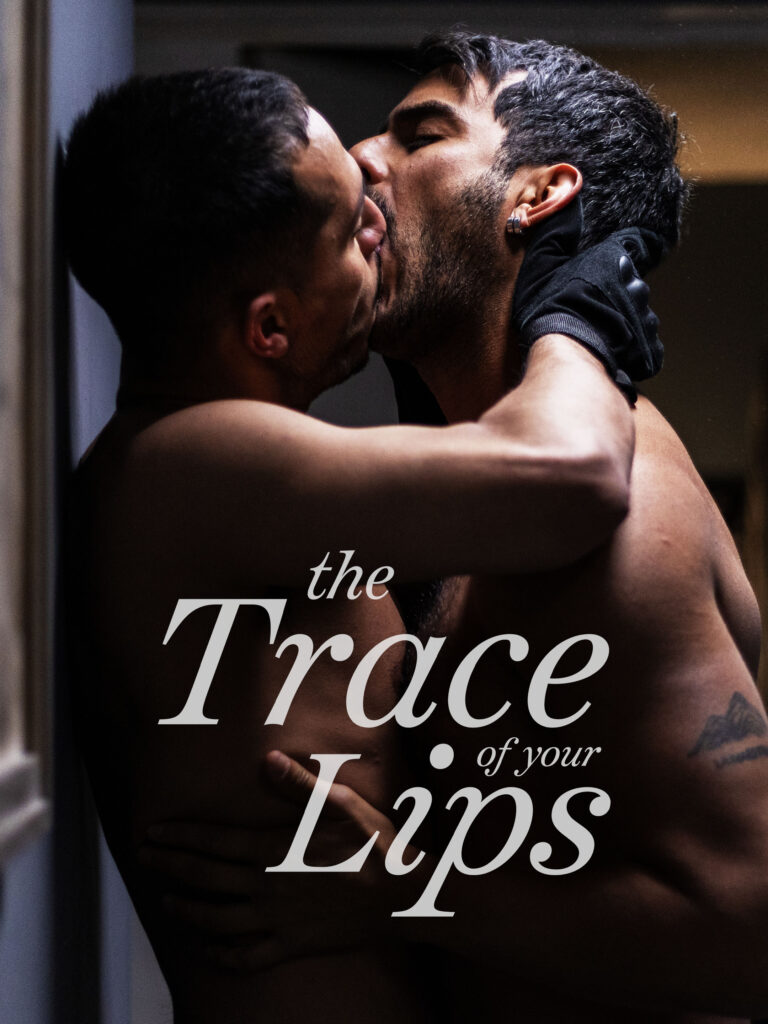
2024 Entry #014 01-11-24 “The Trace of Your Lips” (aka “La huella de unos labios”) is a 2023 Mexican drama directed by gay cinema icon Julián Hernández, who co-wrote the film with Gustavo Hernández de Anda. The film centers on Aldo (Mauricio Rico) & Román (Hugo Catalán), gay men who live in the same apartment complex who have never been formally introduced. Aldo works in a store with some tricking on the side while Román is an actor in B-movies. The story takes a turn as the men are isolated in their apartments due to the Covid-19 pandemic and the lockdowns that ensued. They trade messages and phone calls, becoming emotionally entangled as well as increasingly sexually explicit in conversation and fantasy.
Watching this film today proved to be extremely ironic. Firstly, I started this LGBTQ+ viewing and reaction project in 2020, in part to keep myself sane during the Covid-19 NYC lockdown. Additionally, I’ve now been alerted by Facebook that three years ago today I watched and reviewed “Mexican Men”, a collection of short films which first exposed me to Julián Hernández’s work. I’ve always intended to view more and I have tried, but my copy of one film (“A Thousand Clouds of Peace”) was damaged and I started another which I never finished (because I couldn’t get back to it in a timely manner).
As for this film, it is far more tragic than I was expecting, but it was also visually stunning, with a great soundtrack and a subject matter I could clearly relate to. The film’s opening, during the making of one of Román’s B-movies, where he first crosses paths with Aldo, goes on a bit too long; it was clear what the gimmick was but it took a long time to get to the “reveal”. Beyond that, the film played like an AIDS film, but with Covid-19 instead. I don’t highly recommend it, but I wasn’t bored and I don’t regret watching it. And I still want to see more of this director’s work.
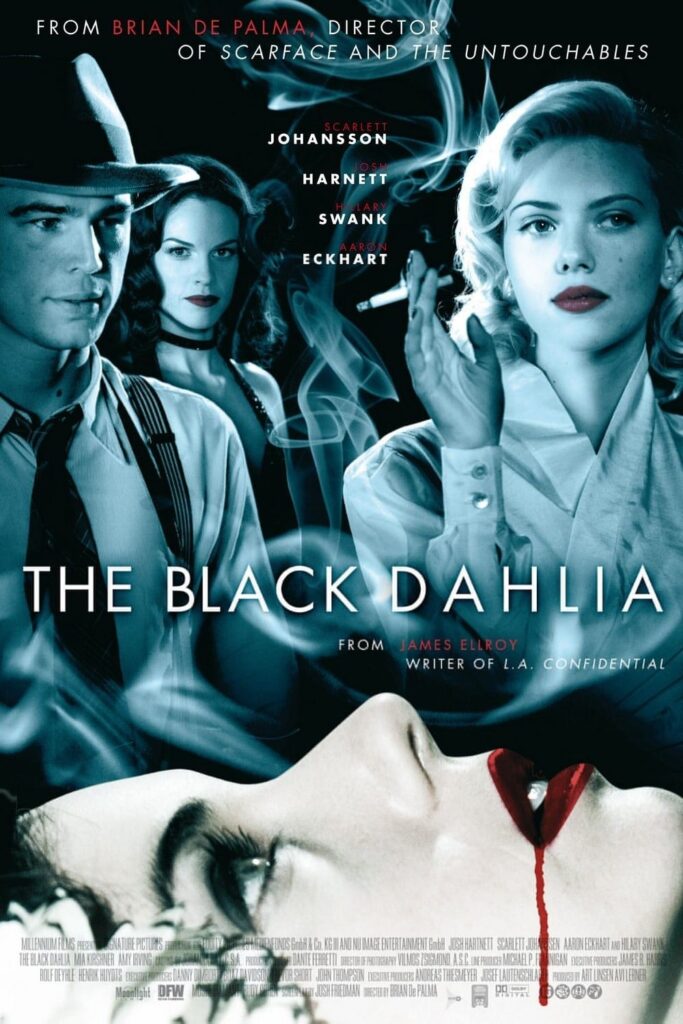
2024 Entry #013 01-08-24 “The Black Dahlia”is a 2006 American neo-noir crime thriller film directed by Brian De Palma (“Dressed to Kill”, “Body Double”) and written by Josh Friedman, based on the 1987 novel of the same name by James Ellroy, the first book in his celebrated “L.A. Quartet”, the others being “The Big Nowhere” (1988), “L.A. Confidential” (1990) & “White Jazz” (1992). The novel on which this film is based was inspired in part by the widely sensationalized murder of Elizabeth Short, a figure of great interest to Ellroy. The novel features both historical and fictional elements. The film stars Josh Hartnett (“Sin City”, “Penny Dreadful”), Scarlett Johansson (“Vicky Cristina Barcelona”, “Avengers: Endgame”), Hilary Swank (“Quiet Days in Hollywood”, “Boys Don’t Cry”), Mia Kirshner (“Exotica”, “Not Another Teen Movie”, “Party Monster”, “The L Word”, “Lost Girl”, “Star Trek: Discovery”, “Star Trek: Strange New Worlds”), Mike Starr (“Cruising”, “Last Exit to Brooklyn”, “Miller’s Crossing”, “A River Made to Drown In”, “Law and Order: Special Victims Unit”, “Glee”, “Shameless”), John Kavanagh (“Braveheart”, “Alexander”), Rachel Miner (“Bully”, “Sex and the City”), Rose McGowan (“The Doom Generation”, “Nowhere”, “Nip/Tuck”, “RuPaul’s Drag Race”), Patrick Fischler (“Mulholland Drive”, “Pushing Daisies”, “Law and Order: Special Victims Unit”, “Shameless”) openly lesbian Fiona Shaw (“Dorian Gray”, “True Blood”, “Killing Eve”, “Fleabag”, “Colette”, “Ammonite”, “Andor” & the Harry Potter films) & Aaron Eckhart. Openly lesbian musician k.d. lang has an uncredited cameo as the floor show performer at the lesbian nightclub Laverne’s Hideaway.
The convoluted plot follows two Los Angeles Police Department detectives investigating Short’s murder, leading them through a series of shocking discoveries.
Wow. Okay.
To start with, I’m going to out myself and just admit that I’m not a huge Brian De Palma fan. And while that is often considered heresy within certain circles that I frequent, there are lots of well known and beloved film directors that I just don’t enjoy; Stanley Kubrick is a good example, or Woody Allen (and not just because he’s creepy – I just really don’t enjoy what I’ve seen of his stuff). With Brian De Palma, I like “Carrie” and “The Fury”, but I don’t love “Scarface” (sorry) and I hate “Mission: Impossible” , and even when I do enjoy De Palma’s films, I find his renowned flourishes to be too showy and a bit obnoxious. So keep that in mind.
Having said that, I’m trying to step out of my comfort zone while exploring LGBTQ+ inclusive cinema and I thought I’d give this one a shot. When I was over half way through the film, I stopped to read a synopsis (up to the point in the film I’d stopped) because I thought I’d missed something. Only I hadn’t. David Denby’s review in The New Yorker summed up my reaction when the film had ended: “It’s overrich and fundamentally unsatisfying… There are scenes that display De Palma’s customary visual brilliance… but the movie is so complicated, the narrative so awkward, that when the pieces of the puzzle fall into place we get no tingle of satisfaction.”
That. The movie wasn’t short but it felt like it was missing a lot. Apparently it was originally 3 hours long and cut down to two and it shows. What should be big aha moments are either telegraphed so far in advance or sprung out of nowhere – and these failings are made worse by some really horrible acting choices by just about everyone. Ick. No. It’s bad. For a minute or two I thought it would be good, but then it wasn’t.
As for LGBTQ+ content, there are lots of lesbians, but none of them are central to the plot. There’s a lovely cameo by k.d. lang in a lesbian bar with lots of lesbians surrounding her, which is sadly, the highpoint of representation here. There’s a bisexual woman, but she’s a murderer – who is apparently sexually involved with a despicable man that we think is her father. And there’s another bisexual / lesbian woman who is the central victim of the story, but since she was brutally murdered, she’s barely in the film. There just aren’t a lot of positive depictions here. And while that’s not always necessary for me to enjoy something (for example, I love “Basic Instinct” in which all the women are bisexual murderers), the ladies here don’t get much to work with, and what they do get isn’t supported by anything especially exciting. This is not a very good movie. This wasn’t even a very entertaining movie. And those are my thoughts. YMMV.
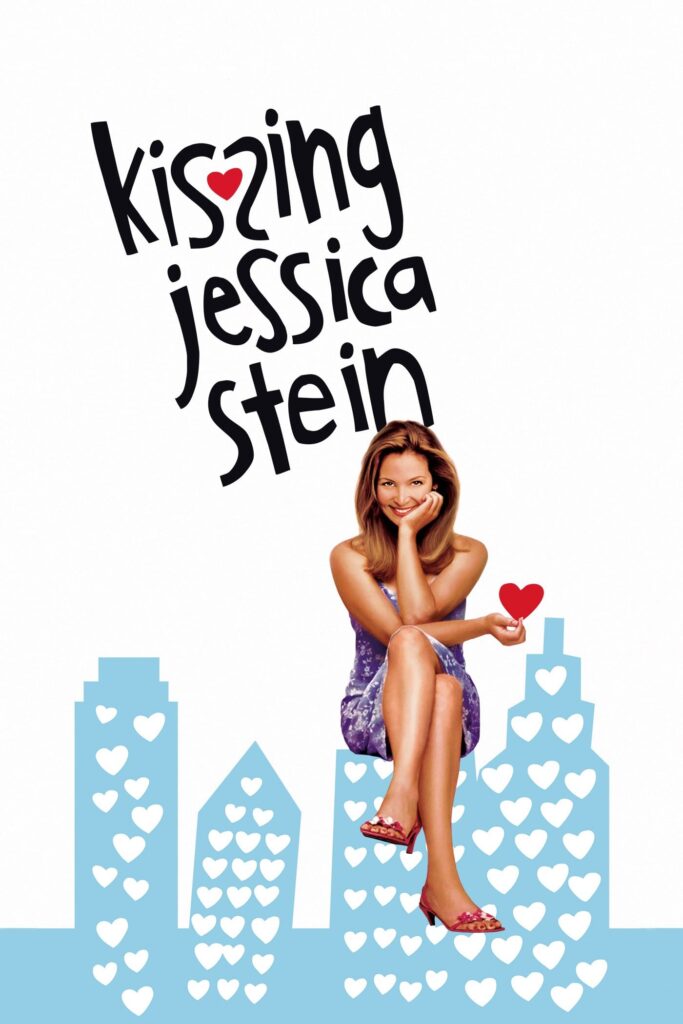
2024 Entry #011 01-07-24 “Kissing Jessica Stein” is a 2001 American independent romantic comedy film, written and co-produced by the film’s stars, Jennifer Westfeldt and Heather Juergensen; directed by Charles Herman-Wurmfeld (“Fanci’s Persuasion”, “Legally Blonde 2: Red, White & Blonde”, . The film also features openly gay John Edward Cariani (“The Good Wife”), Ben Weber (“Sex and the City”, “The Broken Hearts Club: A Romantic Comedy”) Tovah Feldshuh (“Friends & Family”, “Ugly Betty”, “The Good Wife”), Scott Cohen (“Oz”, “Gia”), Jackie Hoffman (“Queer Duck: The Movie”, “The New Normal”, “The Good Wife”, “Glass Onion: A Knives Out Mystery”), Brian Stepanek (“Six Feet Under”, “Green Book”), Jon Hamm (“Ally McBeal”, “Mad Men”, “A Single Man”, “Howl”, “Absolutely Fabulous: The Movie”, “Mean Girls”) & Michael Showalter (“Wet Hot American Summer”). The film is based on a scene from the 1997 off-Broadway play by Westfeldt and Juergensen called “Lipschtick”.
The story follows the title character, a Jewish copy editor living and working in New York City, who is plagued by failed blind dates with men, and decides to answer a newspaper’s personal advertisement, placed by a thirtysomething art gallerist, a ‘lesbian-curious’ woman. I had seen this movie once before, when I purchased it for my collection, when it was relatively new – so close to 22 years ago. Of that viewing, I remembered a powerful scene between Jessica (Jennifer Westfeldt) and her mother Judy (Tovah Feldshuh) on a swing, in which Judy reveals that she is supportive of Jessica’s relationship with Helen (Heather Juergensen), the gallerist; I cried both times that I saw it. The other scene I remembered was the breakup between the two women and the reasons for it. Otherwise, I remembered nothing; not even that it was set in NYC.
This movie is a bit of a mixed bag for me. I enjoy it, but I could have loved it and I didn’t. I think there are a few really successful ideas here about relationships and what constitutes a healthy one; how people can inspire us to be better than we were before – and can simply inspire us to do our best, our most creative work, which isn’t the same thing. But I think the tone of this piece is a little too “safe” and is so hellbent on being fluffy and fun that it often does a disservice to the strength of these messages. And I think that this silly romantic comedy occasionally gets out of its own way and allows for depth and honesty.
And then there’s the other problem, which may be more problematic for some than others: I’m not certain there are any lesbian characters in this supposedly lesbian themed film. I think if the film stood its ground more often and didn’t pull its punches this would be less annoying, because there is something to be said for the experiences of women who have relationships with women beyond lesbianism, but because it plays everything as frothy and weightless, that subject matter is presented as nearly devoid of anything of worth, and it didn’t have to be that way. But because of that, I wish the film had just allowed these characters to be lesbians. A fun lesbian comedy would be both easier to convey and a more welcome story to discover, as finding lesbian films which actually feature lesbian characters, who aren’t there only for decoration or flavor seems to be shockingly rare. Though I do give the movie some props for one of the bisexual women ending up with a woman, as her ending up with a man would have been so obnoxious as to spoil the film altogether.
Overall, this IS a silly romantic comedy, but every now and again there is something of greater value to be found here, which suggests this story could have been something much better.
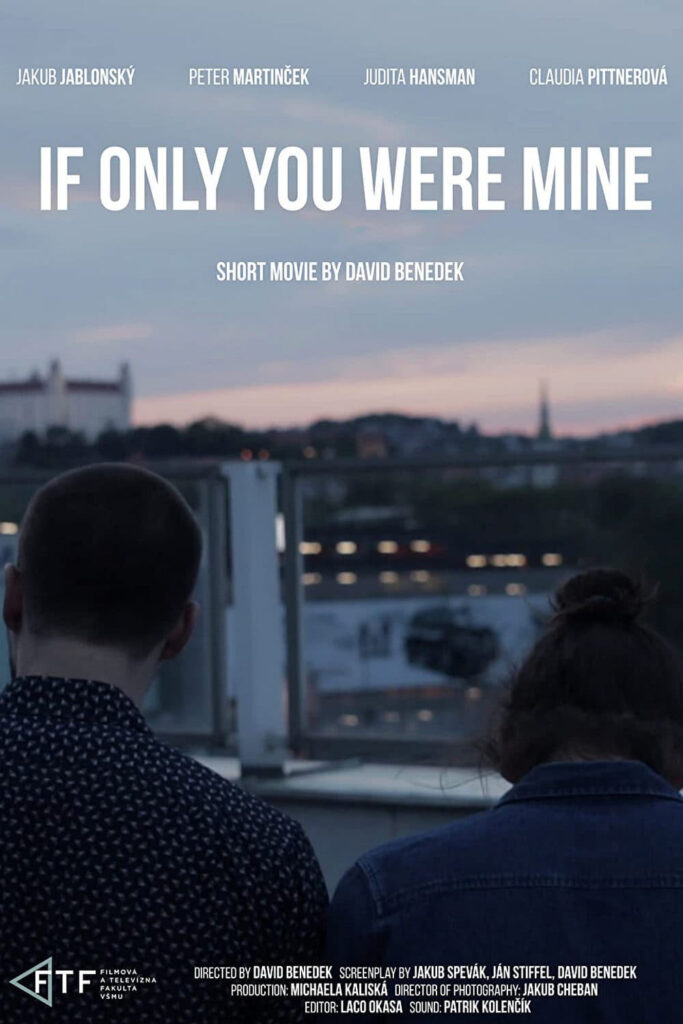
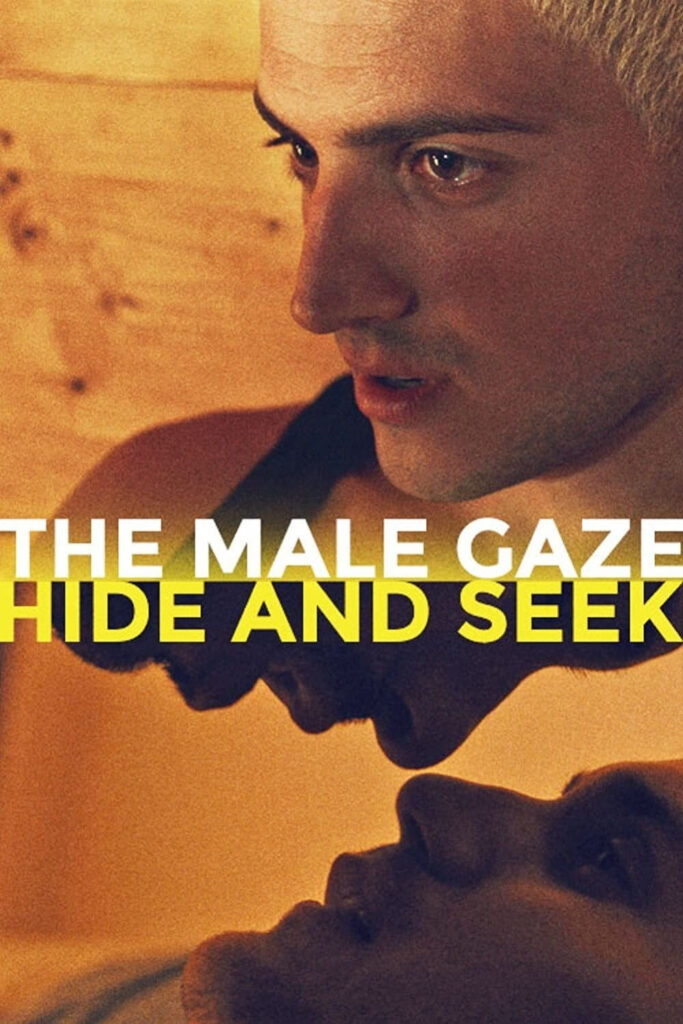
2024 Entry #012 01-07-24 “If Only You Were Mine” is a 23 minute 2017 Slovakian short romantic drama film which was directed by David Benedek (“Together”), who co-wrote it with Jakub Spevák (“Together”) & Ján Stiffel. The story follows a young graduate named Dominik (Jakub Jablonský), who is experiencing his first relationship with a man named Adam (Peter Martincek). Dom struggles with his complicated feelings and an eating disorder. The relationship doesn’t last as Dom expresses love for Adam who is in a different place emotionally – which hurts Dominik, though he quickly rebounds.
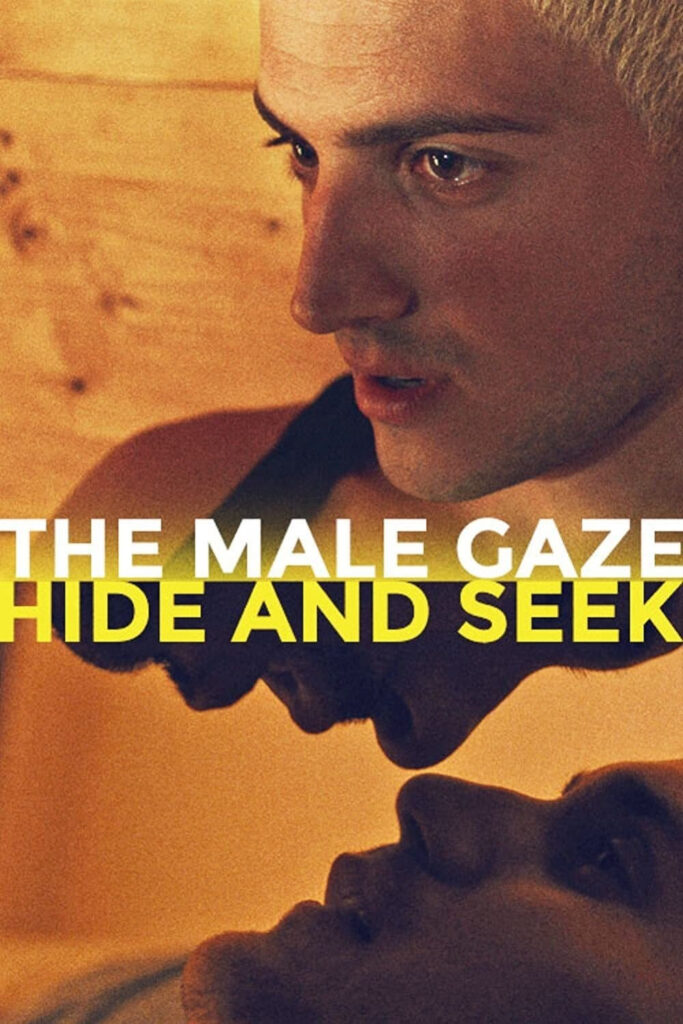
Another short collected in “The Male Gaze: Hide and Seek”, This was difficult for me to watch. I suffer from disordered eating myself, though it’s very different from what Dominik experiences – it was close enough that it hurt me. While too brief to really sink its claws in, I appreciated that this was a story with a lot to say about various aspects of life, and I could relate to much of it. I also appreciated Dominik’s relationship with his mother (Judita Hansman).
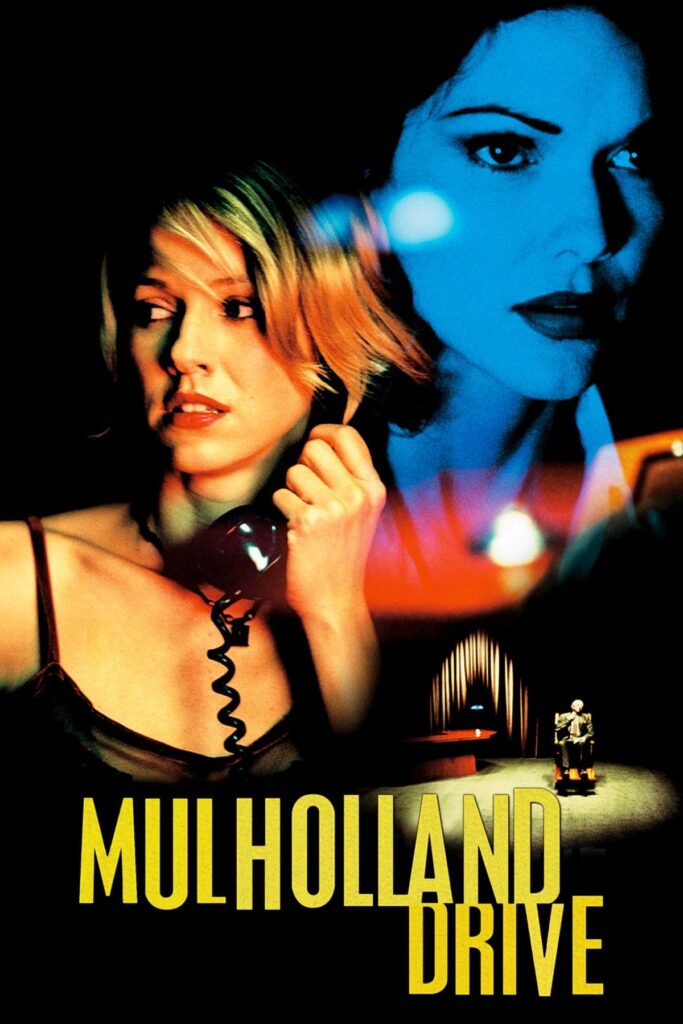
2024 Entry #010 01-06-24 “Mulholland Drive” (often stylized as “Mulholland Dr.”) is a 2001 surrealist mystery film written and directed by David Lynch (“Dune”, “Wild at Heart”, “Twin Peaks”, “Twin Peaks: Fire Walk With Me”). The film stars Naomi Watts (“J. Edgar”, “Feud: Capote vs. The Swans”), Laura Harring (“Gossip Girl”, “Law and Order: Special Victims Unit”), Justin Theroux (“I Shot Andy Warhol”, “Ally McBeal”, “Sex and the City”, “American Psycho”, “The Broken Hearts Club: A Romantic Comedy”, “Six Feet Under”, “The Sleepy Time Gal”, Mark Pellegrino (“Capote”) and Robert Forster (“Desperate Housewives”) and was the last feature film to star veteran Hollywood actress Ann Miller.
The film seemingly tells the story of an aspiring actress named Betty Elms (Watts), newly arrived in Los Angeles, who meets and befriends an amnesiac woman (Harring) recovering from a car accident and the two become lovers. The story follows several other vignettes and characters, including a Hollywood film director (Theroux). In the final act there is a jarring change of perspectives in which many of the roles we’ve been following are altered, and the audience is left to decide for themselves what actually happened. Despite this unconventional twist, “Mulholland Drive” is often regarded as one of Lynch’s finest works and as one of the greatest films of all time. It was ranked 8th in the 2022 Sight & Sound critics’ poll of the best films ever made and topped a 2016 BBC poll of the best films since 2000.
It might surprise some (and disappoint others) that I had never seen this film before watching it yesterday. Despite loving the original “Twin Peaks” series, the prequel film “Twin Peaks: Fire Walk With Me” and Lynch’s version of “Dune”, I generally don’t think of myself as a big David Lynch fan. I saw “Lost Highway” in theaters and fell asleep, but I hated what I did see and I’ve never been tempted to revisit it.
Having said that, I found this piece to be quite moving at times, disquieting at others. In the beginning, following the opening credits, I disliked the film’s tone, which was epitomized in Naomi Watts and her performance. However, the change in perspectives (among others things) changed my response as well. I didn’t write this review right away because I wanted to spend some time with my thoughts on the film, and I’m convinced (like many others) that the final section of the film is the true tale, while everything after the opening credits up to that point is a kind of fantasy or self deception, which circles back around at the end of the film. It’s complicated, clearly. I can see why so many people both love and hate it. I think I love it. I may need to watch it again at some point. In retrospect, this feels like a masterpiece, but while I was watching it, I didn’t feel that way at all – which itself is fascinating.
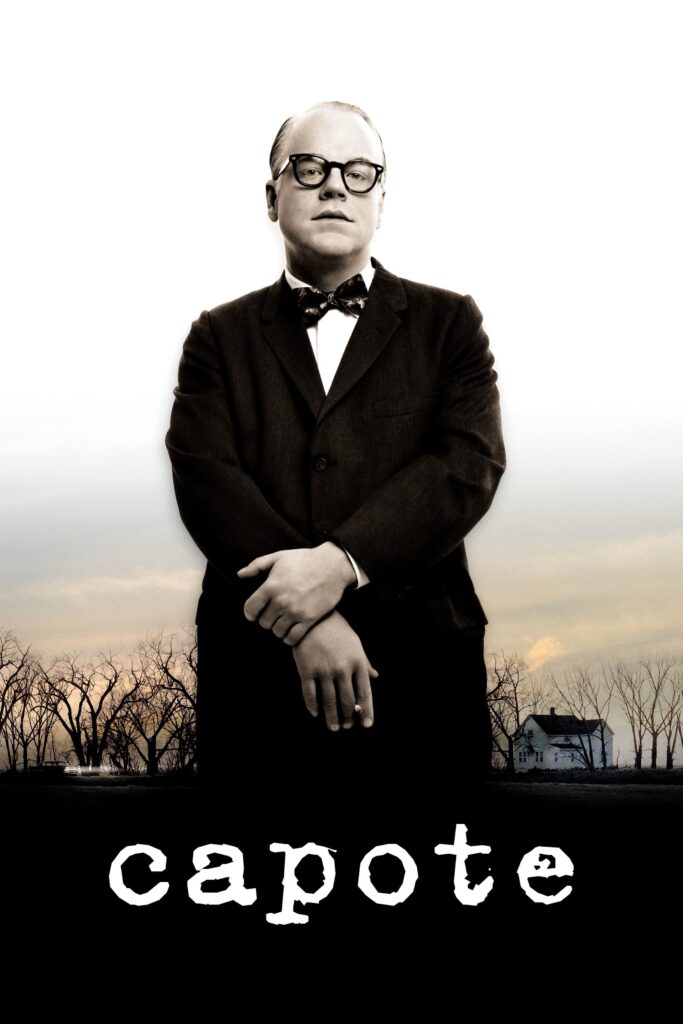
2024 Entry #009 01-04-24 “Capote” is a 2005 biographical drama film about gay American novelist Truman Capote directed by Bennett Miller, from a screenplay by Dan Futterman (“The Birdcage”, “Sex and the City”, “Urbania”, “Will & Grace”, “Political Animals”). The film stars Philip Seymour Hoffman (“Boogie Nights”, “Flawless”, “The Talented Mr. Ripley”), Catherine Keener (“Thelma & Louise”, “Being John Malkovich”, “Adaptation”, “Modern Love”), Clifton Collins Jr. (“Light It Up”, “The Rules of Attraction”, “American Girl”, “Scott Pilgrim vs. The World”, “Red, White & Royal Blue”), Chris Cooper (“This Boy’s Life”, “American Beauty”, “Adaptation”) & Bob Balaban (“Midnight Cowboy”, “Three to Tango”, “Howl”).
The film primarily follows the events during the writing of Capote’s 1965 nonfiction book In Cold Blood. The film was based on Gerald Clarke’s 1988 biography Capote. It was released on September 30, 2005, coinciding with what would’ve been Capote’s 81st birthday.
The film was successful at the box office, was well reviewed and the film was nominated for 5 Academy Awards including Best Picture, Best Director for Miller, Best Supporting Actress for Catherine Keener, and Best Adapted Screenplay, with Hoffman winning the Academy Award for Best Actor.
In truth, I’ve avoided this film for nearly 20 years. I was aware that the central character was famously gay, and that at least one other gay man was portrayed (Truman Capote’s partner, Jack Dunphy) and I now know that there are others mentioned (including James Baldwin), but I also knew that while the film centered on a homosexual character, that it was essentially sexless and I found this problematic. While films featuring queer sexuality were being celebrated, it seemed that only the most non-threatening portrayals were award worthy at that particular time – and this film’s Oscar win in the same year in which “Brokeback Mountain” was denied (while meeting every standard which historically had led to a Best Picture win) hurt me. Indeed, I’ve never watched the Oscars ever again, despite loving them up to that point. It still angers me. But here we are.
Although I’d never seen this before, I was familiar with a great deal of the subject matter, having seen the 2006 film about the same topic (“Infamous”) also having read a novel by Kim Powers called “Capote in Kansas: A Ghost Story”. It was fascinating seeing how “Infamous” and “Capote” chose to tackle the same events with very different results. Of the two films I’d say that “Capote” hit me harder, and the final act of the film was tortuous (in a complimentary way), but that I was more entertained by “Infamous”, it was more fun.
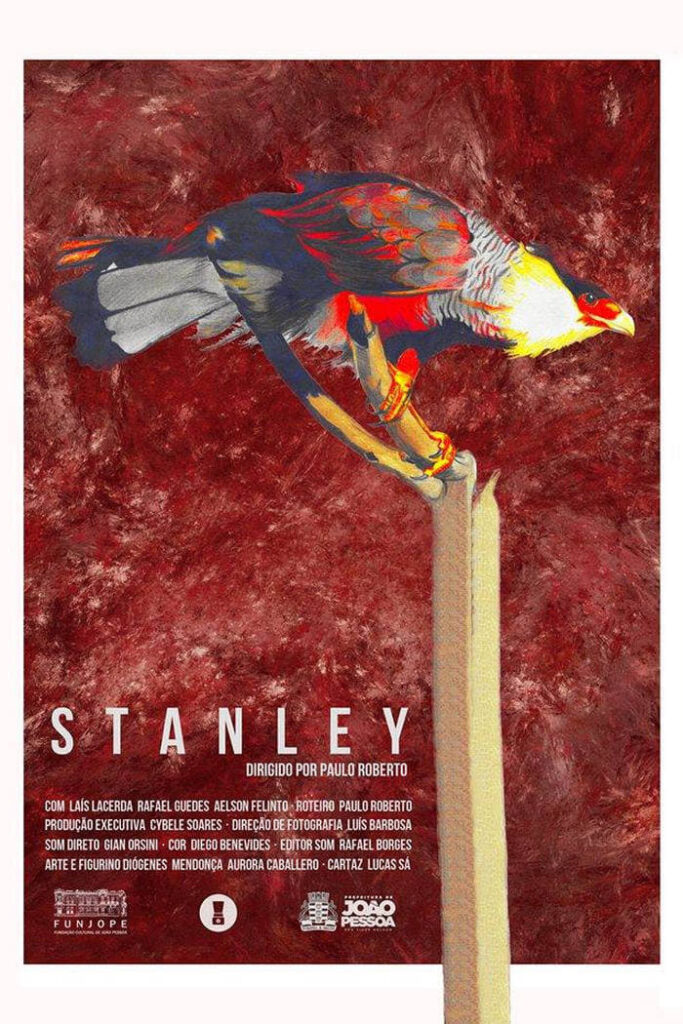
2024 Entry #008 01-04-24 “Stanley” is an 18 minute 2017 Brazilian short drama film which was written and directed by Paulo Roberto.
The story follows a young man who kills birds for his family to eat, plays David Bowie’s “The Man Who Sold the World” on his guitar, then goes to a club where he and another young man dance with a woman. After leaving the bar they share a motorcycle ride to a lake where birds feed. The young woman sleeps, one of the guys swims and later the other guys fucks him. They talk afterward and you learn they went to the same church when they were little though only one of them remembers this. The one who remembers asks the other about his brother Stanley, whom he was friends with when they were young and it is revealed that Stanley killed himself. And that’s that.
This was okay. I actually thought I would like this one more than I did as I tend to love Brazilian films – I love the sound of Portuguese, and I had read an excerpt of dialogue from it which served as a description of the short, which I liked a lot. Sometimes a short feels wholly satisfying on its own with no need for more. Sometimes a short is great but you want more and would welcome a feature length version. And then there are ones like this, which feel like a fragment of something larger, which are not horrible, but are also not completely satisfying on their own. It’s not bad; there are several elements that work very well, and yet none of it feels like it matters in the end.
This short was in the same collection as the previous two. I’ll likely watch the rest of them soon, but not tonight.