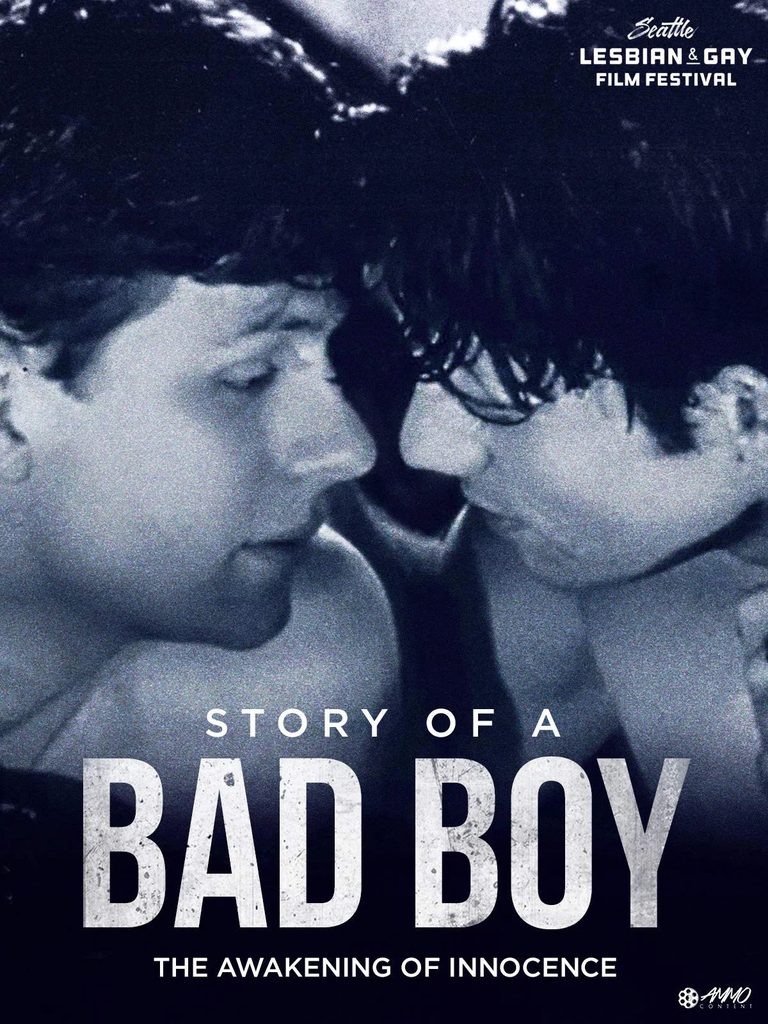
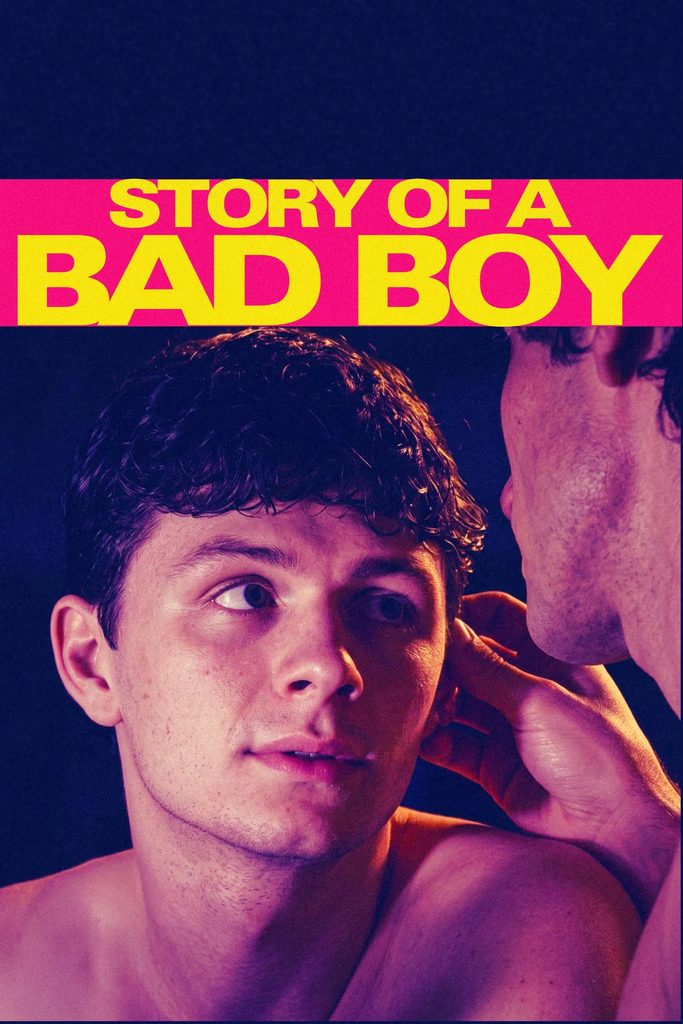
Story of a Bad Boy (1999)

“Story of a Bad Boy” is a 1999 American independent coming-of-age coming-out LGBTQ+ romantic dramedy film written and directed by award winning American playwright Tom Donaghy (“The Dad Shuttle”). The film stars Jeremy Hollingworth, Christian Camargo (“Penny Dreadful”, “The Picture of Dorian Gray”), Julie Kavner (“The Simpsons”), Stephen Lang (“Last Exit to Brooklyn”, “Tombstone”, “Save Me”), Lauren Ward (“In & Out”, “Law & Order: Special Victims Unit”, “Torchwood”), Cherelle Cargill (“Law & Order: Special Victims Unit”, “Sex and the City”, “Jessica Jones”), Bill Velin (“Wonder Boys”), Anthony Gestone (“Just One Time”) & Anil Kumar (“Law & Order: Special Victims Unit”, “Oz”, “Six Feet Under”, “Nip/Tuck”, “Revenge”, “Shameless”). It premiered at the Frameline Film Festival in 1999 but didn’t receive a commercial release until 2001, when it arrived in Germany.

I’d previously seen Tom Donaghy’s “The Dad Shuttle” several times, but I was unaware of this piece by the same creator. The story follows Pauley (Jeremy Hollingworth), who continuously follows his erotic interests, which change constantly throughout the film, giving the movie an indecisive, random quality that was unusual and charming, if not wholly satisfying. I couldn’t remember purchasing this film, or that it even existed when I stumbled upon it while looking for something in my collection to entertain me for an afternoon, which it did. Some of the performances are quite good, including Hollingworth, which is why I was a bit disappointed to learn that he didn’t appear in much beyond this movie. Pauley has a girlfriend, Lauren Ward’s as Ludmilla, whom he kisses a lot. But he also pursues his student teacher Noel (Christian Camargo) jerks off with another friend and kisses a nun. Pauley is daring, reckless, young and nearly fearless…which may or may not lead to a tragic ending, which is left to the audience’s interpretation, as it should be. One of the plot points concerns a tacky musical version of The Scarlet Letter, titled “A”. This probably amused me more than most, as days after moving to New York in September of 2012, I saw a musical version of The Scarlet Letter titles “A is For Adultery”, where I met several people who I remain friends with to this day.

The final moments of the film, which again, are open to interpretation, haunted me a bit, and left me feeling a lot. But given the open nature of it all, your mileage may vary, and likely will. I liked it. This isn’t a great movie but it’s fun and it feels like an exciting find as again, I’d never heard of it before (that I can remember) and this is just what I was looking for today.
The Trip (2002)

“The Trip” is a 2002 American romantic drama film directed by Miles Swain, which follows the love affair between a young gay rights activist and an initially closeted conservative. Openly gay actor Larry Sullivan plays the conservative, Alan Oakley, while Steve Braun plays the proud Tommy Ballenger. The film features trans actress Alexis Arquette, former Bond Girl, Jill St. John and a groovy soundtrack (featuring America, T Rex, Missing Persons, Ready for the World, Pointer Sisters and Bruce Springsteen), but unfortunately the tone of the film is extremely uneven; it just doesn’t seem to know what it wants to be. Tellingly, the film’s score (which is occasionally effective) contradicts what is happening on screen several times, which is jarring. Also, there are some really horrific wigs.

When I’m watching the movie, I enjoy most of it, but it’s always a bit frustrating. Having said that, I’ve now seen the movie 4 times so there must be something there. I initially watched it when it was a new release at the video store where I worked (between 2002 & 2008). In late 2011 or early 2012 I found myself haunted by something I remembered of the film and I rewatched it. Then I watched it again on March 28, 2020 – again, during the NYC Covid-19 lockdowns. It was the second queer film I watched during that time and then I watched over 800 more. But I didn’t write anything up about it then. So here I am again in October of 2026. Maybe that means I’ll watch it again in a few years?

The movie covers a span of about 11 years, between 1973 & 1984, which isn’t wholly believable, but is often fun, and then brutally horrifying, before a tacked on happy-ish ending, that doesn’t feel like it belongs with what came just before. If it sounds like I hate this movie, that’s not accurate. This is very close to being something good, or at least something better, but it’s not. And that’s a shame, because there’s a lot of potential here. And maybe that’s why I keep revisiting it.

Also, despite the movie only featuring the song for maybe 30 seconds, I can’t here the song “A Horse with No Name” by America, without thinking of this movie.

Geography Club (2013)

I first watched this film on March 18, 2020, during the NYC lockdown of the Covid-19 pandemic. It became the first of a larger project, where I ended up watching over 800 queer films, with 340 of them in 2020 alone! If I was awake I was watching a movie. It wasn’t healthy, but it did keep me sane. And it was fun. I was entertained and engaged. But, when I started, I just wanted to watch a movie and this was what I watched.

I decided the other day that I should revisit some of these titles that I never really reviewed, and give them some more attention. I remembered that this was the first I’d watched and that I hadn’t loved it, but I couldn’t remember why. So here we are.

“Geography Club” is a 2013 American comedy drama film directed by Gary Entin from a screenplay by Edmund Entin, based on the 2003 novel of the same name by openly gay American author Brent Hartinger. And yes, I know that some people object to the term “openly gay”, but for me, it’s still a sign of the progress we’ve made, and is something to note. YMMV. The novel has at least 6 sequels.

The film centers on Russell Middlebrook (Cameron Deane Stewart), who falls for his high school’s football quarterback, Kevin Land (Justin Deeley) which leads him to the school’s Geography Club, which is actually a group of queer kids, leading to the creation of a Gay Straight Alliance. Sounds good right? And it features Alex Newell and reliable ally Scott Bakula…so why don’t I like it? Well, I wondered the same thing as I was watching. Not all of the acting is great, but there are movies with worse acting that I adore, so that’s not it. What I can say is that my problems with the movie have less to do what is there, than what is not. The movie feels rushed, and like either a lot was cut from it, or like maybe they ran out of money and just never filmed everything they needed? Sometimes the plot just jumps forward in a way that seems unjustified, nonsensical and / or totally random. Less annoying, but still problematic, there are some humor elements that just don’t work. Whole sections that I’m aware the movie wants me to laugh, but they just aren’t funny. And I wish there was more to discuss, but there isn’t. And if this was the only film to cover this kind of story, that would be fine, but it’s not, and so it just feels tired and, incomplete. That’s the word I’d use for the movie if I was asked. It’s an incomplete experience, despite watching the entire film twice.

Before it was a movie, the novel was adapted as a play. I wonder if that’s better? Speaking of which, maybe the novel is better? The novel has at least 6 sequels and assorted spin-offs, so even if the movie is exactly like the book, you get more time with the main characters for sure. Watching the movie I wasn’t tempted to read the book, which isn’t like me. Maybe I will someday? I’m just not sure it would be worth my time. But I’m also probably not the target audience either…because I’m old! lol


Claire of the Moon (1992)

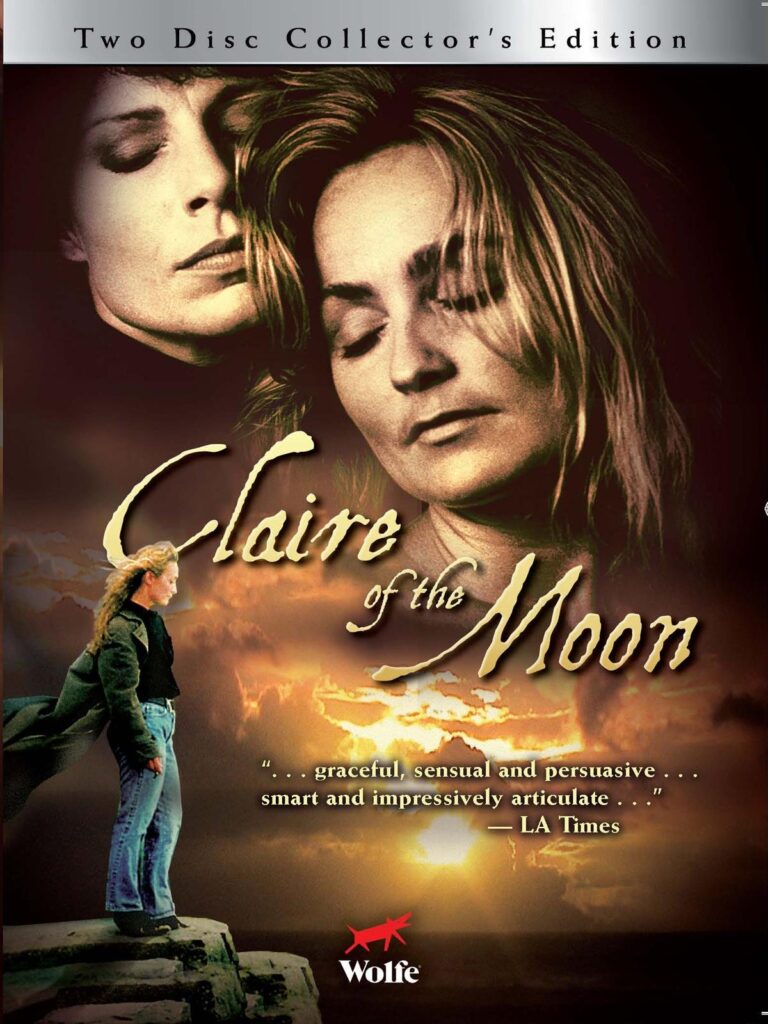
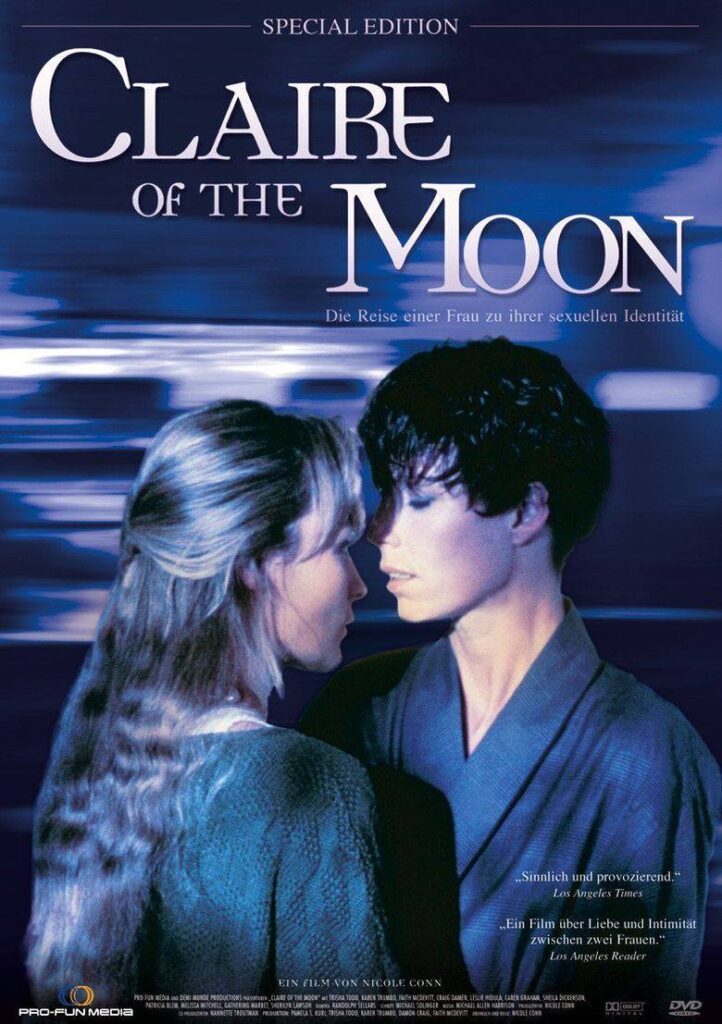
I first saw this movie on VHS in 1994 with my friend Jen Beam. She showed me 3 or 4 queer films that each left a lasting impression on me, and that may in part be why I love this movie as much as I do. It’s not great, and there are bits of it that are horrible, but it means well, and there are moments that really shine. The film score (by Michael Allen Harrison) is often stunning, just as much of the other music in the film is either bad or relatively forgettable. The performances are often more like caricatures, but for some reason I find this charming instead of annoying, and I’ve watched it 5 or 6 times, at least. I last watched this as part of my survival in NYC Covid-19 lockdown on April 21, 2020, but I barely wrote anything about it because it was one of the earlier entries before I knew that I was going to be watching and eventually reviewing over 800 LGBTQ+ inclusive movies from my collection. So, I’ll try to be better about that this time.

“Claire of the Moon” is a 1992 lesbian-themed erotic drama film directed by openly lesbian filmmaker Nicole Conn (“Elena Undone”, “A Perfect Ending”, “More Beautiful for Having Been Broken”) and starring Trisha Todd as Claire Jabrowski, a relatively famous published and seemingly heterosexual author, who decides to attend a retreat for all-female writers. While at the retreat she is forced to cohabitate with Dr. Noel Benedict (Karen Trumbo), an openly lesbian published author of a controversial book called The Naked Truth. The two live on opposite schedules but come to terms with a growing respect a rapport. The film centers on their budding relationship, but features the other women in supporting roles.

While the movie plays as a lesbian romance in an era that was nearly devoid of such films, the film also attempts to explore communication via Noel’s current work in exploring this topic through the subject of sex, theorizing that men and women speak wholly different languages, making it impossible for them to find true intimacy – while suggesting this is only possible via lesbian relationships. There are a lot of generalizations, but the film points that out as well, which makes the impassioned arguments a little hard to take seriously. But there are kernels of truth here and there which I wish had been expanded on more fully. At one point, while explaining her theory to her friends, she admits that sexual roles are complicated and possibly intrinsic, while she also struggles to define them and honestly explore them. She also discusses the vulnerability that partners must feel when exploring things that excite them as they risk rejection from those closest to them. There are no answers here and the discussions are murky enough to hide whatever the characters may actually be saying, but the discussion itself is an interesting topic that could have been explored in more depth. I also think it would have been fascinating for the other characters to have provided insight but they all seem willing to follow Noel on the matter – with the exception of Claire, but her objections seem to imply that she is wrong to disagree, which is fine, if a little simplistic. I should also say that I don’t mind everyone following Noel as I love the performance by Karen Trumbo, who sells the character’s obsession with tragic denial, even if I find the movie to be too in love with her backstory as a therapist in love with a client, which is a serious breach in ethics. But perhaps that was the point? I would have loved to have heard the filmmakers discuss this but I’m aware that I’m not the target audience and that I might take the film far more seriously than it needs to be. lol

I’ve always wanted to read the novel, but I’ve never owned a copy and it’s very difficult to find. I wonder if I might not get it through a library? Hmmm.

Caravaggio (1986)

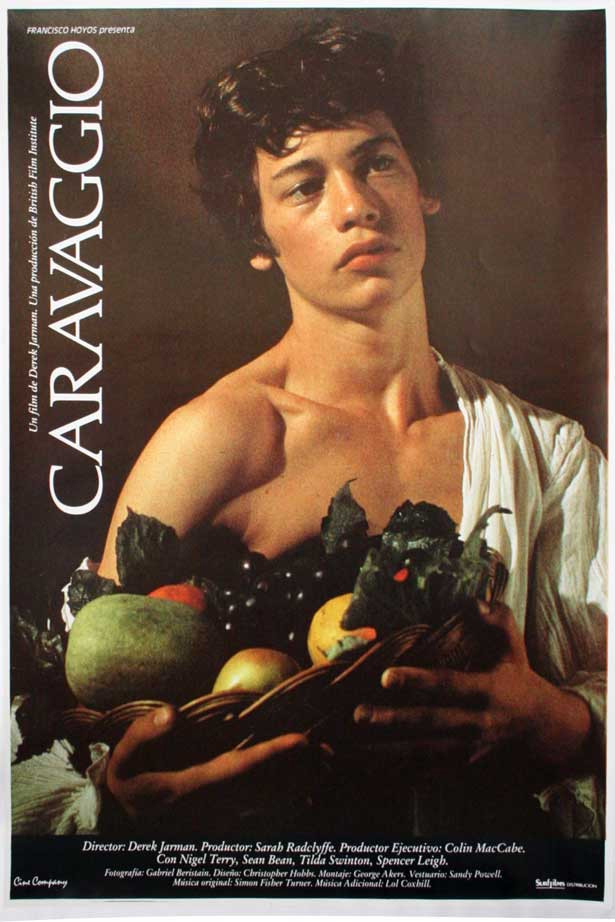
“Caravaggio” is a 1986 British historical drama film directed by openly gay filmmaker Derek Jarman (“Sebastiane”, “The Angelic Conversation”, “Edward II”), who died of AIDS in 1994. The film is a fictionalised retelling of the life of Baroque painter Michelangelo Merisi da Caravaggio.

I first saw this film around 2005, I think? I only saw it the one time; a rental from the Hollywood Video where I worked. I never owned it, but it was a film that I had always wanted to see and I had great affection for “Edward II”, which had shocked and then haunted me for years. I have always intended to revisit “Caravaggio” and now, I have. There were many things in the film which I had forgotten, like the inclusion of modern elements, similar to “Edward II”, and aside from Sean Bean and Tilda Swinton, the world famous cast, including Michael Gough and Robbie Coltrane (“Mona Lisa”, “The Fruit Machine”). Indeed, the bits I most remembered was a sort of 3 way love affair between Nigel Terry’s Caravaggio, Sean Bean’s Ranuccio & Tilda Swinton’s Lena – though these memories were both vague and powerful. I had totally forgotten the essential murders of the plot or Spencer Leigh’s heartbreaking Jerusaleme.

But is it any good? Yes, I think it is. Probably more so if one was alive when it was released and knows what it must have taken to make this film, which seems like a brilliant and noble act of bravery to me. But that’s the thing: I admire the filmmaker so much that I find it difficult to judge his work. Watch it for yourself and you tell me.

Eighteen (2005)

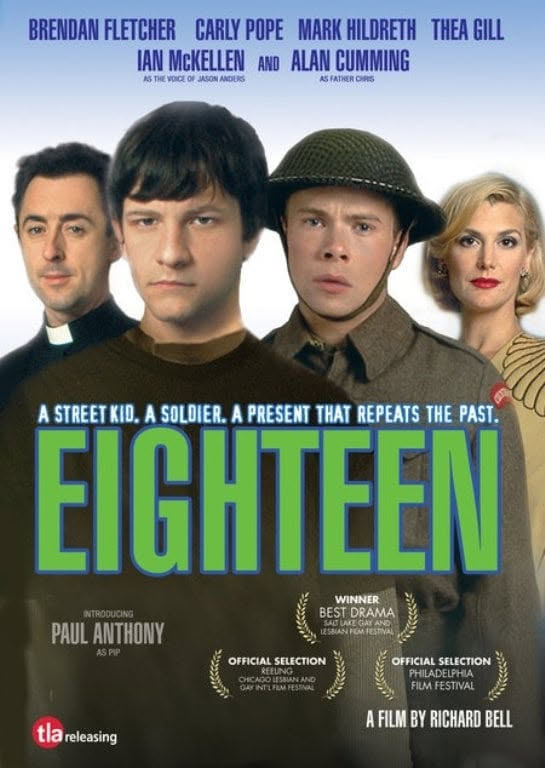
Eighteen is a 2005 Canadian drama film written and directed by openly gay Vancouver filmmaker Richard Bell (“Two Brothers” / “Two Brothers and Two Others”) which centers on Pip Anders (Paul Anthony) & his grandfather, Private Jason Anders (Brendan Fletcher) as the gift of a cassette tape allows Pip to experience his grandfather’s eighteenth birthday as Pip experiences his own. Both of these central characters are straight but both storylines feature dignified respectful relationships with other men, one of whom, Clark (Clarence Sponagle), is a gay hustler.

At the time I first saw this, I mostly knew Brendan Fletcher from a series of queer inclusive films, including: “The Five Senses” (1999), “Rollercoaster” (1999), “Anatomy of a Hate Crime” (2001), “Touch” (2022) & “Everyone (2004)”, which is what caught my eye at the video store. When I picked it up I also saw that the film featured Thea Gill (from the second iteration of “Queer as Folk”), with openly queer legends Alan Cumming and Ian McKellen. I rented it and enjoyed it. I bought it for my collection, which I finally revisited on November 7, 2024.

However, I wasn’t feeling well at the time and I didn’t make a lot of notes or write anything resembling a review. What I remember is that I enjoyed this just as much as I did the first time, which was a lot. It is a very quirky, very emotional, very interesting film. And someday I’ll have to give it another go so I write something more substantial than this.

Life as a House (2001)

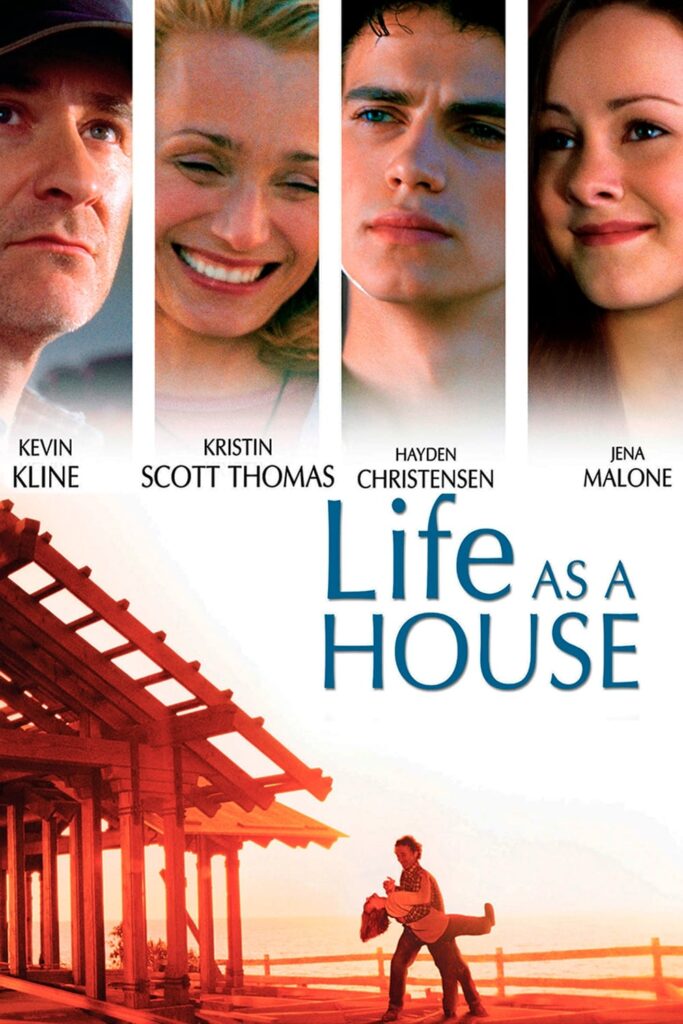
2024 Entry #59 09-05-24 “Life as a House” is a 2001 American drama film produced and directed by Irwin Winkler (“De-Lovely”, “The Wolf of Wall Street”) based on a screenplay by Mark Andrus (“As Good as it Gets”, “Otherhood”). The story focuses on a man who is anxious to repair his relationship with his ex-wife and teenage son after he is diagnosed with terminal cancer.

I’ve always enjoyed this movie, though its attitudes towards body jewelry annoys me as I have a labret piercing and I love it. lol The film is great though, emotionally, and it takes several unexpected turns. It’s not perfect, but it’s very good.

As for the queer content, early in the film, Hayden Christensen’s character is led into the world of sex workers by his frenemy and would-be-pimp, a seemingly straight guy played by Ian Somerhalder (“Rules of Attraction”, “Law and Order: SVU”) – who initiates an encounter between Christensen’s character and a john (played by Sam Robards from “American Beauty”, “Bounce”) – which is interrupted by the police – which becomes a key plot element later in the film. It’s pretty tenuous but it is there.

The Adjuster (1991)

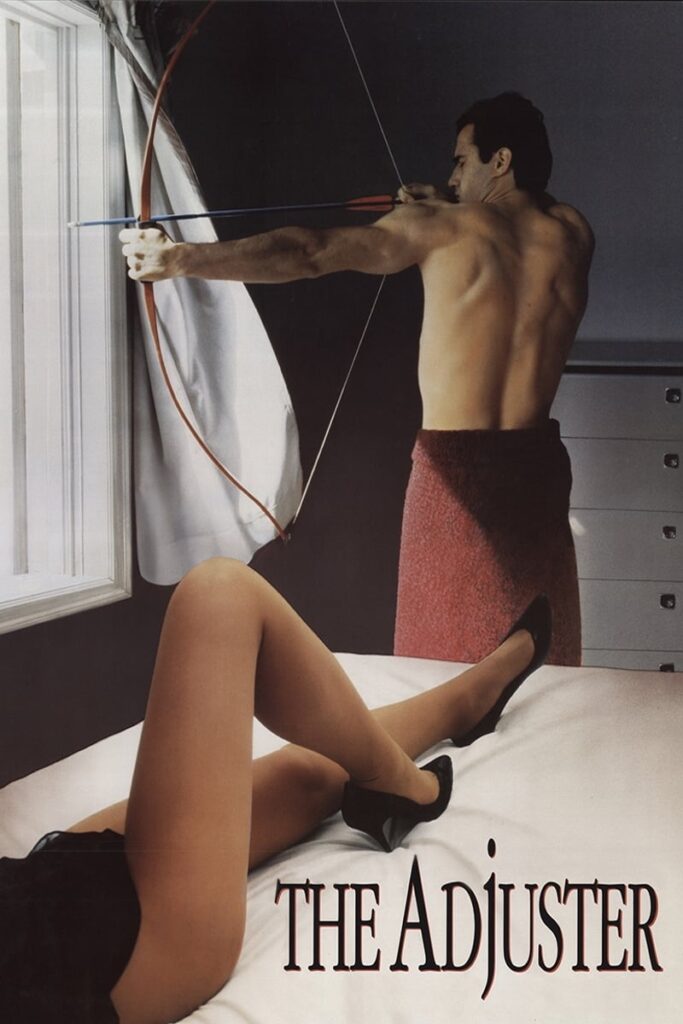
2024 Entry #58 08-20-24 “The Adjuster” is a 1991 Canadian drama film directed by Atom Egoyan (“Speaking Parts”, “Exotica”, “Ararat”, “Where the Truth Lies”, “Chloe”); this was his fourth feature film and the first to achieve international acclaim. The film stars Elias Koteas (“Chain of Desire”, “Exotica”, “Crash”, “Apt Pupil”, “Ararat”) as Noah Render, the insurance adjuster of the title who sleeps with his clients, men and women alike.

A very odd film. I’d been meaning to watch this one for ages and it felt like I’d found another David Lynch film. Elias Koteas is as hot as ever but how much you’re able to enjoy this will likely be based on your expectations.

Hellraiser: Deader (2005)

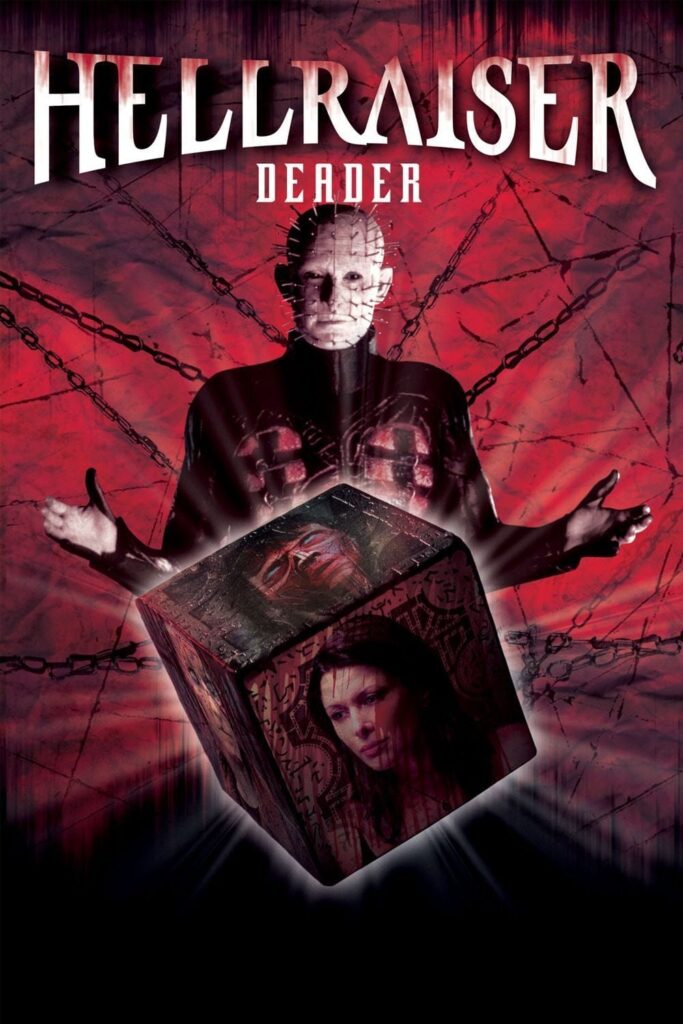
2024 Entry #57 08-13-24 “Hellraiser: Deader” is a low budget 2005 American supernatural horror film; it was the seventh installment released in the Hellraiser series. Directed by Rick Bota, the original script was written by Neal Marshall Stevens. As with “Hellraiser: Hellseeker” (Hellraiser VI) it began as an unrelated spec script, which was subsequently rewritten (by Tim Day) as a Hellraiser film. Like “Hellraiser: Inferno” (Hellraiser V), series gay creator Clive Barker did not have any involvement in the production.

This movie barely rates a mention, but the point of me reviewing LGBTQ+ inclusive material stems from a childhood in which there was almost no representation – so childhood me (who collected horror movies, many of them low budget shlock like this one, and who was a fan of gay author Clive Barker, without knowing he was gay) would have enjoyed this movie. It’s not a happy movie and it’s not necessarily a good movie, but considering some of the Hellraiser sequels that have been spit out over the years, this one isn’t that bad. It also has several interesting concepts within it, which never quite gel, but raise some interesting questions, just the same. The film features a graphic topless girl on girl makeout scene in a bizarre, sex positive side plot – which may or may not be everyone’s cup of tea. And then there’s the human villain Winter, as played by Paul Rhys (“Food of Love”, “Saltburn”), who is revealed to be a descendant of Phillip LeMarchand, a French toymaker who was revealed to have been commissioned to make the Lament Configuration, the puzzle box which summons the Cenobites. His character is somehow able to bring people back to life with a kiss, which he demonstrates with both a woman and then a man. Some equal opportunity homoeroticism. Also, there’s some blink and you’ll miss it full frontal male nudity. So again, I’m pretty sure that little boy me would have loved this movie. But as an adult, it’s well below average. But horror fans might want to give it a go.

The Craft: Legacy (2020)

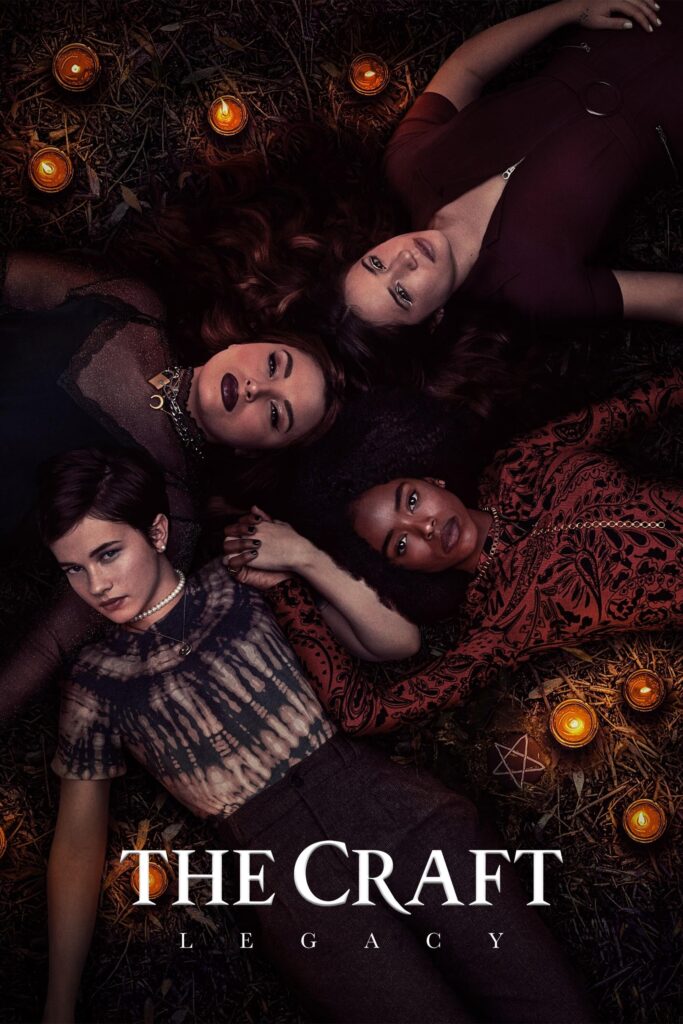
2024 Entry #55 07-21-24 “The Craft: Legacy” is a 2020 American supernatural horror film, written and directed by Zoe Lister-Jones, who is openly queer. A legacy sequel to 1996’s “The Craft”, the film stars Cailee Spaeny, Gideon Adlon (“When We Rise”), Lovie Simone (“Orange is the New Black”), and openly trans Zoey Luna as four teenage girls who practice witchcraft as a coven. Additional cast members include Nicholas Galitzine (“Handsome Devil”, “Bottoms”, “Red, White & Royal Blue”, “Mary & George”), Michelle Monaghan (“Kiss Kiss Bang Bang”), and David Duchovny (“Twin Peaks”, “Sex and the City”, “Queer Duck: The Movie”), with Fairuza Balk (from the original film) making a cameo appearance as her character, Nancy.

This was a disappointment. The first film is a guilty pleasure of mine; a cute teenybopper horror flick with enough style to get by and enough fun performances to remain entertaining long after the fact. But this sequel lacks most of what made the original worthwhile. The performances are all over the place and most of the characters are either annoying or extremely underdeveloped, often both. The movie gets points for featuring a transgender witch and a male bisexual character but the former is one of those underdeveloped characters and the latter is murdered, so was it really worth it in the end? Lead actor Cailee Spaeny comes off the best and Nicholas Galitzine is fun while he’s around, but nearly everyone else is either totally wasted or feel like they might be in an entirely different film. Fairuza Balk has more charisma in her single scene than many of the main characters.

error: Content is protected !!