Watching the news I am chilled and I’m sickened by thrall of the crisis which made its debut…
These shocking truths have filled me and quickened the call of the righteous – beleaguered and true.
Our government lacks a soul or compassion – our President lies as civil rights crumble… standing in judgment of control collapsed factions as reticent cries from the heights start to stumble.
The choices of monsters enshrined by the truthless – the respected & modest are damned by their dictums… the voices of sponsors designed to be ruthless – the elected dishonest demand us as victims…
for we pay the price –
what they say is official… when they spy and deploy bad guys to deride us… when they take civil rights they make us uncivil… then they lie to destroy and try to divide us with erroneous tools who say they are decent prejudice(d) preachers who practice a skit… felonious fools who are simply malfeasant excrement seekers who attack us with shit.
Advancement aligned with cheats for their cause… incels incited for fear they’re invisible klansmen who hide behind sheets and the cross: indicted dickheads – so (fucking) predictable.
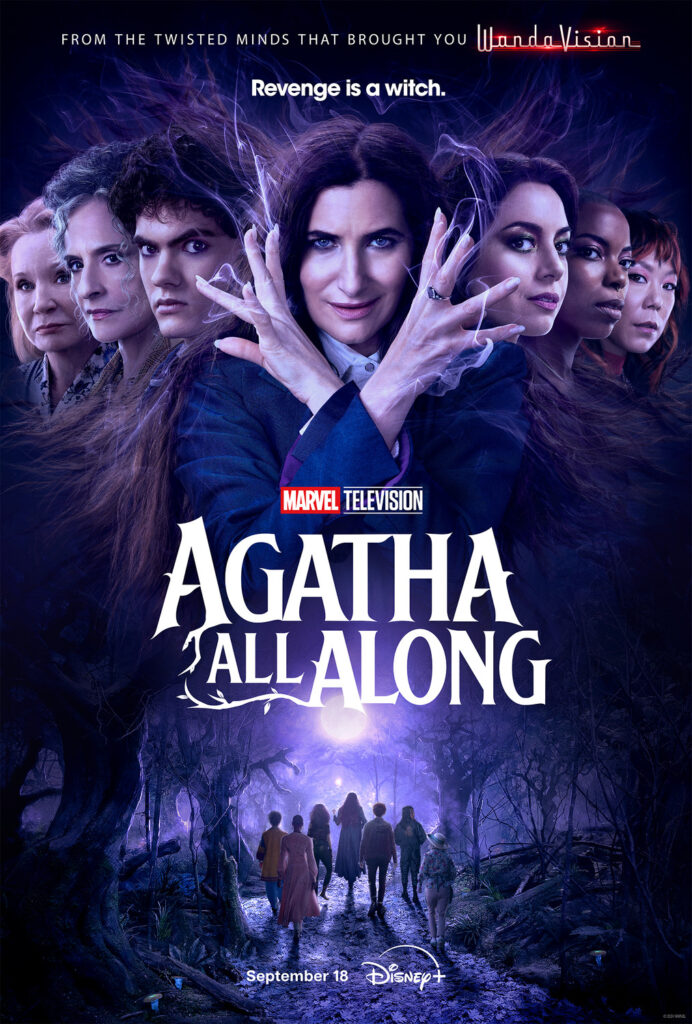
2025 Entry #60 10-30-24 “Agatha All Along” is an American television miniseries created by Jac Schaeffer for the streaming service Disney+, based on Marvel Comics featuring the character of Agatha Harkness. The series is essentially Season 2 of the 2021 Marvel miniseries, “WandaVision” (2021) and shares continuity with the Marvel Cinematic Universe. Schaeffer served as showrunner and lead director.
The series features queer talent, like Joe Locke as the mysterious “teen”, Miles Gutierrez-Riley as the teen’s loving boyfriend Eddie, and Sasheer Zamata as the bound witch, Jennifer Kale. Queer icons Patti LuPone, Aubrey Plaza & Kathryn Hahn also appear in the series, and the past relationship of the latter two as title character Agatha and the mysterious Green Witch known as Rio Vidal, is an essential element of the story. The series also confirms the queer nature of two characters who were themselves introduced in the aforementioned “WandaVision”.
This series is a delight! I loved “WandaVision” and I love most of Marvel so I’m a bit biased. I do however know people who enjoyed this who were somehow ignorant of the fact that it is a sequel or part of a larger story, but I’d recommend at least watching “WandaVision” before this series – and if possible, “Doctor Strange in the Multiverse of Madness” between them – because these 3 stories weave in and out of one another – and all of them feature queer characters. I always hoped that one of these queer characters would be introduced but I doubted they ever would! And not only has it now happened, but it happened in this impressive puzzle box of a series that genuinely surprised me with several of its twists.
I should warn people, I suppose, that the ending sets up more stories, which is pretty typical of Marvel, but these stories have a good chance at being made as this series was a big hit for Disney / Marvel! Rumors persist that this series will get a second season as it was nominated for awards outside the “limited series” categories and Disney+ has begun listing it as “Season 1”. Additionally, an alternate version of Agatha (still seemingly queer) & Vision have already returned in an episode of another series (“What If…?”) and another alternate take on Wanda is expected to appear in Marvel Zombies in October of 2025 – while the version of Vision from the parent series is also expected to return in his own spotlight show in 2026.
Highly recommended! Especially if you’re a Marvel fan!
Edit: This series has since been described the the middle part in a trilogy, made up of “WandaVision”, “Agatha All Along” & “VisionQuest”, an upcoming miniseries. Again, I’d include “Doctor Strange in the Multiverse of Madness” between ‘Wanda’ & ‘Agatha’ but otherwise this seems to make sene. The new series is expected in late 2026.
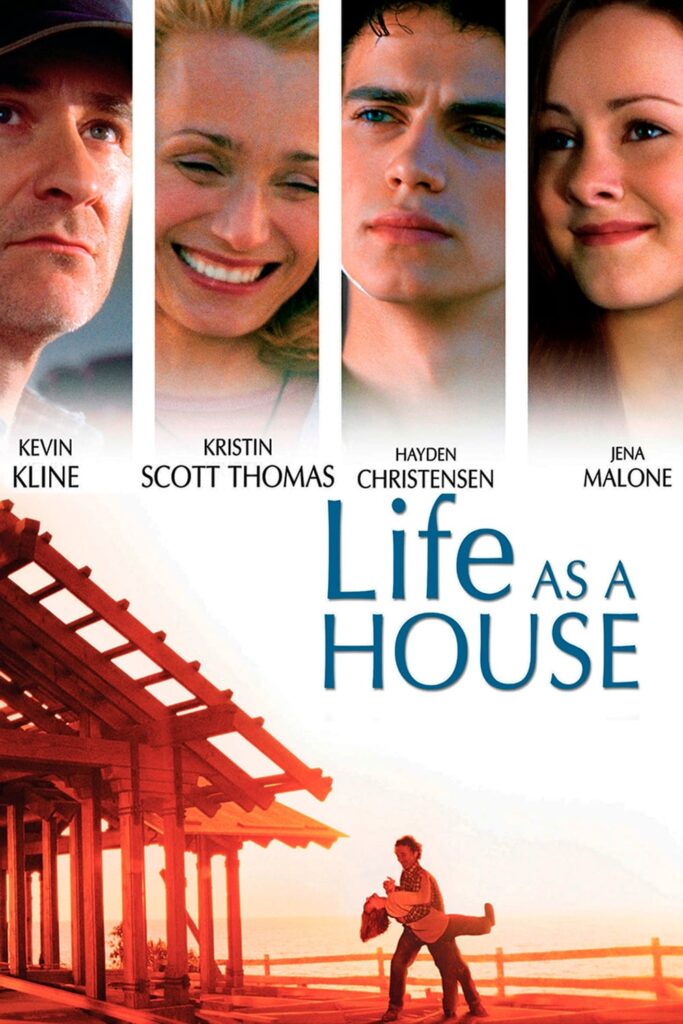
2024 Entry #59 09-05-24 “Life as a House” is a 2001 American drama film produced and directed by Irwin Winkler (“De-Lovely”, “The Wolf of Wall Street”) based on a screenplay by Mark Andrus (“As Good as it Gets”, “Otherhood”). The story focuses on a man who is anxious to repair his relationship with his ex-wife and teenage son after he is diagnosed with terminal cancer.
I’ve always enjoyed this movie, though its attitudes towards body jewelry annoys me as I have a labret piercing and I love it. lol The film is great though, emotionally, and it takes several unexpected turns. It’s not perfect, but it’s very good.
As for the queer content, early in the film, Hayden Christensen’s character is led into the world of sex workers by his frenemy and would-be-pimp, a seemingly straight guy played by Ian Somerhalder (“Rules of Attraction”, “Law and Order: SVU”) – who initiates an encounter between Christensen’s character and a john (played by Sam Robards from “American Beauty”, “Bounce”) – which is interrupted by the police – which becomes a key plot element later in the film. It’s pretty tenuous but it is there.
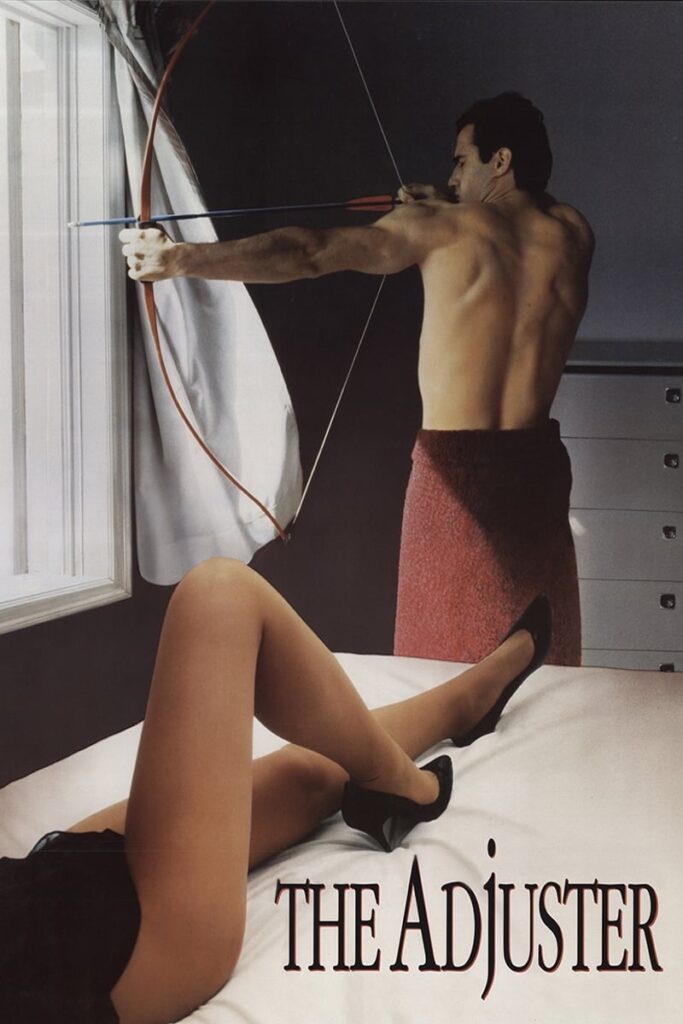
2024 Entry #58 08-20-24 “The Adjuster” is a 1991 Canadian drama film directed by Atom Egoyan (“Speaking Parts”, “Exotica”, “Ararat”, “Where the Truth Lies”, “Chloe”); this was his fourth feature film and the first to achieve international acclaim. The film stars Elias Koteas (“Chain of Desire”, “Exotica”, “Crash”, “Apt Pupil”, “Ararat”) as Noah Render, the insurance adjuster of the title who sleeps with his clients, men and women alike.
A very odd film. I’d been meaning to watch this one for ages and it felt like I’d found another David Lynch film. Elias Koteas is as hot as ever but how much you’re able to enjoy this will likely be based on your expectations.
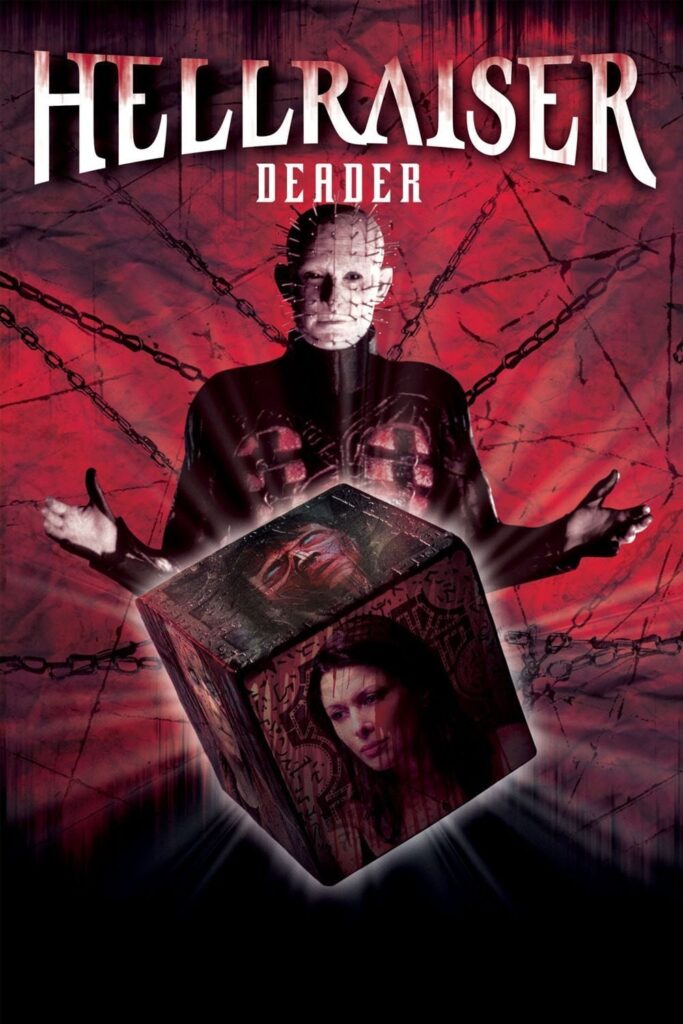
2024 Entry #57 08-13-24 “Hellraiser: Deader” is a low budget 2005 American supernatural horror film; it was the seventh installment released in the Hellraiser series. Directed by Rick Bota, the original script was written by Neal Marshall Stevens. As with “Hellraiser: Hellseeker” (Hellraiser VI) it began as an unrelated spec script, which was subsequently rewritten (by Tim Day) as a Hellraiser film. Like “Hellraiser: Inferno” (Hellraiser V), series gay creator Clive Barker did not have any involvement in the production.
This movie barely rates a mention, but the point of me reviewing LGBTQ+ inclusive material stems from a childhood in which there was almost no representation – so childhood me (who collected horror movies, many of them low budget shlock like this one, and who was a fan of gay author Clive Barker, without knowing he was gay) would have enjoyed this movie. It’s not a happy movie and it’s not necessarily a good movie, but considering some of the Hellraiser sequels that have been spit out over the years, this one isn’t that bad. It also has several interesting concepts within it, which never quite gel, but raise some interesting questions, just the same. The film features a graphic topless girl on girl makeout scene in a bizarre, sex positive side plot – which may or may not be everyone’s cup of tea. And then there’s the human villain Winter, as played by Paul Rhys (“Food of Love”, “Saltburn”), who is revealed to be a descendant of Phillip LeMarchand, a French toymaker who was revealed to have been commissioned to make the Lament Configuration, the puzzle box which summons the Cenobites. His character is somehow able to bring people back to life with a kiss, which he demonstrates with both a woman and then a man. Some equal opportunity homoeroticism. Also, there’s some blink and you’ll miss it full frontal male nudity. So again, I’m pretty sure that little boy me would have loved this movie. But as an adult, it’s well below average. But horror fans might want to give it a go.
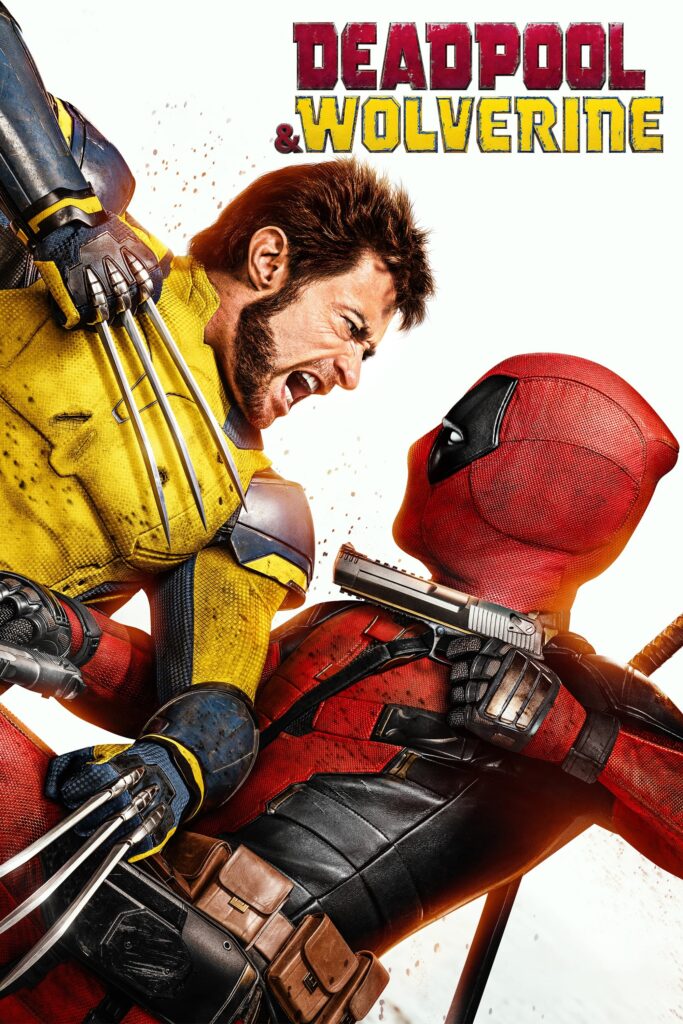
2024 Entry #56 07-25-24 “Deadpool & Wolverine” is a 2024 American superhero comedy film based on Marvel Comics which serves as both the 14th entry in Fox’s X-Men film universe and the official 34th film in the ongoing Marvel Cinematic Universe. The film was directed by Shawn Levy (“Stranger Things”, “Free Guy”) from a screenplay he wrote with Ryan Reynolds (“Buying the Cow”, “The Nines”, “Deadpool”, “Deadpool 2”), Rhett Reese, Paul Wernick, and Zeb Wells.
I’m going to avoid spoilers, including plot info here as the film is still in theaters, and I have friends who still haven’t seen the film – which is packed with surprises that I don’t want to spoil.
Having said that, Deadpool is back and he’s more openly pansexual than ever – and this time he brought lots of friends, including cameo roles for openly queer Brianna Hildebrand as Negasonic Teenage Warhead, a teenage member of the X-Men & Shioli Kutsuna as Yukio, Negasonic Teenage Warhead’s girlfriend and fellow X-Men member – both returning from previous Deadpool films. I’m sure there are other elements which I could mention, but it’s been nearly a month since I saw it and I only remember the highlights – because I didn’t write this right away. Lol
The movie is a fun action / comedy – with extreme comedy action violence and much raunchy humor. The film has been a huge success, having joined the billion dollar club and already ranking as the highest grossing rated R movie of all time.
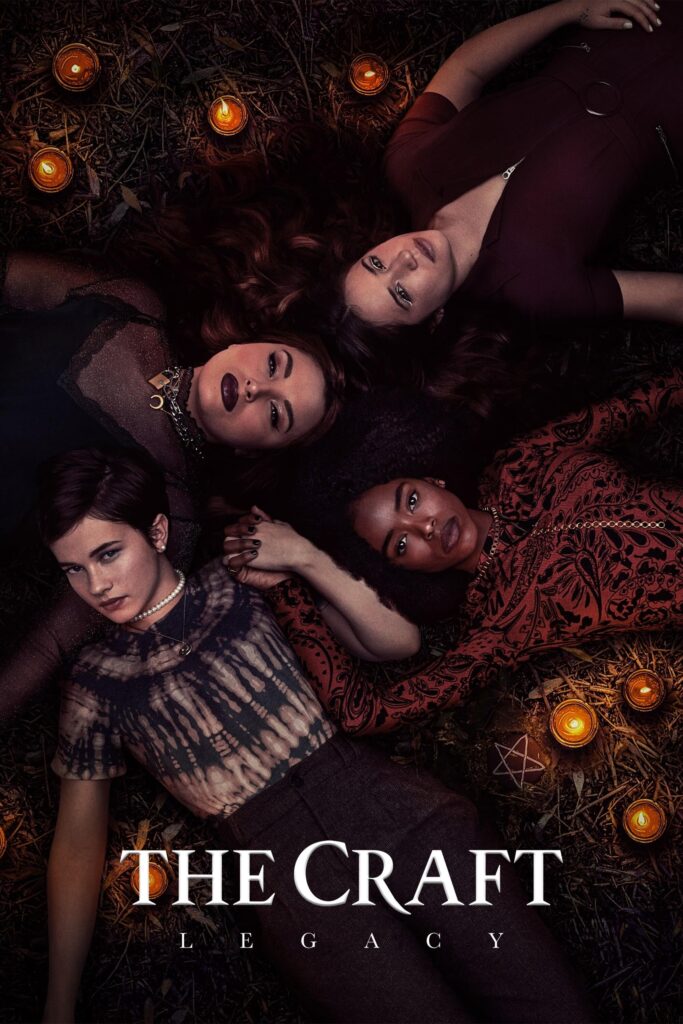
2024 Entry #55 07-21-24 “The Craft: Legacy” is a 2020 American supernatural horror film, written and directed by Zoe Lister-Jones, who is openly queer. A legacy sequel to 1996’s “The Craft”, the film stars Cailee Spaeny, Gideon Adlon (“When We Rise”), Lovie Simone (“Orange is the New Black”), and openly trans Zoey Luna as four teenage girls who practice witchcraft as a coven. Additional cast members include Nicholas Galitzine (“Handsome Devil”, “Bottoms”, “Red, White & Royal Blue”, “Mary & George”), Michelle Monaghan (“Kiss Kiss Bang Bang”), and David Duchovny (“Twin Peaks”, “Sex and the City”, “Queer Duck: The Movie”), with Fairuza Balk (from the original film) making a cameo appearance as her character, Nancy.
This was a disappointment. The first film is a guilty pleasure of mine; a cute teenybopper horror flick with enough style to get by and enough fun performances to remain entertaining long after the fact. But this sequel lacks most of what made the original worthwhile. The performances are all over the place and most of the characters are either annoying or extremely underdeveloped, often both. The movie gets points for featuring a transgender witch and a male bisexual character but the former is one of those underdeveloped characters and the latter is murdered, so was it really worth it in the end? Lead actor Cailee Spaeny comes off the best and Nicholas Galitzine is fun while he’s around, but nearly everyone else is either totally wasted or feel like they might be in an entirely different film. Fairuza Balk has more charisma in her single scene than many of the main characters.
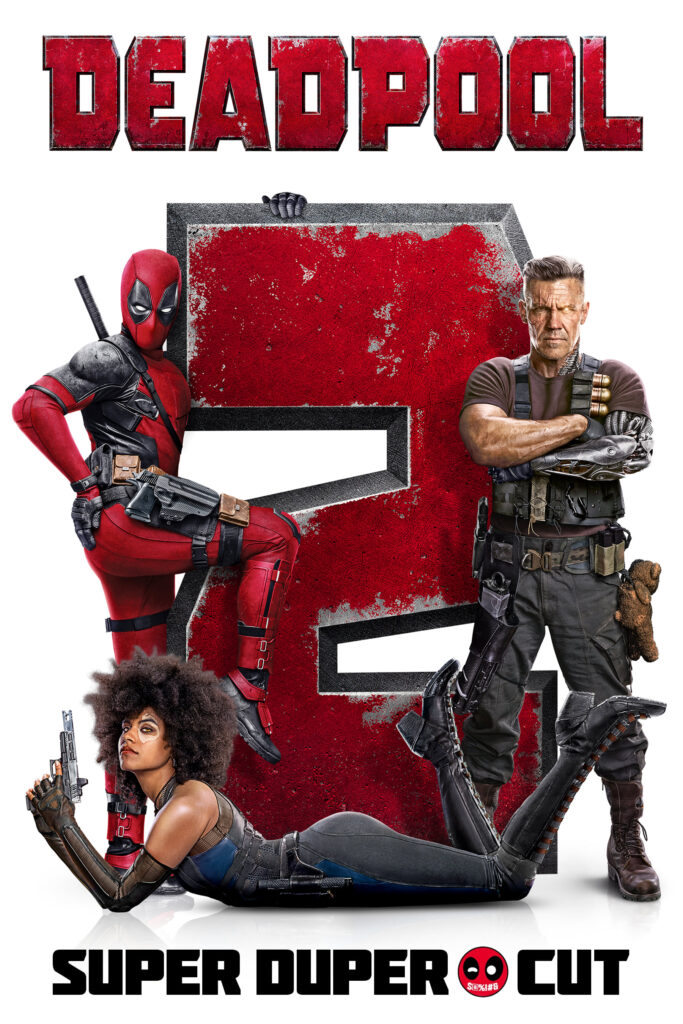
2024 Entry #54 07-21-24 “Deadpool 2” is a 2018 American superhero film based on the openly pansexual Marvel Comics character Deadpool. Distributed by 20th Century Fox, it is the sequel to “Deadpool” (2016) and, to my way of thinking, the thirteenth installment in the X-Men film series. The film was directed by David Leitch (“Atomic Blonde”) and written by Rhett Reese, Paul Wernick, and Ryan Reynolds, who all worked on the original “Deadpool” and the upcoming sequel “Deadpool & Wolverine”. Ryan Reynolds (“Buying the Cow”, “The Nines”, “Deadpool”, “Deadpool & Wolverine”) also stars in the title role alongside openly queer Brianna Hildebrand (as lesbian character Negasonic Teenage Warhead), Josh Brolin (“Milk”, “Women in Trouble”, “Avengers: Endgame”), Morena Baccarin (“Firefly”, “The Good Wife”, “Deadpool”, “Deadpool & Wolverine”), Zazie Beetz (“Black Mirror”) & T. J. Miller (“Deadpool”). In the film, Deadpool forms the X-Force to protect a young mutant from the time-traveling soldier Cable.
The Queer Factor: Wade Wilson / Deadpool is more openly pansexual in this sequel, hitting on men and women constantly. Additionally, Negasonic Teenage Warhead has a girlfriend in this film, Yukio (Shioli Kutsuna); all three of these queer characters will return in the upcoming sequel. Also, the film goes out of its way to paint the anti-mutant villains as a kind of gay conversion camp, and then the hero takes great joy in killing them.
The Sequel Factor: For what it is worth, I enjoyed the first film more than this one, but I do still enjoy this movie. They’re both entertaining and fun, hyper violent and sexual, but this film is a bit unfocused and not all of the jokes land. I have high hopes for the sequel though, which we’re planning on seeing in theaters this week.
Be sure to stick around through the credits for some essential information.