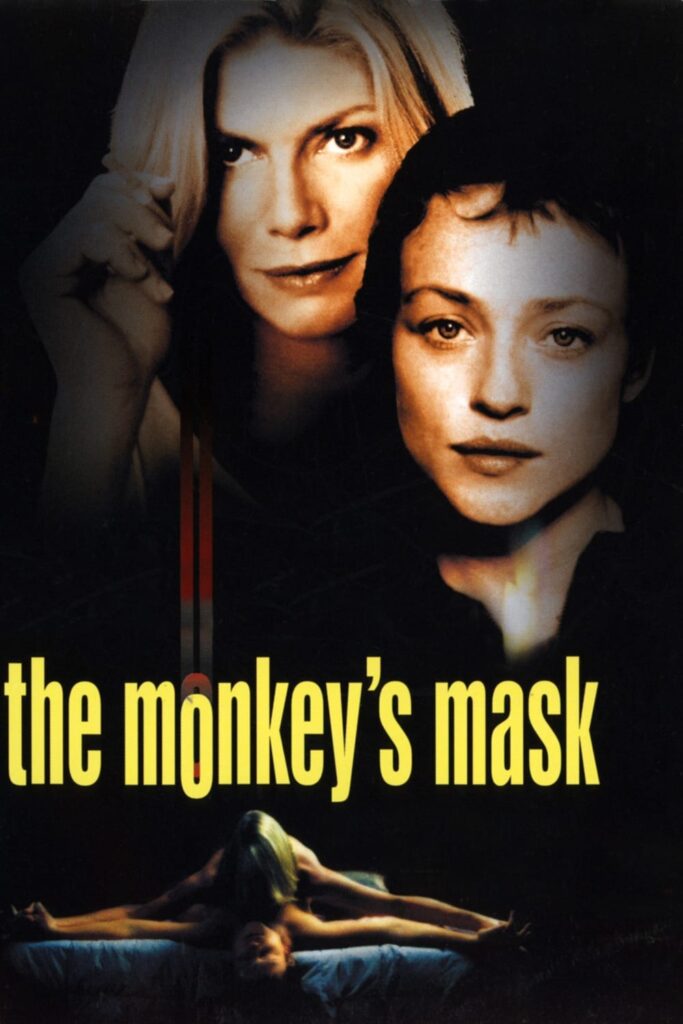
2024 Entry #41 04-13-24 “The Monkey’s Mask” is an international co-production 2000 thriller film directed by Samantha Lang based on the 1994 verse novel of the same name by celebrated Australian lesbian poet Dorothy Porter. It stars Susie Porter and out lesbian actress Kelly McGillis. Porter plays a lesbian private detective who becomes entangled with a possible suspect (McGillis) in the disappearance of a young woman.
I’d seen this once before but I barely remembered anything about it, save that it featured Kelly McGillis, a lesbian storyline, and that the film was set in Australia. I also remembered that I didn’t like it as much as I’d hoped to. This second time I felt like I might have been too harsh in my earlier reactions as I enjoyed most of the movie. However, it stumbles horribly at the end, in which the “killers” are revealed but are then painted (via voiceover) as accidental killers, when the actual revelation is played as far more malicious and randomly, graphically, sexual. I think this might be the only movie I’ve ever seen in which the shaft of a lead actor’s cock (or maybe a stunt cock) is suddenly displayed, with none of the other bits, just as a crime is confessed. Even if the killers didn’t murder the victim on purpose, they hid the body and they played out some pretty twisted shenanigans after the fact – including threatening a detective. And that ending would be fine – if there was some resolution beyond it, but there’s nothing.
The film, which only just preceded the release of The Lord of the Rings film trilogy, features two actors from those films: Marton Csokas, who played Lord Celeborn in all 3 films and John Noble, who portrays Denethor in the latter two films. Csokas also played Xena’s lover Borias in “Xena: Warrior Princess”.
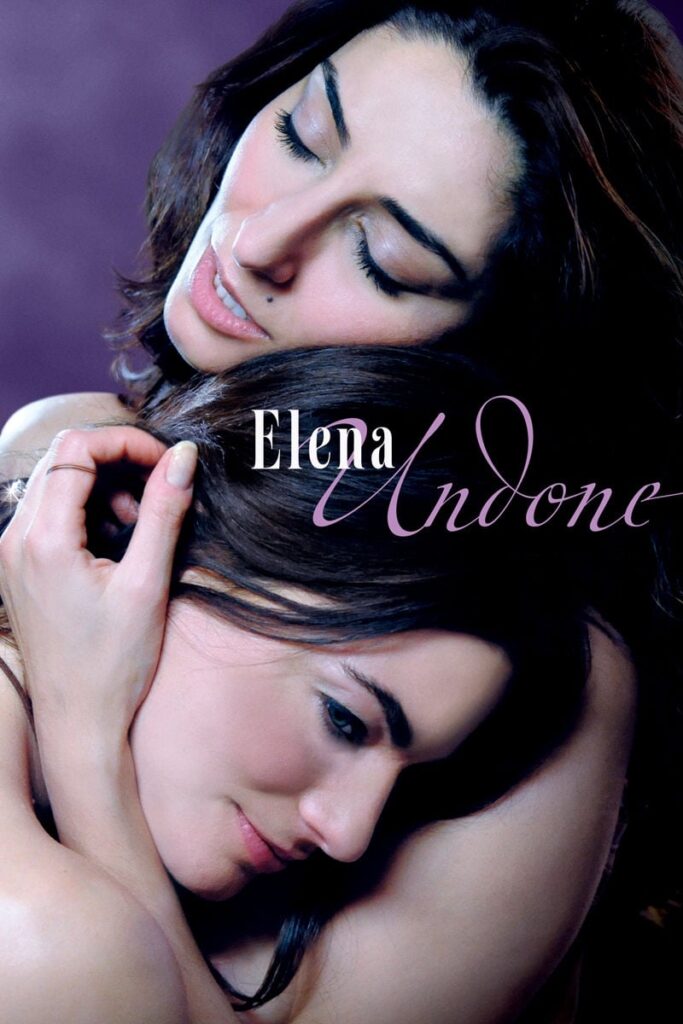
2024 Entry #32 04-09-24 “Elena Undone” is a 2010 romantic lesbian drama film which was written and directed by openly lesbian creative Nicole Conn (“Claire of the Moon”, “Little Man” & “More Beautiful for Having Been Broken”), loosely based on her romance with filmmaker Marina Rice Bader. The title character, Elena Winters (Necar Zadegan), is married to a cis male pastor named Barry (Gary Weeks), and they have a son named Nash (Connor Kramme). Elena crosses paths with Peyton Lombard (Traci Dinwiddie) and the two connect so intensely that it breaks Elena out of the malaise of her existence and embarks on a happier, more honest life.
I liked a big chunk of this movie; the part that plays at being a serious drama with the best of intentions but feels more like something you’d find buried in the back of the video store. But I disliked a lot of it as well, which mostly had to do with the chosen structure. The narrator, Tyler (played by the openly gay Sam Harris), has this new-agey, “two flames” or “twin flames” mentality that permeates the film and makes it all seem sillier at times than it needs to be. He has a series of interviews between happy couples throughout the film, including one between a pair who both have Dissociative Identity Disorder, and only one personality of either likes the other person’s specific personality. It was bizarre and could have worked for comedy if the rest of the movie had been funnier…and maybe it was meant to be? But I wasn’t laughing. And the sex scenes, which were kind of the point, were also repetitive and uninspired, which is a shame. Another repetitive element was the unending music, none of which I enjoyed overly much. Also… there’s a very odd pregnancy storyline at the end of the movie which seemed to contradict nearly everything that came before it and which felt like an attempt at a creative shortcut rather than anything making any kind of actual sense. So there’s that.
The leads are attractive but the acting is pretty wooden across the board, yet sometimes you want a cheesy, poorly acted lesbian romance movie – or at least I do. Indeed, the director’s first film, “Claire of the Moon” is just such a move (it’s actually kind of awful) but I adore it! I have music from it on my Amazon Playlist. Basically, if you saw this movie and you loved it or you were inspired by it (like the baby gay who recommended it to me), I’m not knocking it. We all have our little favorites. But I’ll likely stick to my own cheesy Nicole Conn lesbian romance movie in future! Lol
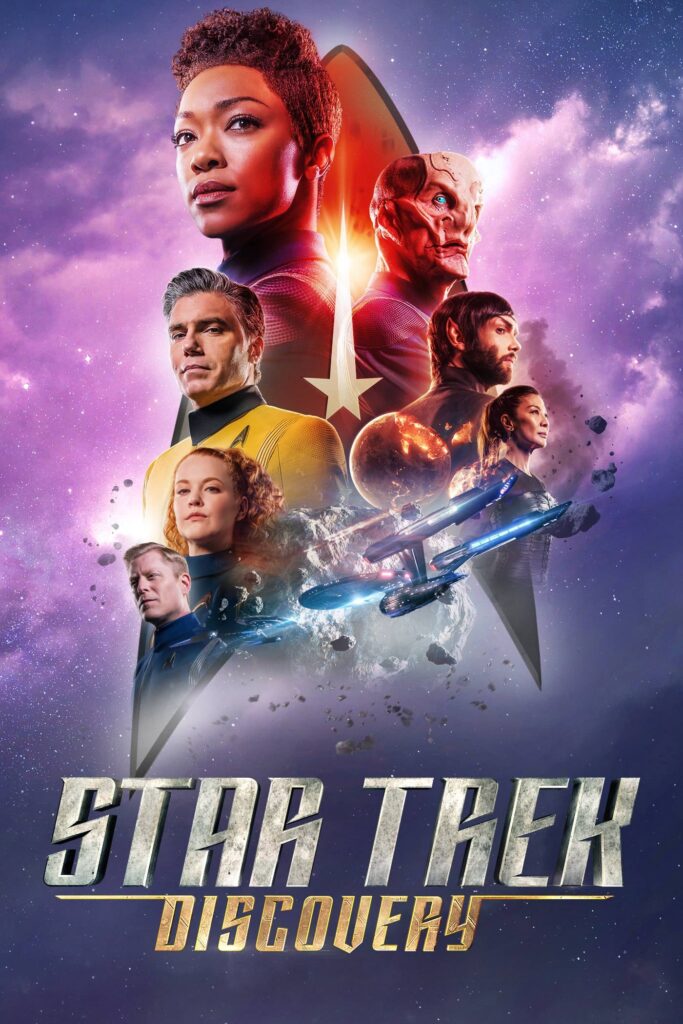
2024 Entry #30 01-31-24 The second season of the American TV series “Star Trek: Discovery” begins in the year 2257 and ends in 2258, 7 years before the beginning of “Star Trek” (The Original Series). Until Star Trek: Discovery LGTBQ+ characters in Trek were exceedingly rare and often only there via interpretation, but the first season introduced brilliant Astromycologist Paul Stamets (played by openly gay actor Anthony Rapp) & his loving physician husband Dr. Hugh Culber (played by openly gay actor Wilson Cruz). That season saw the death of the latter character, but death is often not permanent in Trek, and this was to be the case here; it’s more a wrinkle in their extended love story than an abrupt ending to one. And in the Mirror Universe we met Her Most Imperial Majesty, Mother of the Fatherland, Overlord of Vulcan, Dominus of Qo’noS, Regina Andor, Philippa Georgiou Augustus Iaponius Centarius (who is pansexual, and played by Oscar Winner Michelle Yeoh).
Season 2 was released in 2019 and not only brought our gay and pansexual characters back with a vengeance, greatly expanding on them, but also brought us a widowed lesbian engineer in the form of Jett Reno (played by lesbian comedian legend Tig Notaro). If that seems like a lot of representation after barely having any, it is, but this series doesn’t rest on its laurels and the series gets more Queer as it goes – which is wonderful. Season 2, picking up right where Season 1 left off, completes a story which leads into Season 3 but also feels complete, while also launching spin-off series, “Star Trek: Strange New Worlds”, which is currently shooting its third season and has been renewed for a fourth. If you stopped here it would be satisfying. But if you keep going, there’s so much more! And I love it all! Well worth checking out!
And for completists, the first “Short Treks” installment, titled “Runaway” fits in between episodes 2 & 3 of Season 2; that’s “New Eden” and “Point of No Return”.
I plan on re-watching Seasons 3 & 4 before watching the final season this summer. I’ll probably post a review for those 3 seasons together.
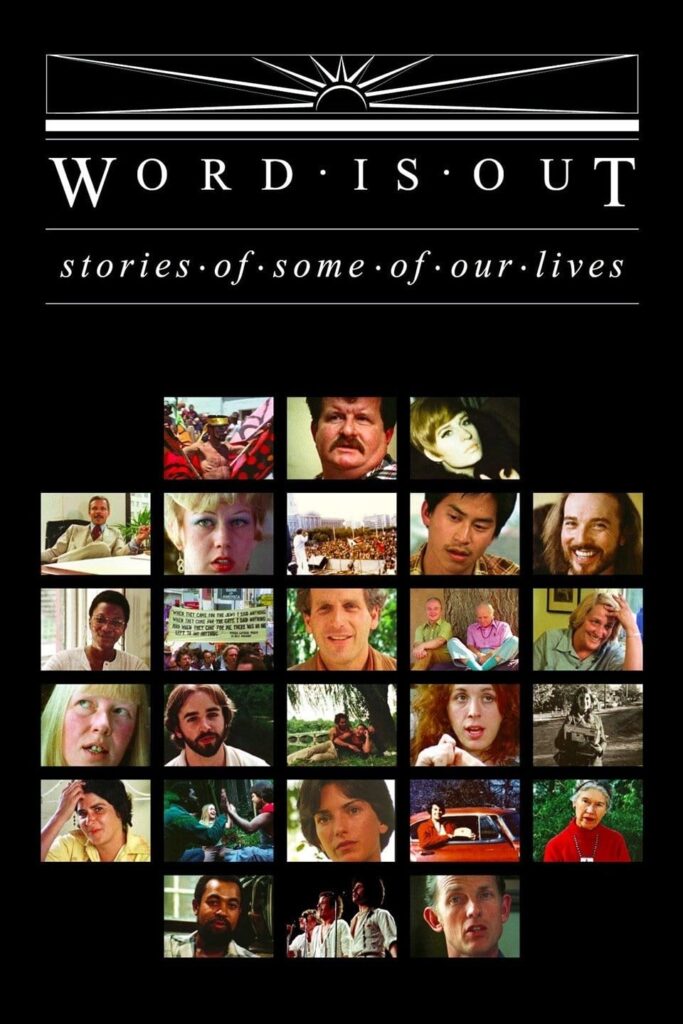
2024 Entry #029 01-21-24“Word Is Out: Stories of Some of Our Lives” is a 1977 documentary film featuring interviews with 26 gay men and women. It was directed by six people collectively known as the Mariposa Film Group. Peter Adair conceived and produced the film, and was one of the directors. The film premiered in November 1977 at the Castro Theater in San Francisco and went into limited national release in 1978. It also aired on many PBS stations in 1978.
I’ve had this documentary for a couple of years but I finally got around to watching it and I found it quite moving. To hear an interesting variety of queer voices from the 1970s, I was again reminded of how things might have been had AIDS halted our progress for so many years. Many of the people here seem to have come to happy places in their lives, but many of them were ridiculed along the way, ostracized and / or in many instances, tortured for living honestly. To their credit, they survived and that this work allows them to be heard by all of us now…by me, is incredibly satisfying and emotional. I was 3 years old when this was released.
Highly recommended.
In 2022, the film was selected for preservation in the United States National Film Registry by the Library of Congress as being “culturally, historically, or aesthetically significant”.
2024 Entry #026 “Vicky Cristina Barcelona” is a 2008 romantic comedy-drama film written and directed by Woody Allen. The film stars Javier Bardem (“Not Love, Just Frenzy”, “Second Skin”, “Before Night Falls”, “Skyfall”), Penélope Cruz (“Not Love, Just Frenzy”, “Head in the Clouds”, “Sex and the City 2”), Rebecca Hall (“Dorian Gray”) and Scarlett Johansson (“The Black Dahlia”, “Avengers: Endgame”) in lead roles. The plot centers on two American women, Vicky (Hall) and Cristina (Johansson), who spend a summer in Barcelona, where they meet an artist, Juan Antonio (Bardem), who is attracted to both of them, while still enamored of his mentally and emotionally unstable ex-wife María Elena (Cruz). The film was shot in Spain in Barcelona, Avilés, and Oviedo, and was Allen’s fourth consecutive film shot outside the United States.
I don’t generally enjoy Woody Allen movies. There are actually quite a few celebrated directors that I don’t enjoy. Examples: I mostly dislike the works of Brian De Palma (as I mentioned a few weeks ago) & Stanley Kubrick, and I think that most of Steven Spielberg’s films feel too “plastic” to be truly effective, though there are a few exceptions. Woody Allen is the same for me. I’ve not seen a lot of his work, but what I have seen, I haven’t loved or cared to revisit. It doesn’t help that he married his partner’s adopted daughter (which I have always found creepy) or that later evidence convinced me that he’s a pedophile – and I highly recommend watching Kirby Dick’s and Amy Ziering’s four-part documentary “Allen v. Farrow”. So why would I want to watch his work? That’s a fair question, and all I can say is that I’ve heard about this movie for years and I wanted to see it. I heard that it was inclusive. I love the cast. And a couple of years ago, I spent a few days in Barcelona, where the film is set. I have also previously reviewed films from convicted criminals and others whose views are directly opposed to mine. Sometimes I can pay more attention to the art than the artist, and other times I can’t. And I can’t explain why that is because I honestly don’t know. For instance, I have no problem re-watching the Wizarding World movies despite J.K. Rowling being a transphobe, yet I find the idea of re-reading her books (even though I already own them) difficult – and maybe that will change, or maybe it won’t. I just go with what my conscience will allow.
But what did I think of the movie? I liked it. I actually really liked it. I thought Scarlett Johansson’s performance was a little weak, but not horrible. I thought everyone else was fantastic. There were many times that I recognized different locations that I’d been to on my Barcelona trip, which was fun for me. And I honestly felt that while some of the situations seemed a little over the top, that the basic messages of the film were worth exploring and were honest in a way that over the top stories often aren’t. The inclusiveness involves Cristina forming a 3 way relationship with both Juan Antonio and María Elena, with the former spouses both finding value in featuring a third partner – both believing that Cristina is the ingredient that they lacked when they used to be a couple. I’ve known people who have experienced this. I’ve been involved with people experiencing this. And this is something that I’ve seldom if ever seen explored on screen. So that was one aspect I really enjoyed. But overall, while there was drama, I just liked that the movie was fun. The movie is light, while also exploring other facets of relationships that many will likely relate to. I wouldn’t call it a masterpiece or anything, but it was a good time. And that’s far more than what I was expecting.
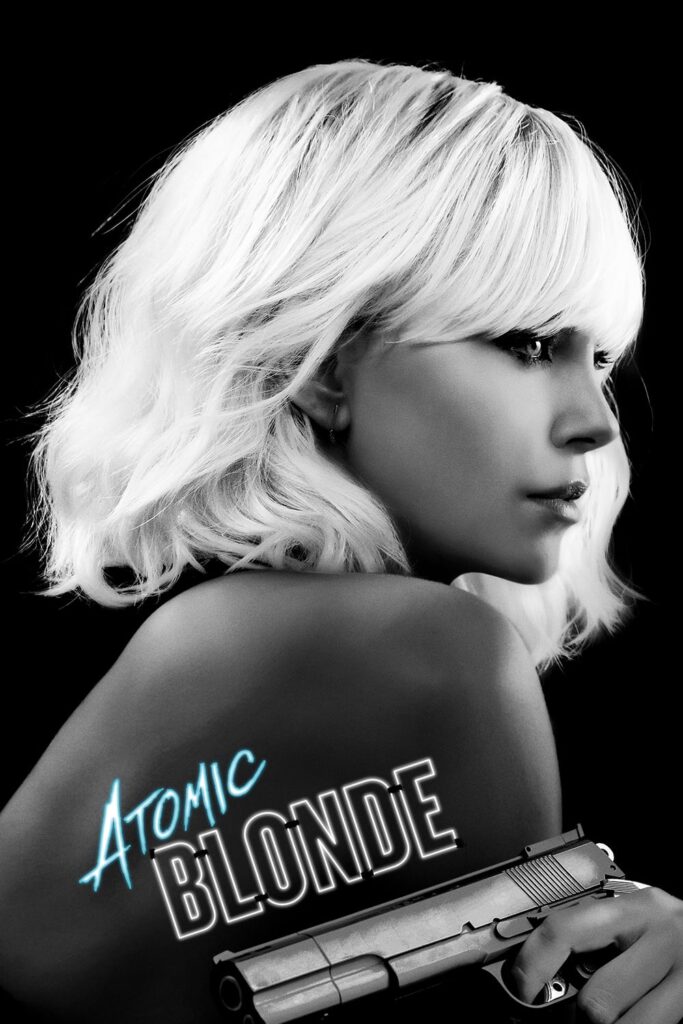
2024 Entry #021 01-16-24 “Atomic Blonde” is a 2017 American action thriller film directed by David Leitch (in his feature directorial debut – he later directed “Deadpool 2” and performed in “V for Vendetta”) from a screenplay by Kurt Johnstad (“300”), based on the 2012 graphic novel The Coldest City by Antony Johnston and Sam Hart. The film was co-produced by the film’s star Charlize Theron (“Sweet November”, “Monster”, “Head in the Clouds”, “The Old Guard”, “Doctor Strange in the Multiverse of Madness”), and also features James McAvoy (“Bright Young Things”, “Wimbledon”, “Deadpool 2”, “It Chapter Two”), John Goodman (“Revenge of the Nerds”, “Roseanne”, “ParaNorman”, “Love the Coopers”, “The Conners”), Til Schweiger (“Intimate Affairs”), Eddie Marsan (“EastEnders”, “V for Vendetta”, “Deadpool 2”), Sofia Boutella (“Star Trek Beyond”, “Modern Love”, “Rebel Moon”), and Toby Jones (“Orlando”, “Mrs. Henderson Presents”, “Infamous”, “Doctor Who”, “Christopher and His Kind”, & the Harry Potter films as Dobby). The story revolves around an undercover MI6 agent who is sent to Berlin during the Cold War to investigate the murder of a fellow agent and recover a missing list of double agents.
I really like Charlize Theron and she’s incredible here as Lorraine Broughton, the film’s central character. I wasn’t sure I was into this movie when it started but I got much more into it as it continued – until something happened that spoiled that for me. Spoilers follow. The film features a lesbian subplot that was not in the original book. This reportedly came from writer Kurt Johnstad, who suggested it after Theron was “thinking about how do you make this different from other spy movies”. Leitch has insisted that the scenes are not there to be “provocative”, but “more about if you are a spy you will do whatever it takes to get information” and how the main character “find[s] her intimacies and her friendships in small doses”. All of that is fine – it’s welcome, until the film’s villain murders the undercover French agent lesbian love interest, played by Sofia Boutella. The kill happens relatively late in the film and I kept hoping the character wasn’t dead, and while the dangers of their jobs make the death a likely outcome and we have Theron’s character avenging her lover, the ick of another lesbian character dead hurt my enjoyment of the movie and took a film that I initially thought I’d be recommending to friends and turned it into something I will likely never view again.
On the flip side, I’d be remiss if I didn’t mention the film’s excellent soundtrack which features: David Bowie, Siouxsie and the Banshees, A Flock of Seagulls, ‘Til Tuesday, The Clash, Peter Schilling, HEALTHY, Tyler Bates, Nena, Ryal, Robert Ponger & Falco, Re-Flex, Kaleida & Marilyn Manson.
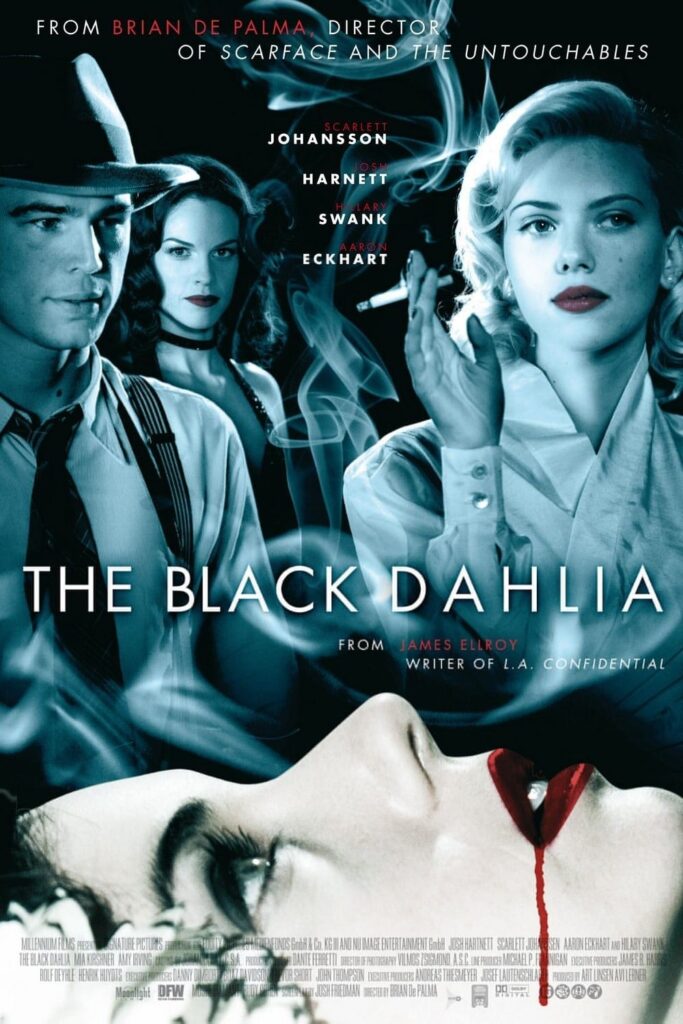
2024 Entry #013 01-08-24 “The Black Dahlia”is a 2006 American neo-noir crime thriller film directed by Brian De Palma (“Dressed to Kill”, “Body Double”) and written by Josh Friedman, based on the 1987 novel of the same name by James Ellroy, the first book in his celebrated “L.A. Quartet”, the others being “The Big Nowhere” (1988), “L.A. Confidential” (1990) & “White Jazz” (1992). The novel on which this film is based was inspired in part by the widely sensationalized murder of Elizabeth Short, a figure of great interest to Ellroy. The novel features both historical and fictional elements. The film stars Josh Hartnett (“Sin City”, “Penny Dreadful”), Scarlett Johansson (“Vicky Cristina Barcelona”, “Avengers: Endgame”), Hilary Swank (“Quiet Days in Hollywood”, “Boys Don’t Cry”), Mia Kirshner (“Exotica”, “Not Another Teen Movie”, “Party Monster”, “The L Word”, “Lost Girl”, “Star Trek: Discovery”, “Star Trek: Strange New Worlds”), Mike Starr (“Cruising”, “Last Exit to Brooklyn”, “Miller’s Crossing”, “A River Made to Drown In”, “Law and Order: Special Victims Unit”, “Glee”, “Shameless”), John Kavanagh (“Braveheart”, “Alexander”), Rachel Miner (“Bully”, “Sex and the City”), Rose McGowan (“The Doom Generation”, “Nowhere”, “Nip/Tuck”, “RuPaul’s Drag Race”), Patrick Fischler (“Mulholland Drive”, “Pushing Daisies”, “Law and Order: Special Victims Unit”, “Shameless”) openly lesbian Fiona Shaw (“Dorian Gray”, “True Blood”, “Killing Eve”, “Fleabag”, “Colette”, “Ammonite”, “Andor” & the Harry Potter films) & Aaron Eckhart. Openly lesbian musician k.d. lang has an uncredited cameo as the floor show performer at the lesbian nightclub Laverne’s Hideaway.
The convoluted plot follows two Los Angeles Police Department detectives investigating Short’s murder, leading them through a series of shocking discoveries.
Wow. Okay.
To start with, I’m going to out myself and just admit that I’m not a huge Brian De Palma fan. And while that is often considered heresy within certain circles that I frequent, there are lots of well known and beloved film directors that I just don’t enjoy; Stanley Kubrick is a good example, or Woody Allen (and not just because he’s creepy – I just really don’t enjoy what I’ve seen of his stuff). With Brian De Palma, I like “Carrie” and “The Fury”, but I don’t love “Scarface” (sorry) and I hate “Mission: Impossible” , and even when I do enjoy De Palma’s films, I find his renowned flourishes to be too showy and a bit obnoxious. So keep that in mind.
Having said that, I’m trying to step out of my comfort zone while exploring LGBTQ+ inclusive cinema and I thought I’d give this one a shot. When I was over half way through the film, I stopped to read a synopsis (up to the point in the film I’d stopped) because I thought I’d missed something. Only I hadn’t. David Denby’s review in The New Yorker summed up my reaction when the film had ended: “It’s overrich and fundamentally unsatisfying… There are scenes that display De Palma’s customary visual brilliance… but the movie is so complicated, the narrative so awkward, that when the pieces of the puzzle fall into place we get no tingle of satisfaction.”
That. The movie wasn’t short but it felt like it was missing a lot. Apparently it was originally 3 hours long and cut down to two and it shows. What should be big aha moments are either telegraphed so far in advance or sprung out of nowhere – and these failings are made worse by some really horrible acting choices by just about everyone. Ick. No. It’s bad. For a minute or two I thought it would be good, but then it wasn’t.
As for LGBTQ+ content, there are lots of lesbians, but none of them are central to the plot. There’s a lovely cameo by k.d. lang in a lesbian bar with lots of lesbians surrounding her, which is sadly, the highpoint of representation here. There’s a bisexual woman, but she’s a murderer – who is apparently sexually involved with a despicable man that we think is her father. And there’s another bisexual / lesbian woman who is the central victim of the story, but since she was brutally murdered, she’s barely in the film. There just aren’t a lot of positive depictions here. And while that’s not always necessary for me to enjoy something (for example, I love “Basic Instinct” in which all the women are bisexual murderers), the ladies here don’t get much to work with, and what they do get isn’t supported by anything especially exciting. This is not a very good movie. This wasn’t even a very entertaining movie. And those are my thoughts. YMMV.
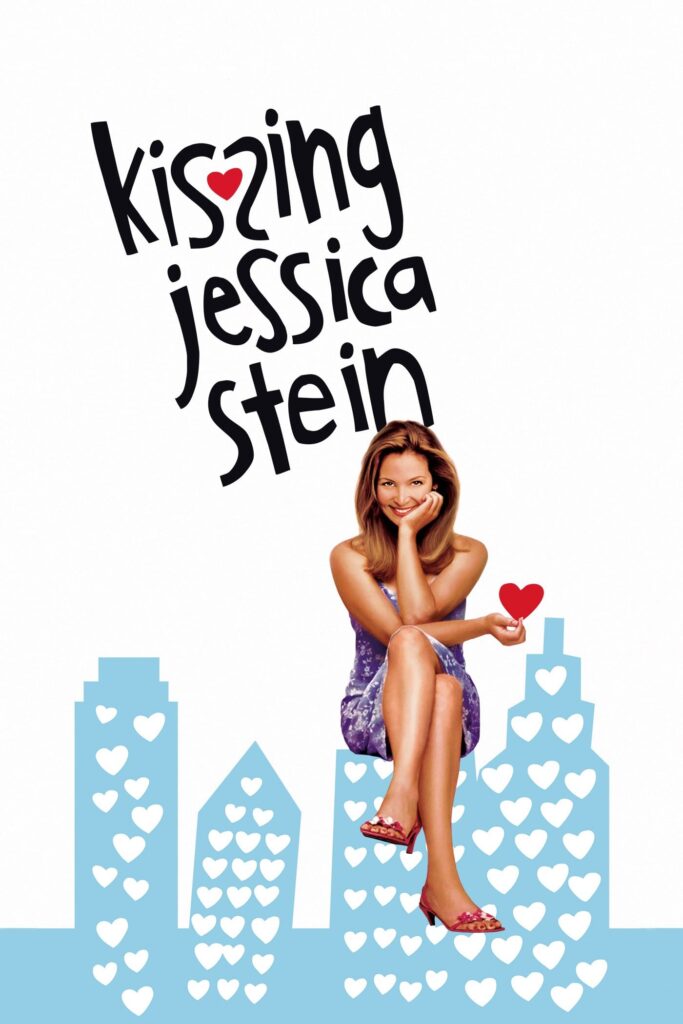
2024 Entry #011 01-07-24 “Kissing Jessica Stein” is a 2001 American independent romantic comedy film, written and co-produced by the film’s stars, Jennifer Westfeldt and Heather Juergensen; directed by Charles Herman-Wurmfeld (“Fanci’s Persuasion”, “Legally Blonde 2: Red, White & Blonde”, . The film also features openly gay John Edward Cariani (“The Good Wife”), Ben Weber (“Sex and the City”, “The Broken Hearts Club: A Romantic Comedy”) Tovah Feldshuh (“Friends & Family”, “Ugly Betty”, “The Good Wife”), Scott Cohen (“Oz”, “Gia”), Jackie Hoffman (“Queer Duck: The Movie”, “The New Normal”, “The Good Wife”, “Glass Onion: A Knives Out Mystery”), Brian Stepanek (“Six Feet Under”, “Green Book”), Jon Hamm (“Ally McBeal”, “Mad Men”, “A Single Man”, “Howl”, “Absolutely Fabulous: The Movie”, “Mean Girls”) & Michael Showalter (“Wet Hot American Summer”). The film is based on a scene from the 1997 off-Broadway play by Westfeldt and Juergensen called “Lipschtick”.
The story follows the title character, a Jewish copy editor living and working in New York City, who is plagued by failed blind dates with men, and decides to answer a newspaper’s personal advertisement, placed by a thirtysomething art gallerist, a ‘lesbian-curious’ woman. I had seen this movie once before, when I purchased it for my collection, when it was relatively new – so close to 22 years ago. Of that viewing, I remembered a powerful scene between Jessica (Jennifer Westfeldt) and her mother Judy (Tovah Feldshuh) on a swing, in which Judy reveals that she is supportive of Jessica’s relationship with Helen (Heather Juergensen), the gallerist; I cried both times that I saw it. The other scene I remembered was the breakup between the two women and the reasons for it. Otherwise, I remembered nothing; not even that it was set in NYC.
This movie is a bit of a mixed bag for me. I enjoy it, but I could have loved it and I didn’t. I think there are a few really successful ideas here about relationships and what constitutes a healthy one; how people can inspire us to be better than we were before – and can simply inspire us to do our best, our most creative work, which isn’t the same thing. But I think the tone of this piece is a little too “safe” and is so hellbent on being fluffy and fun that it often does a disservice to the strength of these messages. And I think that this silly romantic comedy occasionally gets out of its own way and allows for depth and honesty.
And then there’s the other problem, which may be more problematic for some than others: I’m not certain there are any lesbian characters in this supposedly lesbian themed film. I think if the film stood its ground more often and didn’t pull its punches this would be less annoying, because there is something to be said for the experiences of women who have relationships with women beyond lesbianism, but because it plays everything as frothy and weightless, that subject matter is presented as nearly devoid of anything of worth, and it didn’t have to be that way. But because of that, I wish the film had just allowed these characters to be lesbians. A fun lesbian comedy would be both easier to convey and a more welcome story to discover, as finding lesbian films which actually feature lesbian characters, who aren’t there only for decoration or flavor seems to be shockingly rare. Though I do give the movie some props for one of the bisexual women ending up with a woman, as her ending up with a man would have been so obnoxious as to spoil the film altogether.
Overall, this IS a silly romantic comedy, but every now and again there is something of greater value to be found here, which suggests this story could have been something much better.
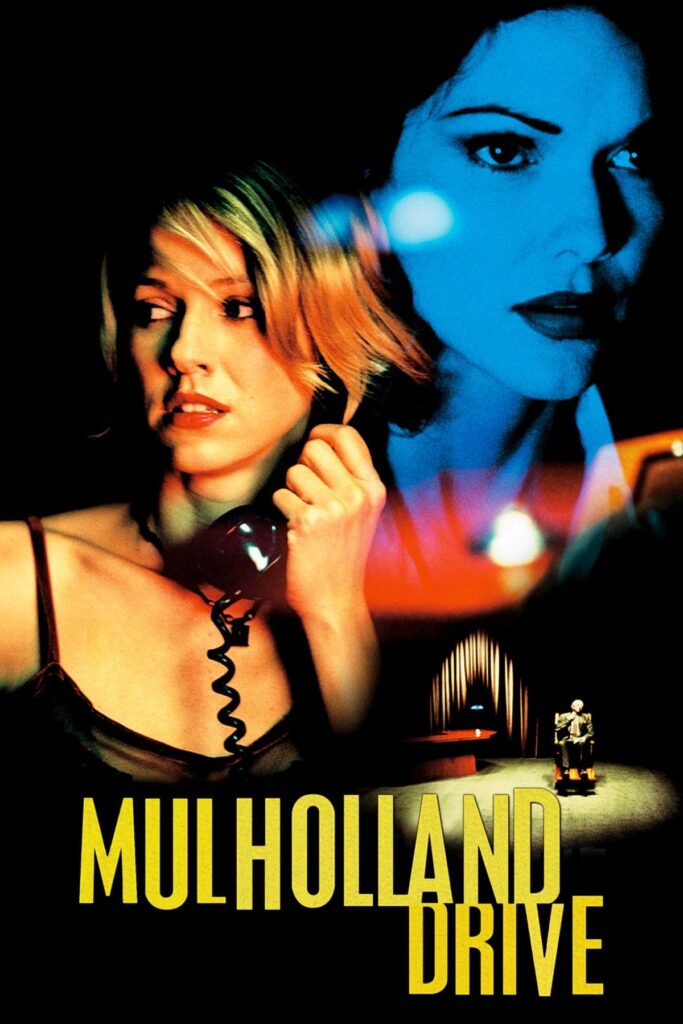
2024 Entry #010 01-06-24 “Mulholland Drive” (often stylized as “Mulholland Dr.”) is a 2001 surrealist mystery film written and directed by David Lynch (“Dune”, “Wild at Heart”, “Twin Peaks”, “Twin Peaks: Fire Walk With Me”). The film stars Naomi Watts (“J. Edgar”, “Feud: Capote vs. The Swans”), Laura Harring (“Gossip Girl”, “Law and Order: Special Victims Unit”), Justin Theroux (“I Shot Andy Warhol”, “Ally McBeal”, “Sex and the City”, “American Psycho”, “The Broken Hearts Club: A Romantic Comedy”, “Six Feet Under”, “The Sleepy Time Gal”, Mark Pellegrino (“Capote”) and Robert Forster (“Desperate Housewives”) and was the last feature film to star veteran Hollywood actress Ann Miller.
The film seemingly tells the story of an aspiring actress named Betty Elms (Watts), newly arrived in Los Angeles, who meets and befriends an amnesiac woman (Harring) recovering from a car accident and the two become lovers. The story follows several other vignettes and characters, including a Hollywood film director (Theroux). In the final act there is a jarring change of perspectives in which many of the roles we’ve been following are altered, and the audience is left to decide for themselves what actually happened. Despite this unconventional twist, “Mulholland Drive” is often regarded as one of Lynch’s finest works and as one of the greatest films of all time. It was ranked 8th in the 2022 Sight & Sound critics’ poll of the best films ever made and topped a 2016 BBC poll of the best films since 2000.
It might surprise some (and disappoint others) that I had never seen this film before watching it yesterday. Despite loving the original “Twin Peaks” series, the prequel film “Twin Peaks: Fire Walk With Me” and Lynch’s version of “Dune”, I generally don’t think of myself as a big David Lynch fan. I saw “Lost Highway” in theaters and fell asleep, but I hated what I did see and I’ve never been tempted to revisit it.
Having said that, I found this piece to be quite moving at times, disquieting at others. In the beginning, following the opening credits, I disliked the film’s tone, which was epitomized in Naomi Watts and her performance. However, the change in perspectives (among others things) changed my response as well. I didn’t write this review right away because I wanted to spend some time with my thoughts on the film, and I’m convinced (like many others) that the final section of the film is the true tale, while everything after the opening credits up to that point is a kind of fantasy or self deception, which circles back around at the end of the film. It’s complicated, clearly. I can see why so many people both love and hate it. I think I love it. I may need to watch it again at some point. In retrospect, this feels like a masterpiece, but while I was watching it, I didn’t feel that way at all – which itself is fascinating.
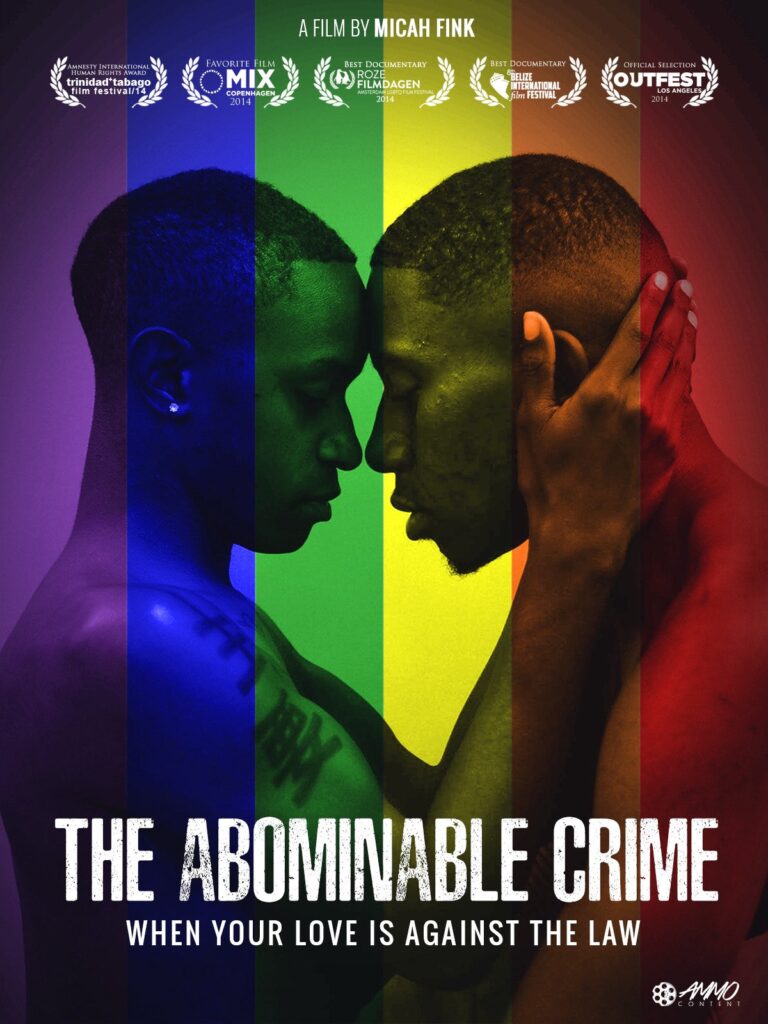
2022 Entry #021 02-01-22 “The Abominable Crime” is a 2013 documentary which was directed by award winning producer Micah Fink. The film explores the impacts of homophobia through the eyes of two Jamaicans who are forced to choose between their homeland and their lives. Simone, a young lesbian mother, survives being shot outside of her home by anti-gay gunmen; her gay brother escaped. She must choose between living in hiding with her daughter in Jamaica or traveling alone to seek safety and asylum abroad. Maurice, Jamaica’s leading gay-rights activist, is outed shortly after filing a lawsuit to overturn Jamaica’s anti-sodomy law.
This was really well done; very impressive work. The film covers several years in the lives of these brave souls who not only make incredibly powerful and brave choices in their lives but also have the courage to allow their story to be told. The piece opens with a stylized prologue telling of the shooting that haunts Simone and drives her to action. We see her and her young daughter Khalya. We meet her brother Albert “Carl” Edwards and hear how their stories interconnect. And it’s all so heartbreaking and eventually inspiring. It wasn’t always easy to watch – I was very concerned about what would happen – and in the end I was happy to have watched this.
Maurice’s story is just another piece of this broken story. Having been outed after fighting for LGBT equality in Jamaica, Maruice and his husband are forced to flee to Canada. And yet Maurice continues to fight for his country and those he left behind by returning and seeking change.