“You got those Caravaggio moves”

I did try working on several viewing orders for my website but I was undermined at nearly every level by formatting issues. There’s a certain way that I like to work and it simply isn’t made easy by WordPress or the theme I went with, and it’s too late to turn back now. So that was unsatisfying. I ended up uploading a dozen LGBTQ+ movie reviews, which inspired me in passing to revisit Derek Jarman’s “Caravaggio”, which I was shocked to learn that I didn’t own. I quickly acquired a copy and re-watched it, enjoying my time with the movie.
I was very tired. All day I was tired and nearly slept. When it came time for bed I slept without taking any drugs, but I didn’t stay asleep. I had eaten a bit more than I should have yesterday and I had acid reflux, which thankfully doesn’t happen often. I’d had many vivid dreams in the few hours that I slept, involving theme parks and oral sex. Upon waking, I was reminded of my first visit to a theme park, Cedar Point in 1985 – and how my PTSD relationship to food first presented to the world as an eating disorder and how much this shamed me. I didn’t eat anything all day save a small box of Nerds – the cherry & orange variety that later went away for some reason. I later learned that I did not have an eating disorder, though I definitely suffered from disordered eating. I had to do an interview on the topic in 2013 to qualify for a surgical procedure. Finding anyplace that would do this interview was very difficult because they generally only saw women, but eventually a found a sympathetic center that made an exception for me. The interview was very thorough and very painful – which is a quote from Terry Hatcher from an interview with her on Inside The Actors Studio, which has always felt like an apt description of my experience and so I’ve used it every time I describe it – but this is the first I’ve ever explained the origin of my expression. She was talking about reporting sexual abuse, and essentially, this is what I was doing as well. In some ways it was liberating, but mostly, it was just horrible. The woman who interviewed me was sympathetic and supportive. I don’t know her name but I’ll always be grateful for her tact. She was amazing.
I briefly traded texts with Michael Eisinger, who I hadn’t spoken to in a long while. He had gone for a long walk, more than 6 miles. It was 70 degrees out and he was loving the beautiful weather – I believe he lives in Maryland? Meanwhile, I was indoors all day. It wasn’t quite 70 degrees in New York.

We did not go to Aaron’s pool game. He had told me early in the day that he wasn’t going, which disappointed me, but by the time the gametime rolled around, I could barely keep my eyes open, and so I likely wouldn’t have gone anyways.

I have two Star Wars: Maul episodes to watch, but like last week, I don’t feel like it right now. I might save them for next week and just binge the last 4 episodes of the season, but I’m not married to that idea. If I feel like watching them at some point, I will. It’s that simple.
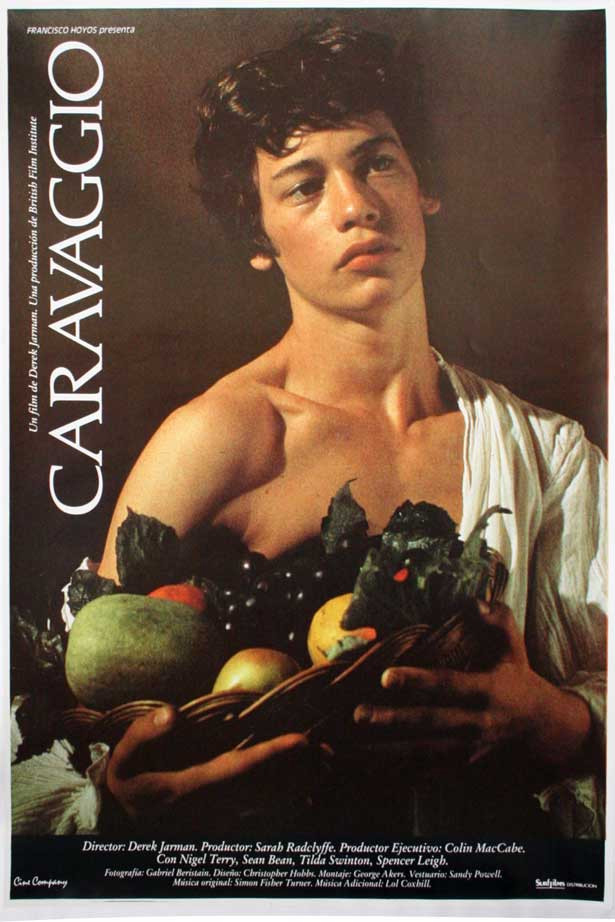
Caravaggio (1986)

“Caravaggio” is a 1986 British historical drama film directed by openly gay filmmaker Derek Jarman (“Sebastiane”, “The Angelic Conversation”, “Edward II”), who died of AIDS in 1994. The film is a fictionalised retelling of the life of Baroque painter Michelangelo Merisi da Caravaggio.

I first saw this film around 2005, I think? I only saw it the one time; a rental from the Hollywood Video where I worked. I never owned it, but it was a film that I had always wanted to see and I had great affection for “Edward II”, which had shocked and then haunted me for years. I have always intended to revisit “Caravaggio” and now, I have. There were many things in the film which I had forgotten, like the inclusion of modern elements, similar to “Edward II”, and aside from Sean Bean and Tilda Swinton, the world famous cast, including Michael Gough and Robbie Coltrane (“Mona Lisa”, “The Fruit Machine”). Indeed, the bits I most remembered was a sort of 3 way love affair between Nigel Terry’s Caravaggio, Sean Bean’s Ranuccio & Tilda Swinton’s Lena – though these memories were both vague and powerful. I had totally forgotten the essential murders of the plot or Spencer Leigh’s heartbreaking Jerusaleme.

But is it any good? Yes, I think it is. Probably more so if one was alive when it was released and knows what it must have taken to make this film, which seems like a brilliant and noble act of bravery to me. But that’s the thing: I admire the filmmaker so much that I find it difficult to judge his work. Watch it for yourself and you tell me.

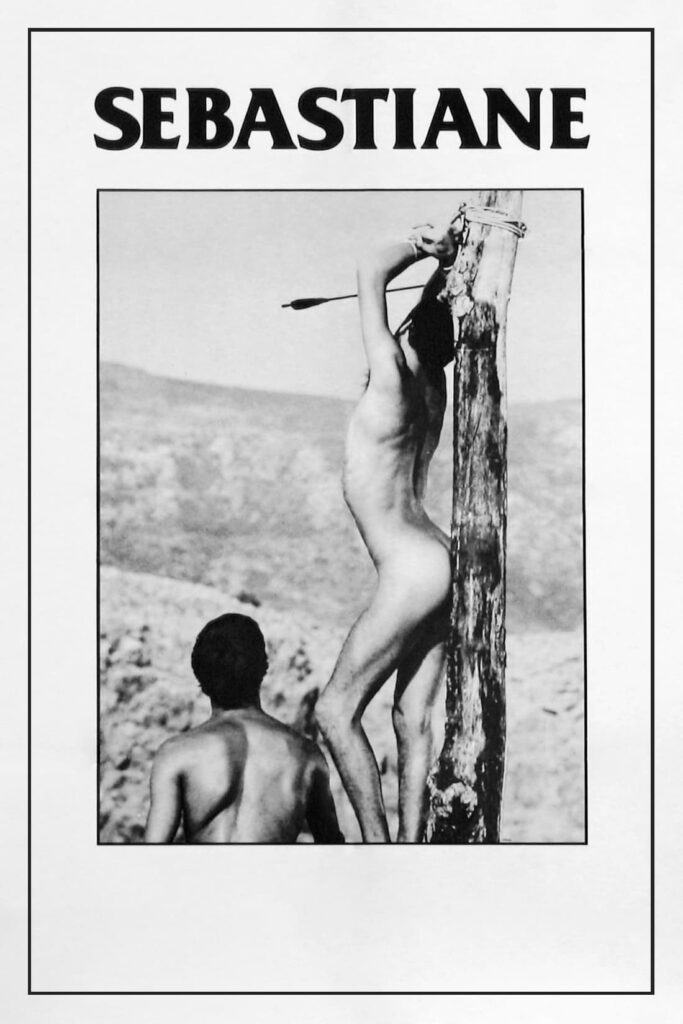
Sebastiane (1976)

2024 Entry #024 01-18-24 “Sebastiane” is a 1976 Latin-language British historical film by openly gay director Derek Jarman (“The Angelic Conversation”, “Caravaggio”, “The Garden”, “Edward II”). Many members of the cast were gay and the film is famous (even notorious) for its controversially direct homoeroticism.

The film begins in Rome, AD 303, where Emperor Diocletian demotes Sebastian, his favorite captain of the palace guard to the rank of common soldier – Sebastian intervenes when the Emperor orders one of his male slaves to be strangled during a highly sexualized celebration of the sun. Sebastian is banished to a remote coastal outpost with his fellow soldiers. Sebastian is an early Christian who sublimates his desire for his male companions into worship of his deity and pacifism – which again, is also eroticized; Sebastian isn’t preaching the gospel so much as pining for his God; with his every breath he speaks of his God in sexy love poetry. Sebastian doesn’t go unnoticed though. Justin, one of his comrades in arms, is also in love with Sebastian, albeit necessarily unrequited, but he forms a friendship with the stubborn celibate pacifist. All of his comrades note his Christianity and castigate him for his faith. Indeed, his commanding officer, Severus, becomes increasingly obsessed with Sebastian, tries to assault him as he begs Sebastian to love him, and ultimately presides over his summary execution for refusing to take up arms in defense of the Roman Empire.

I had never seen this film before, though I’ve been aware of it for decades. I have seen two other Derek Jarman films, “Caravaggio” once, and “Edward II” many times over. If I have any excuse at all for skipping this film until now, it’s simply that there are now so many LGBTQ+ inclusive titles that I just haven’t had the time to get around to watching it – I mean, since 2020 and I actually devoted time to this subject matter, I’ve seen over 800 films, and I’m just now getting around to this one!

Having said that, I found this one quite entertaining – and quite daring, beyond what most creatives release today. The opening dancing ritual, which features men circled around a garishly painted man with his tongue constantly lashing, sees each of the circled men waving gigantic faux phalluses, who then pretend to penetrate the tongue lasher, and then finally splashing his face with what I assume is fake sperm. And by the time we get to the soldiers in the outpost male nudity is nearly constant. Among the men, Adrian and Anthony, two of Sebastian’s fellow soldiers, are gay and obviously in love with one another, which serves as somewhat of a balm after the orgiastic but ugly opening of the film and the equal hatred and lust thrust on the film’s hero.

Although it is far from an original thought, I was reminded that Christians were once the persecuted, but they are so often now the persecutors. Perhaps anyone in power is destined to persecute others? It’s really quite sad and upsetting. And I was also moved by homosexuality being portrayed so graphically in the 1970s, and that were it not for the AIDS crisis that followed, which, for example, ravaged several of the cast members and the film’s director, that this exploration might have continued and queer cinema might be something quite different today.

error: Content is protected !!