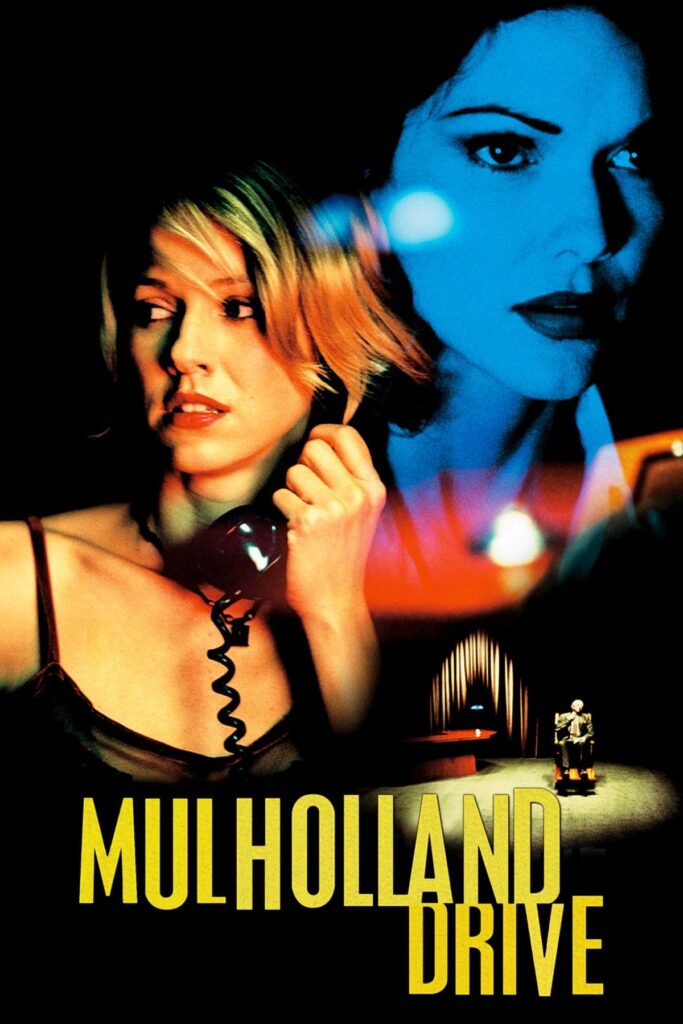
“Mulholland Drive” (2001)

2024 Entry #010 01-06-24 “Mulholland Drive” (often stylized as “Mulholland Dr.”) is a 2001 surrealist mystery film written and directed by David Lynch (“Dune”, “Wild at Heart”, “Twin Peaks”, “Twin Peaks: Fire Walk With Me”). The film stars Naomi Watts (“J. Edgar”, “Feud: Capote vs. The Swans”), Laura Harring (“Gossip Girl”, “Law and Order: Special Victims Unit”), Justin Theroux (“I Shot Andy Warhol”, “Ally McBeal”, “Sex and the City”, “American Psycho”, “The Broken Hearts Club: A Romantic Comedy”, “Six Feet Under”, “The Sleepy Time Gal”, Mark Pellegrino (“Capote”) and Robert Forster (“Desperate Housewives”) and was the last feature film to star veteran Hollywood actress Ann Miller.

The film seemingly tells the story of an aspiring actress named Betty Elms (Watts), newly arrived in Los Angeles, who meets and befriends an amnesiac woman (Harring) recovering from a car accident and the two become lovers. The story follows several other vignettes and characters, including a Hollywood film director (Theroux). In the final act there is a jarring change of perspectives in which many of the roles we’ve been following are altered, and the audience is left to decide for themselves what actually happened. Despite this unconventional twist, “Mulholland Drive” is often regarded as one of Lynch’s finest works and as one of the greatest films of all time. It was ranked 8th in the 2022 Sight & Sound critics’ poll of the best films ever made and topped a 2016 BBC poll of the best films since 2000.

It might surprise some (and disappoint others) that I had never seen this film before watching it yesterday. Despite loving the original “Twin Peaks” series, the prequel film “Twin Peaks: Fire Walk With Me” and Lynch’s version of “Dune”, I generally don’t think of myself as a big David Lynch fan. I saw “Lost Highway” in theaters and fell asleep, but I hated what I did see and I’ve never been tempted to revisit it.

Having said that, I found this piece to be quite moving at times, disquieting at others. In the beginning, following the opening credits, I disliked the film’s tone, which was epitomized in Naomi Watts and her performance. However, the change in perspectives (among others things) changed my response as well. I didn’t write this review right away because I wanted to spend some time with my thoughts on the film, and I’m convinced (like many others) that the final section of the film is the true tale, while everything after the opening credits up to that point is a kind of fantasy or self deception, which circles back around at the end of the film. It’s complicated, clearly. I can see why so many people both love and hate it. I think I love it. I may need to watch it again at some point. In retrospect, this feels like a masterpiece, but while I was watching it, I didn’t feel that way at all – which itself is fascinating.
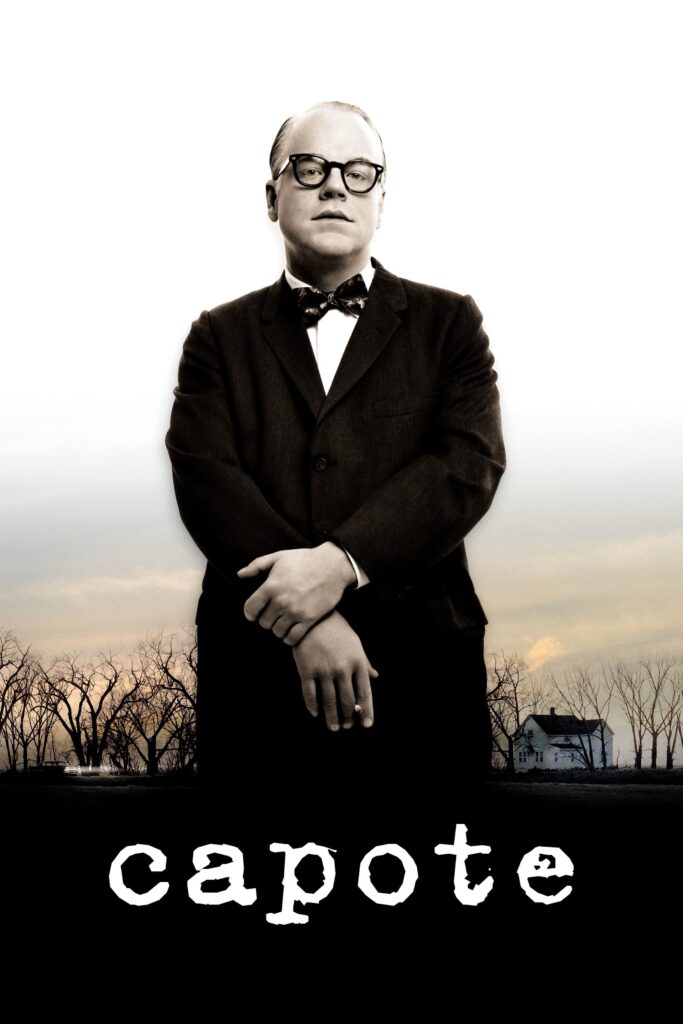

“Capote” (2005)

2024 Entry #009 01-04-24 “Capote” is a 2005 biographical drama film about gay American novelist Truman Capote directed by Bennett Miller, from a screenplay by Dan Futterman (“The Birdcage”, “Sex and the City”, “Urbania”, “Will & Grace”, “Political Animals”). The film stars Philip Seymour Hoffman (“Boogie Nights”, “Flawless”, “The Talented Mr. Ripley”), Catherine Keener (“Thelma & Louise”, “Being John Malkovich”, “Adaptation”, “Modern Love”), Clifton Collins Jr. (“Light It Up”, “The Rules of Attraction”, “American Girl”, “Scott Pilgrim vs. The World”, “Red, White & Royal Blue”), Chris Cooper (“This Boy’s Life”, “American Beauty”, “Adaptation”) & Bob Balaban (“Midnight Cowboy”, “Three to Tango”, “Howl”).

The film primarily follows the events during the writing of Capote’s 1965 nonfiction book In Cold Blood. The film was based on Gerald Clarke’s 1988 biography Capote. It was released on September 30, 2005, coinciding with what would’ve been Capote’s 81st birthday.

The film was successful at the box office, was well reviewed and the film was nominated for 5 Academy Awards including Best Picture, Best Director for Miller, Best Supporting Actress for Catherine Keener, and Best Adapted Screenplay, with Hoffman winning the Academy Award for Best Actor.

In truth, I’ve avoided this film for nearly 20 years. I was aware that the central character was famously gay, and that at least one other gay man was portrayed (Truman Capote’s partner, Jack Dunphy) and I now know that there are others mentioned (including James Baldwin), but I also knew that while the film centered on a homosexual character, that it was essentially sexless and I found this problematic. While films featuring queer sexuality were being celebrated, it seemed that only the most non-threatening portrayals were award worthy at that particular time – and this film’s Oscar win in the same year in which “Brokeback Mountain” was denied (while meeting every standard which historically had led to a Best Picture win) hurt me. Indeed, I’ve never watched the Oscars ever again, despite loving them up to that point. It still angers me. But here we are.

Although I’d never seen this before, I was familiar with a great deal of the subject matter, having seen the 2006 film about the same topic (“Infamous”) also having read a novel by Kim Powers called “Capote in Kansas: A Ghost Story”. It was fascinating seeing how “Infamous” and “Capote” chose to tackle the same events with very different results. Of the two films I’d say that “Capote” hit me harder, and the final act of the film was tortuous (in a complimentary way), but that I was more entertained by “Infamous”, it was more fun.

“Stanley” (2017)

2024 Entry #008 01-04-24 “Stanley” is an 18 minute 2017 Brazilian short drama film which was written and directed by Paulo Roberto.

The story follows a young man who kills birds for his family to eat, plays David Bowie’s “The Man Who Sold the World” on his guitar, then goes to a club where he and another young man dance with a woman. After leaving the bar they share a motorcycle ride to a lake where birds feed. The young woman sleeps, one of the guys swims and later the other guys fucks him. They talk afterward and you learn they went to the same church when they were little though only one of them remembers this. The one who remembers asks the other about his brother Stanley, whom he was friends with when they were young and it is revealed that Stanley killed himself. And that’s that.

This was okay. I actually thought I would like this one more than I did as I tend to love Brazilian films – I love the sound of Portuguese, and I had read an excerpt of dialogue from it which served as a description of the short, which I liked a lot. Sometimes a short feels wholly satisfying on its own with no need for more. Sometimes a short is great but you want more and would welcome a feature length version. And then there are ones like this, which feel like a fragment of something larger, which are not horrible, but are also not completely satisfying on their own. It’s not bad; there are several elements that work very well, and yet none of it feels like it matters in the end.

This short was in the same collection as the previous two. I’ll likely watch the rest of them soon, but not tonight.

“The Den” aka “La tana” (2015)

2024 Entry #007 01-04-24 “The Den” (aka “La tana”) is a 15 minute 2015 Italian short film which was directed by Lorenzo Caproni (“La prima volta”, “The Necklace”, “Lazarus Come Out”) who co-wrote it with Fabio Marson. The story follows Christian (Daniele Mariani), who on a vacation to the beach with his wife (Laura Sinceri) and son (Nicola Luna Maroder) encounters his old friend Luca (Emanuel Caserio), who he had a complex sexual history with… and history often repeats itself.

This is part of the same collection as the previous short I watched, but I liked this entry much better. It left me with many questions about the characters, as shorts often do, but it felt natural. There’s a dangerous edge to the proceedings here but it appears to have a relatively happy ending and I’m not knocking it.

“Lolo” (2019)

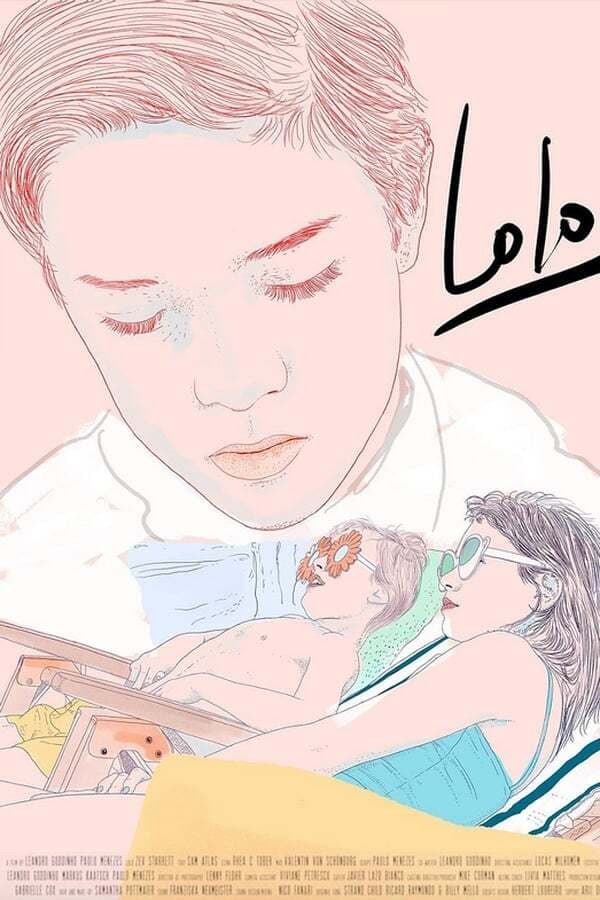
2024 Entry #006 01-04-24 “Lolo” is a 14 minute 2019 German short film which was written and directed by both Leandro Goddinho & Paulo Menezes who went on to create other queer shorts with “It Is Not the Brazilian Homosexuals Who Are Perverse, But the Situation in Which They Live” & “Du Bist So Wunderbar”. The story focuses on Lolo (Zev Starrett), who is an openly gay 11-year-old boy trying to convince Max (Valentin von Schönburg), his first love, to go public with their relationship at the school party, while also spending time with his close friends, Toby (Sam Atlas) and Elena (Rhea C. Tober).

So, this was mostly horrible. The entire cast is made up of children and their performances are not good but with this script it’s hard to blame them for any of this. I do like the poster and the cinematography isn’t horrendous, and I did also like one of the settings – but I wish all of these elements were part of a better film, because this is just scraping the bottom of the barrel.

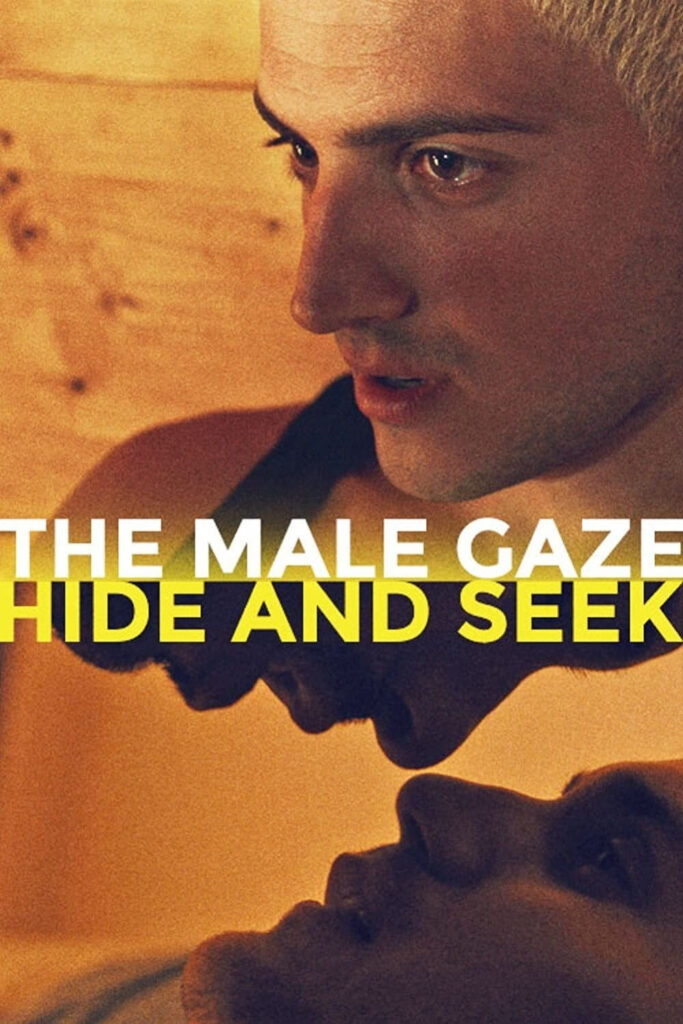
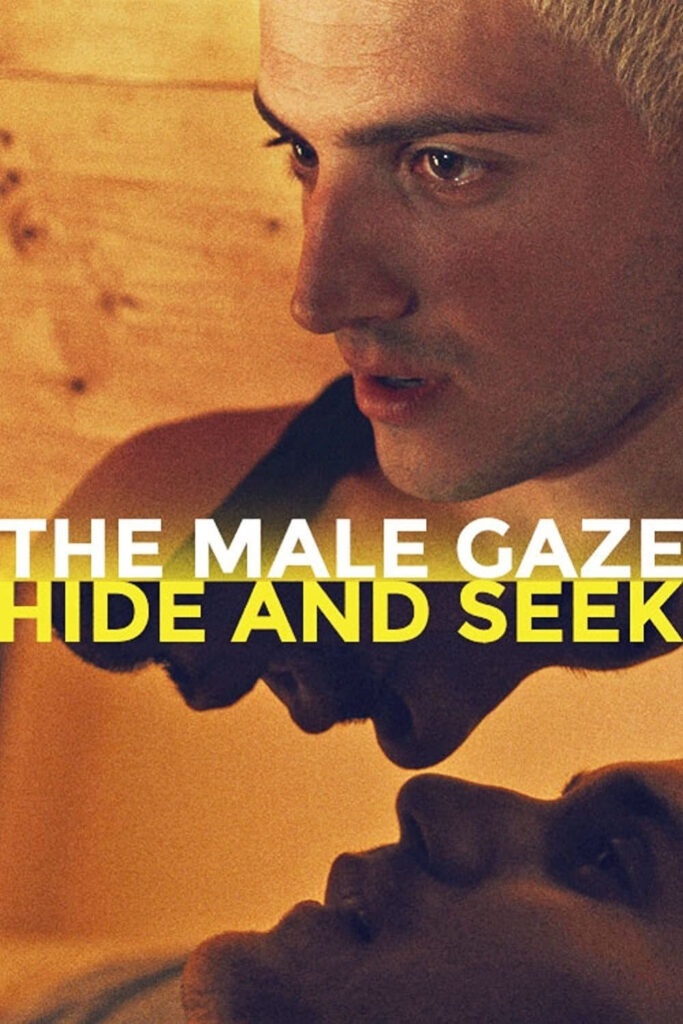
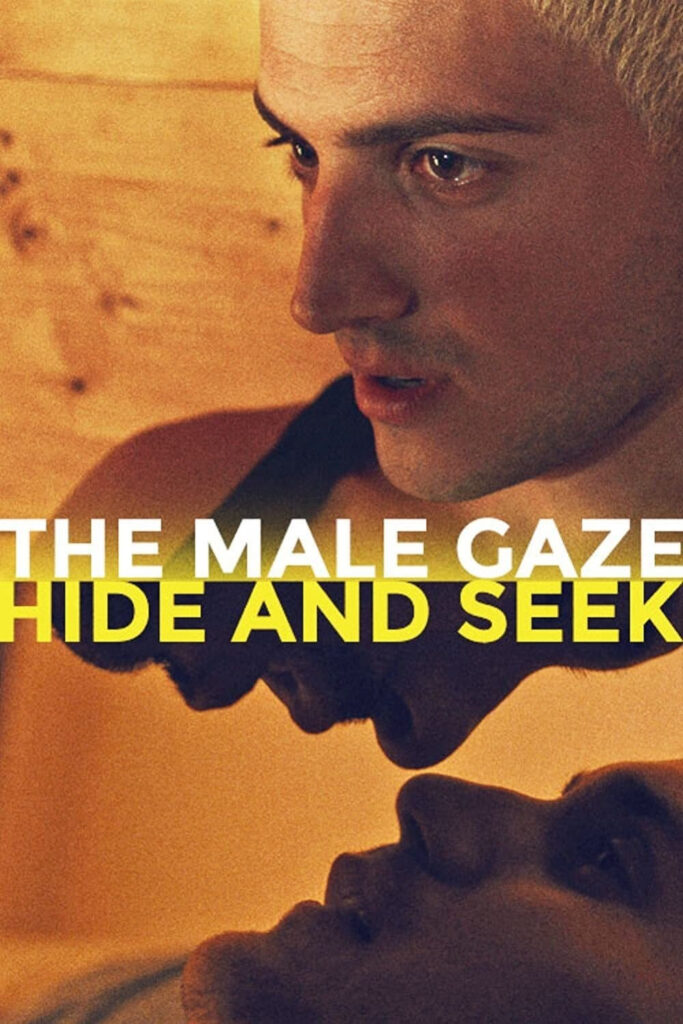
I purchased this short from Amazon Prime a couple of years ago as part of a gay short film collection titled “The Male Gaze: Hide and Seek”. I hope the other entries are better than this one.

Skip it.

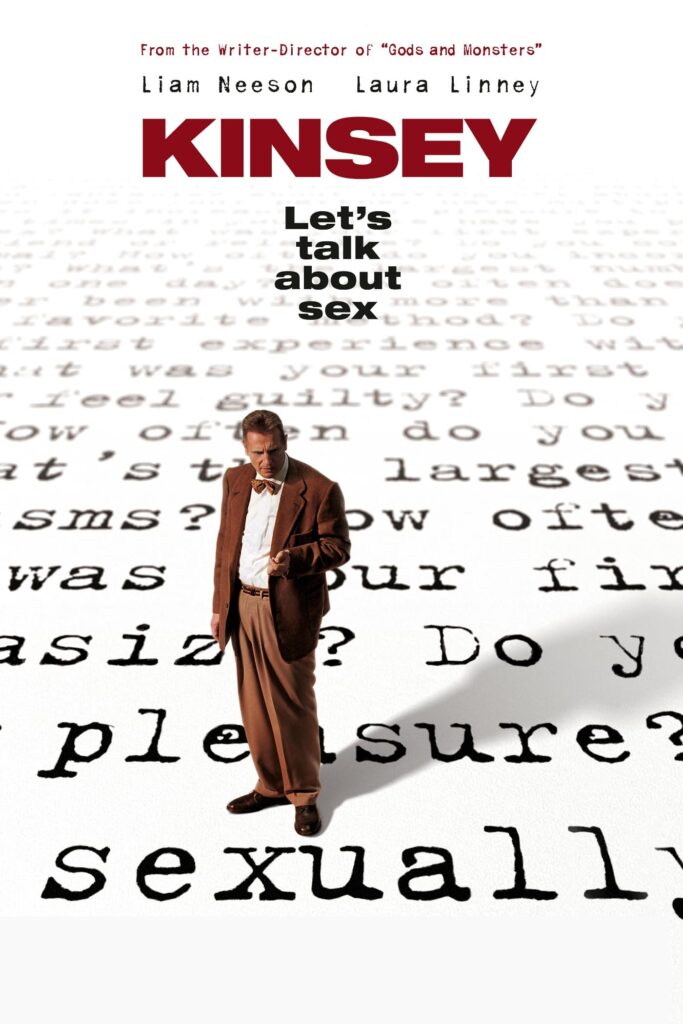
“Kinsey” (2004)

2024 Entry #005 01-04-04 “Kinsey” is a 2004 American biographical drama film written and directed by Bill Condon (“Gods and Monsters”, “Chicago” & the upcoming musical adaptation of “Kiss of the Spider-Woman”), who is himself openly gay. The film features a celebrated cast including Liam Neeson (“Rob Roy”, “Breakfast on Pluto”) Laura Linney (“Tales of the City”, “More Tales of the City”, “Further Tales of the City”, “The Laramie Project”), Chris O’Donnell (“Fried Green Tomatoes”), Peter Sarsgaard (“Boys Don’t Cry”, “Unconditional Love”, “The Dying Gall”, “The Mysteries of Pittsburgh”), Timothy Hutton (“The Substance of Fire”), John Lithgow (“The World According to Garp”), Tim Curry (“The Rocky Horror Picture Show”, “Clue”, “Will & Grace”), Oliver Platt (“Three to Tango”, “Nip/Tuck”, “The Good Wife”, “Modern Family”), Dylan Baker (“Oz”, “Ugly Betty”, “Happiness”, “The Laramie Project”, “The Matador”, “The Good Wife”, “Political Animals”, “Smash”, “The Good Fight”), John McMartin (“Oz”, “Further Tales of the City”), Lynn Redgrave (“Gods and Monsters”, “The Next Best Thing”, “Unconditional Love”, “The Jane Austen Book Club”), Julianne Nicholson (“Ally McBeal”, “Keep the Lights On”), Veronica Cartwright (“Alien”, “Will & Grace”, “Breaking Fast”), Heather Goldenhersh (“Sex and the City”, “Spin the Bottle”, “Nicholas Nickleby”, “Law and Order: Special Victims Unit”, “The Merchant of Venice”, “Modern Family”), David Harbour (“Law and Order: Special Victims Unit”, “Brokeback Mountain”, “Stranger Things”) and openly gay actor Luke Macfarlane (“Brothers & Sisters”, “Smash”, “Single All the Way”, “Bros”).

The film presents the life of Alfred Charles Kinsey (Neeson), a pioneer in the area of sexology. His 1948 publication, Sexual Behavior in the Human Male (the first of the Kinsey Reports) was one of the first recorded works that tried to scientifically address and investigate sexual behavior in humans – including homosexuality, which is featured (refreshingly) prominently throughout the film. Laura Linney’s performance as Kinsey’s wife Clara McMillen was nominated for the Academy Award for Best Supporting Actress and the film received widespread praise (it currently holds a 90% Fresh rating on Rotten Tomatoes) and was featured on many critics’ top ten lists for 2004, including those working for The Boston Globe, Entertainment Weekly, L.A. Weekly, Los Angeles Times, New York Daily News, The New York Times, Newsweek, Rolling Stone, San Francisco Chronicle & The Wall Street Journal. The film won awards from the Los Angeles Film Critics Association (Best Actor: Liam Neeson), The American Film Awards (Top 10 American Films of 2004: Kinsey) & the National Board of Review (Top Ten Films: Kinsey & Best Supporting Actress: Laura Linney).

I’d seen “Kinsey” once before when it was a new release at my video store. I remembered that the film was appropriately frank, that it featured gay, bisexual and lesbian subject matter and characters throughout, and that I had greatly enjoyed it. This proved true on my second viewing as well. I highly recommend it.

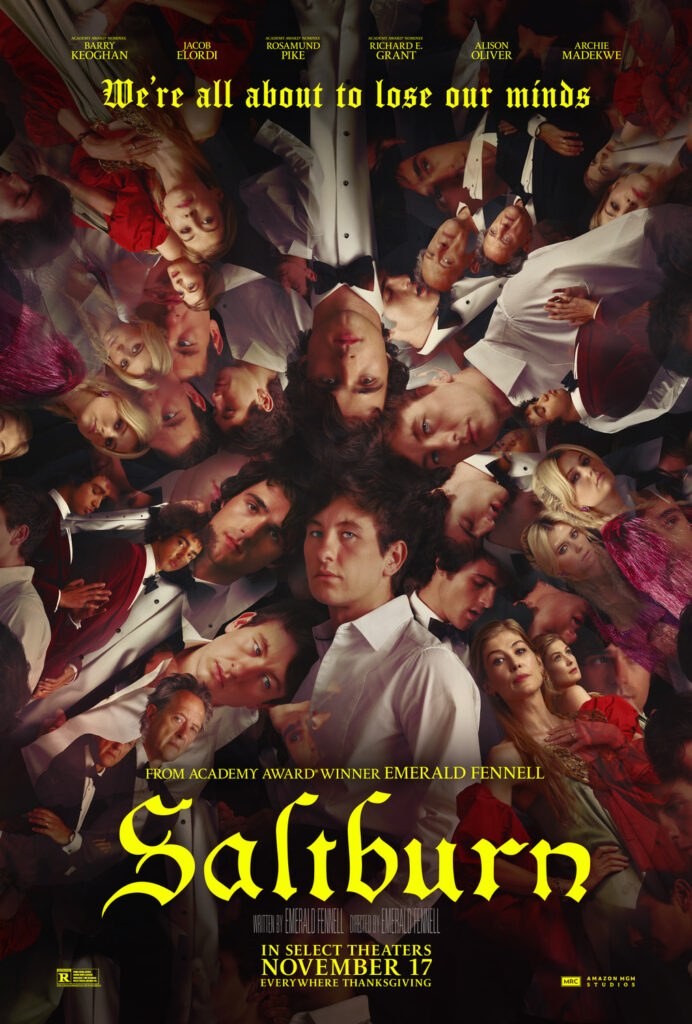
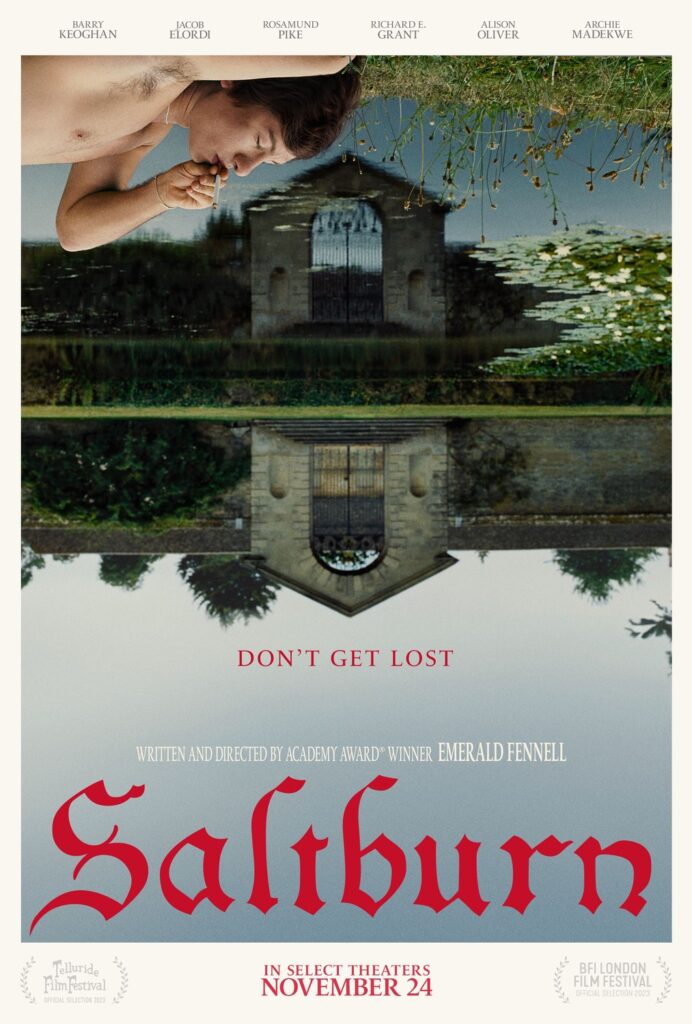
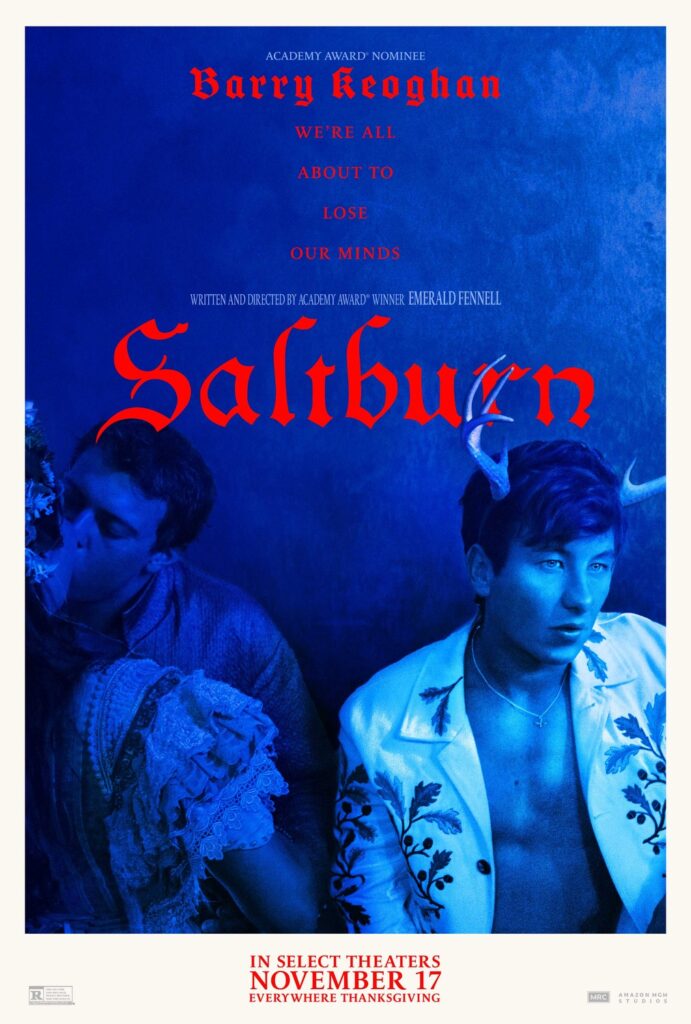
“Saltburn” (2023)

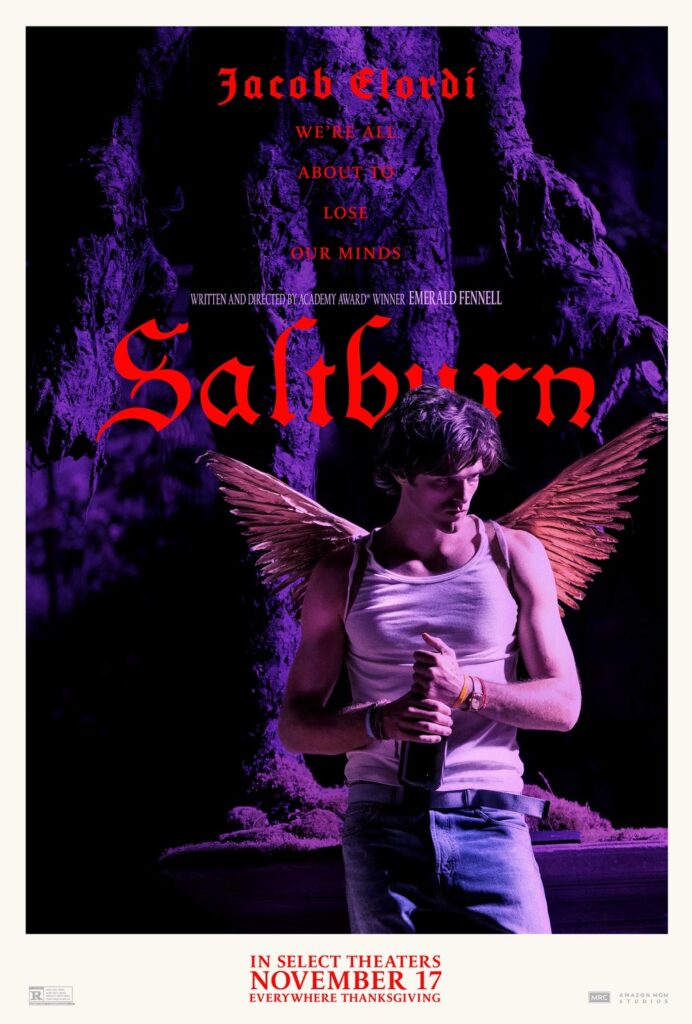
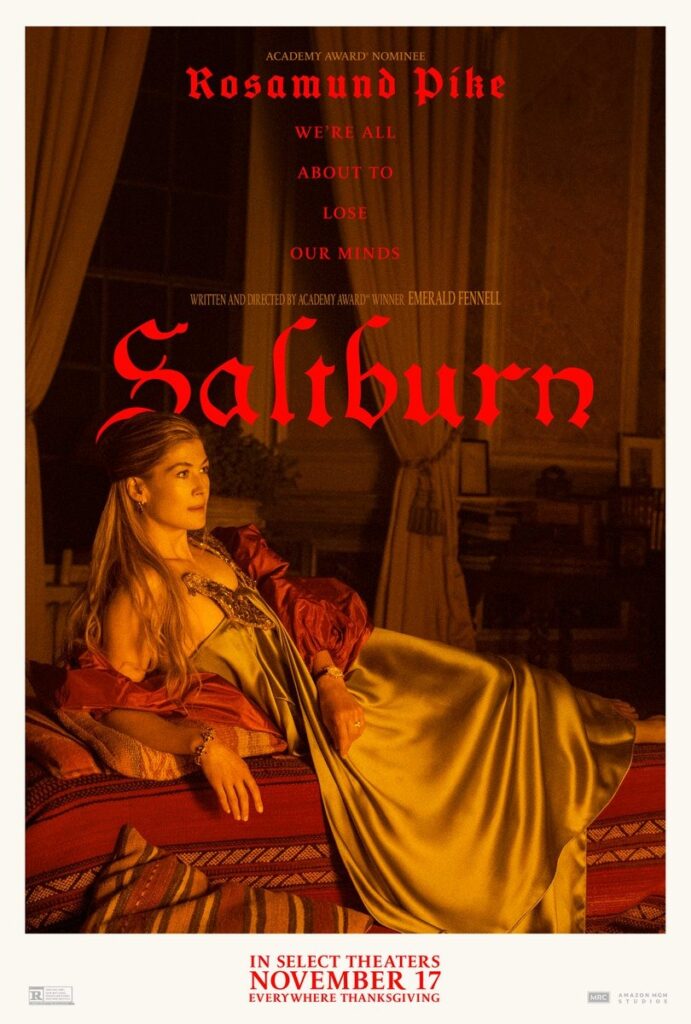
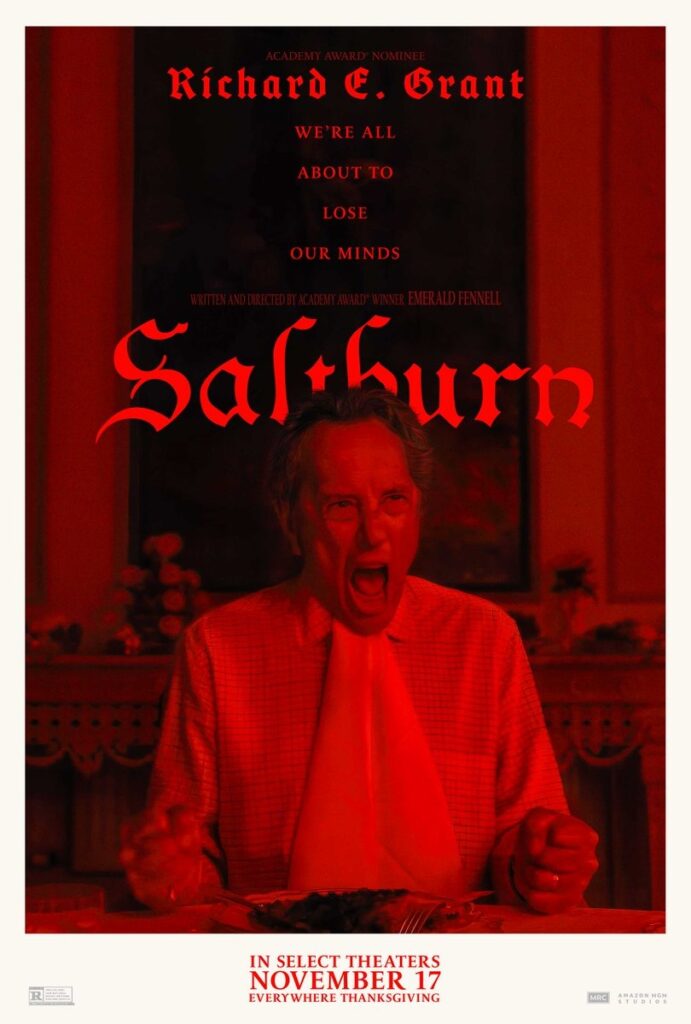
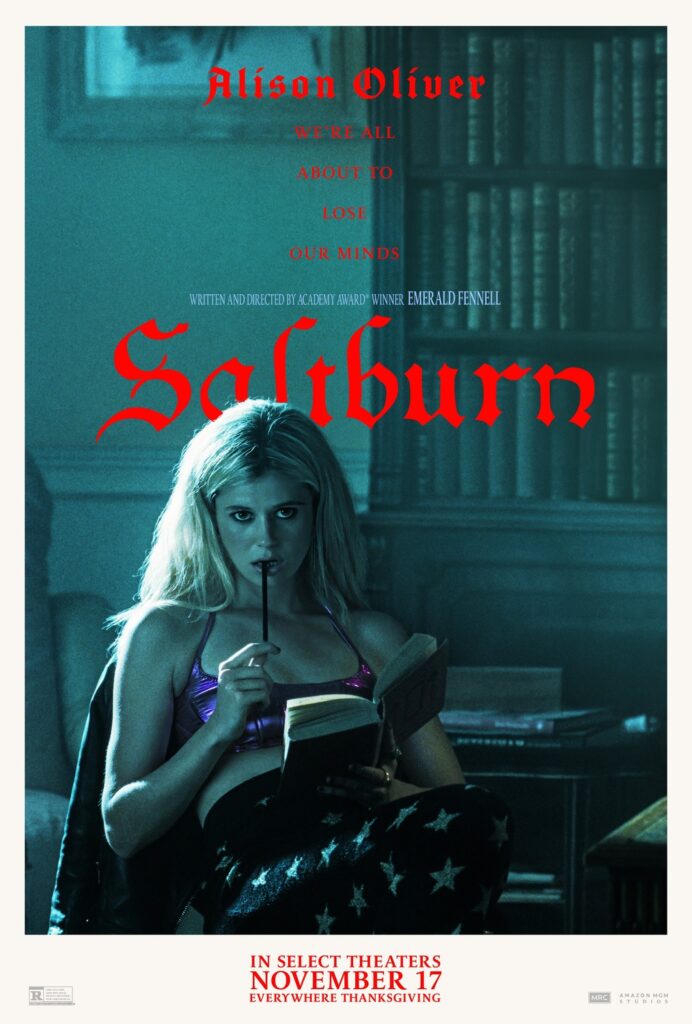
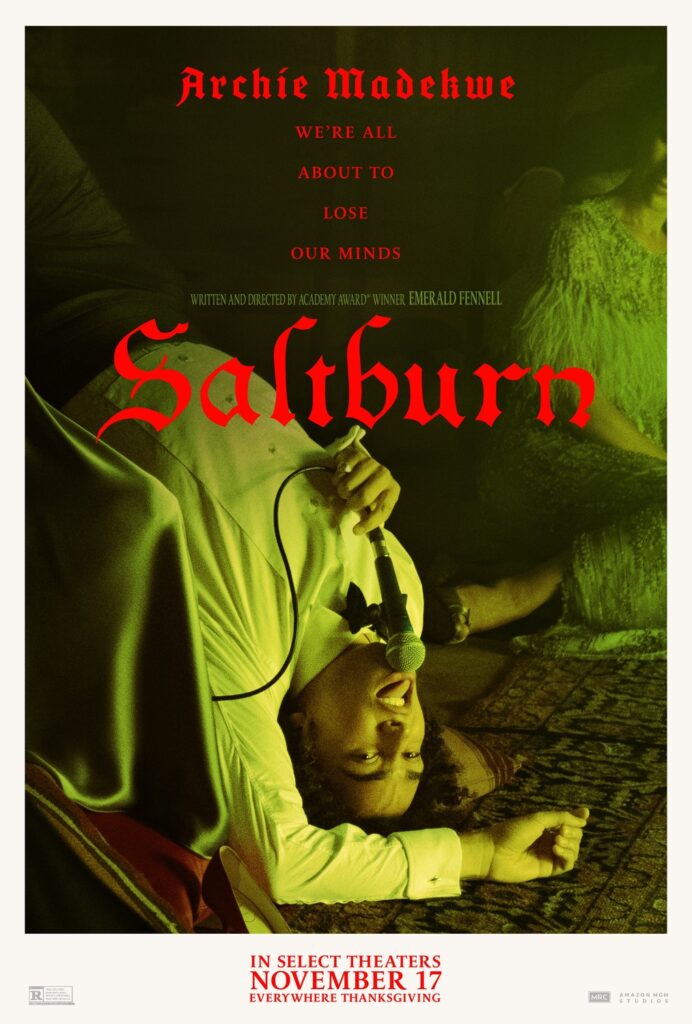
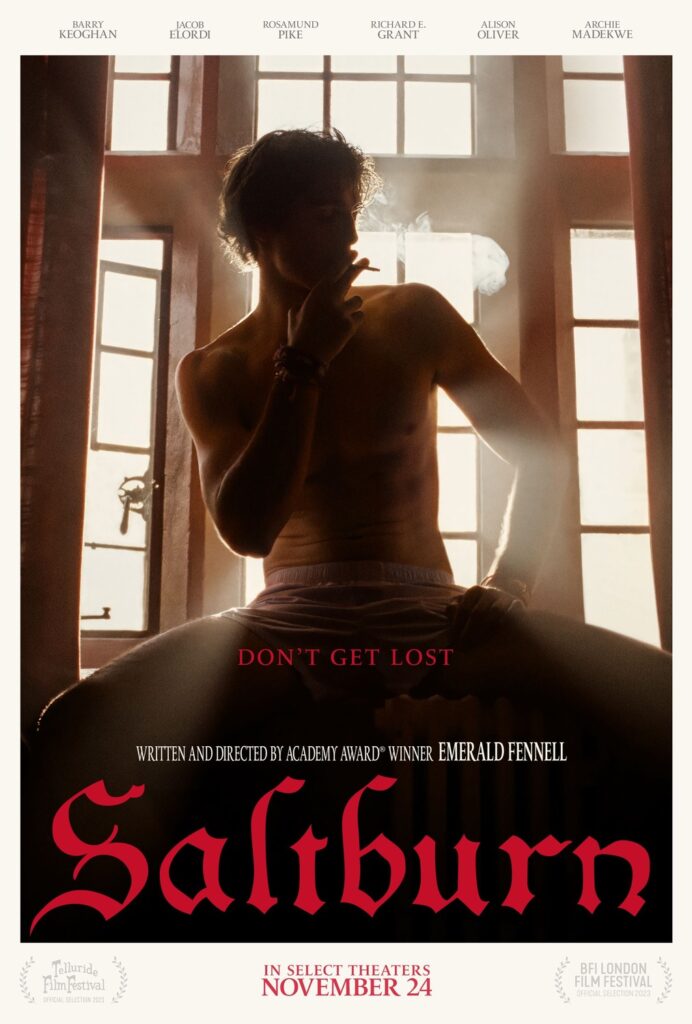
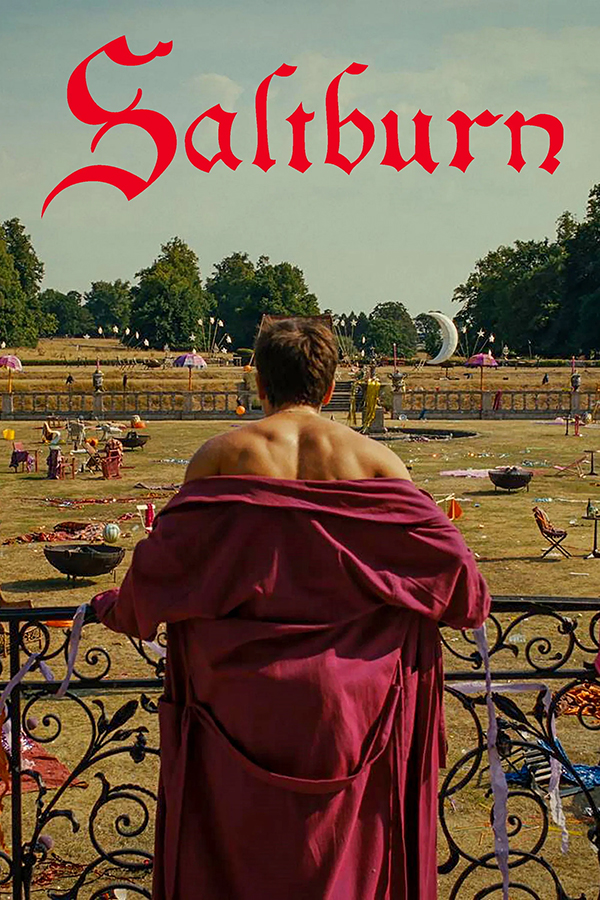
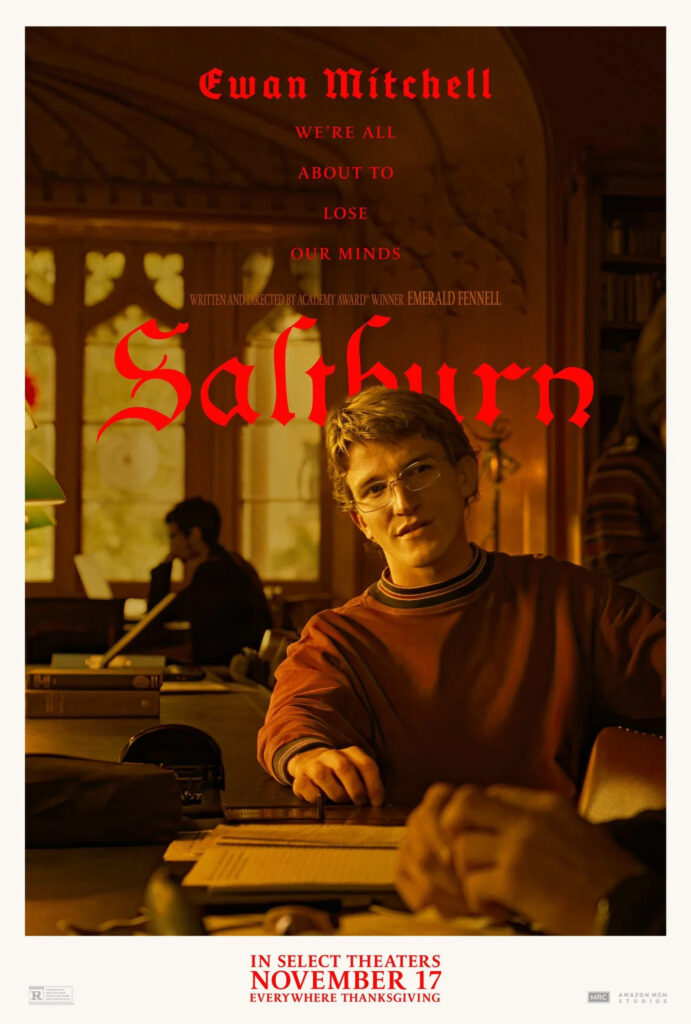
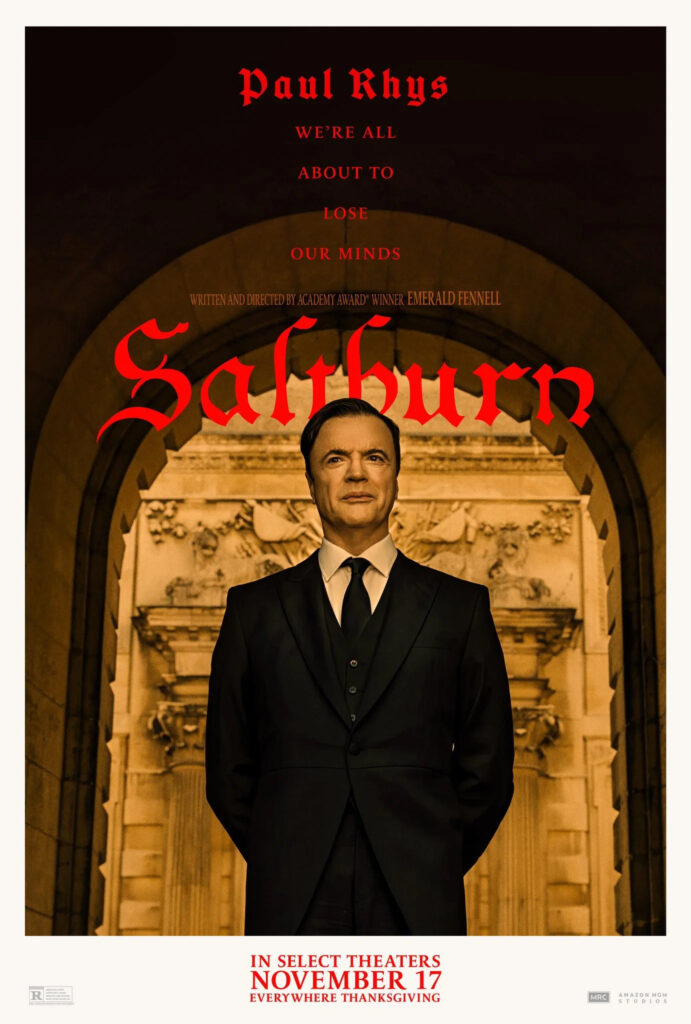
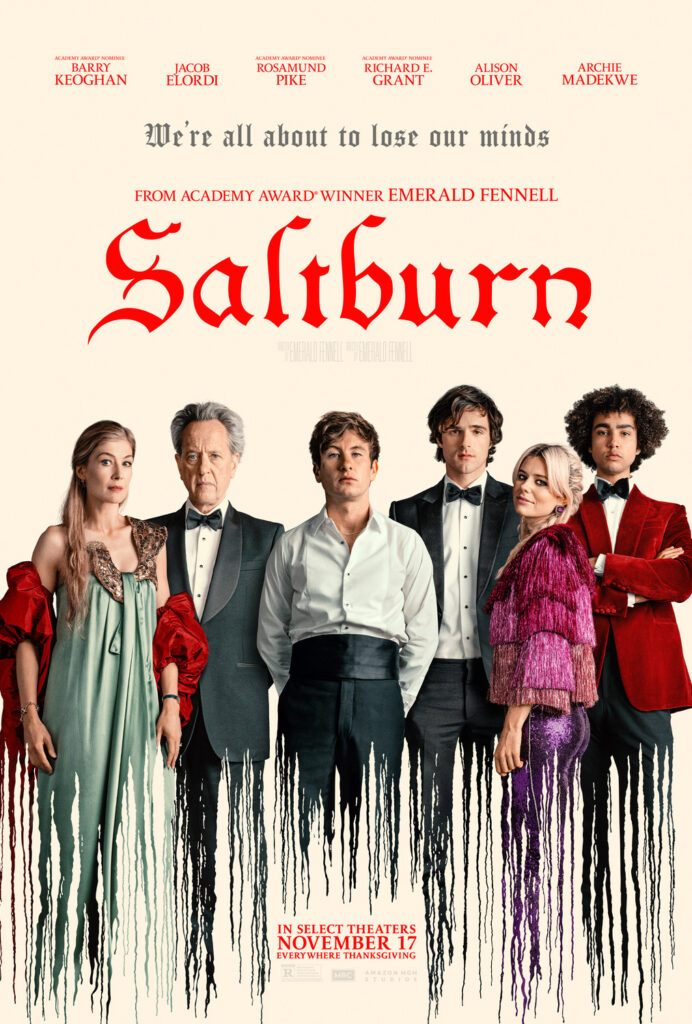
2024 Entry #004 01-04-24 “Saltburn” is a 2023 black comedy psychological thriller film written, directed, and produced by Emerald Fennell (“Albert Nobbs”, “The Danish Girl”, “Vita & Virginia”, “Killing Eve”), starring Barry Keoghan (“Eternals”), Jacob Elordi (“Euphoria”), Rosamund Pike (“The Libertine”), Richard E. Grant (“Withnail and I”, “Warlock”, “Henry & June”, “Bram Stoker’s Dracula”, “Absolutely Fabulous”, “Bright Young Things”, Colour Me Kubrick”, “Doctor Who”, “Game of Thrones”, “Star Wars: The Rise of Skywalker”, “Loki”), Paul Rhys (“Food of Love”), Carey Mulligan (“Doctor Who”, “Shame”, “Maestro”), Alison Oliver, and Archie Madekwe. Set in mid-2000s England, it focuses on a university student who becomes obsessed with a wealthy fellow student within his college, who invites him to spend the summer at his eccentric family’s estate.

I feared that this would be another update of “Brideshead Revisited” (which I’ve never really enjoyed), but instead this film is a clever cross between that pseudo-queer drama and the sinister gay anti-hero, “The Talented Mr. Ripley” – which makes this film much more entertaining than I was expecting! It’s dark and it’s probably not every queer film fan’s cup of tea, but it’s also hilarious, sexy, outrageous and fun. I laughed and I cried, but I laughed out loud a lot.

“Saltburn” is currently streaming on Amazon Prime.

“Aikāne” (2023)

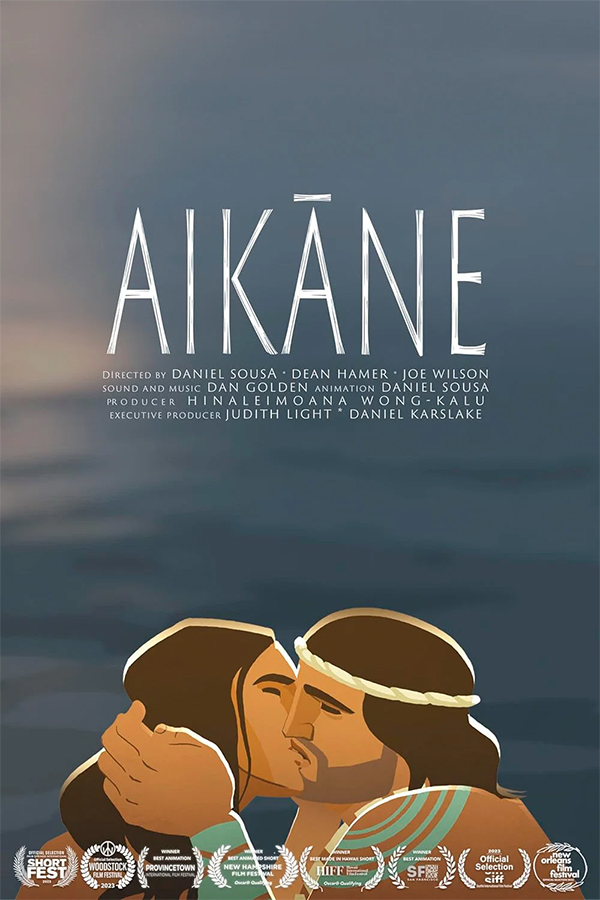
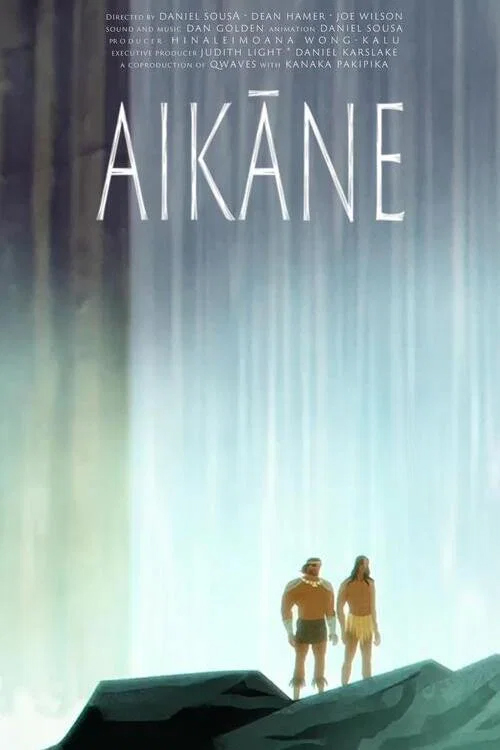
2024 Entry #003 01-03-24 “Aikāne” is a 14 minute 2023 animated short film based on a mythical love and adventure story rooted in the Hawaiian tradition of aikāne, or intimate partners of the same sex. Co-directors Hamer and Wilson, a married couple, were inspired to make the film by their belief that everybody, especially young people, deserve to see a queer love story with a happy ending. The film was produced by Hinaleimoana Kwai Kong Wong-Kalu, also known as Kumu Hina, who is a Native Hawaiian māhū – a traditional third gender person who occupies “a place in the middle” between male and female, as well as a modern transgender woman.

The story follows a valiant warrior, wounded in battle against foreign invaders, who falls deep into a mysterious underwater world. When the octopus who rescues him transforms into a handsome young man, they fall in love and an epic adventure begins.

This was charming, brief and unexpectedly lovely. I know nothing of Hawaiian mythology and was not expecting the sea creature love story – but it was cool nonetheless.

The film has been awarded at multiple children’s, indigenous, LGBTQ+ and other film festivals around the world, and has qualified for the 96th Academy Awards by winning top jury awards at the New Hampshire and Hawaii International Film Festivals.

“Aikāne” is currently streaming for free on YouTube.

“Dark Harbor” (1998)

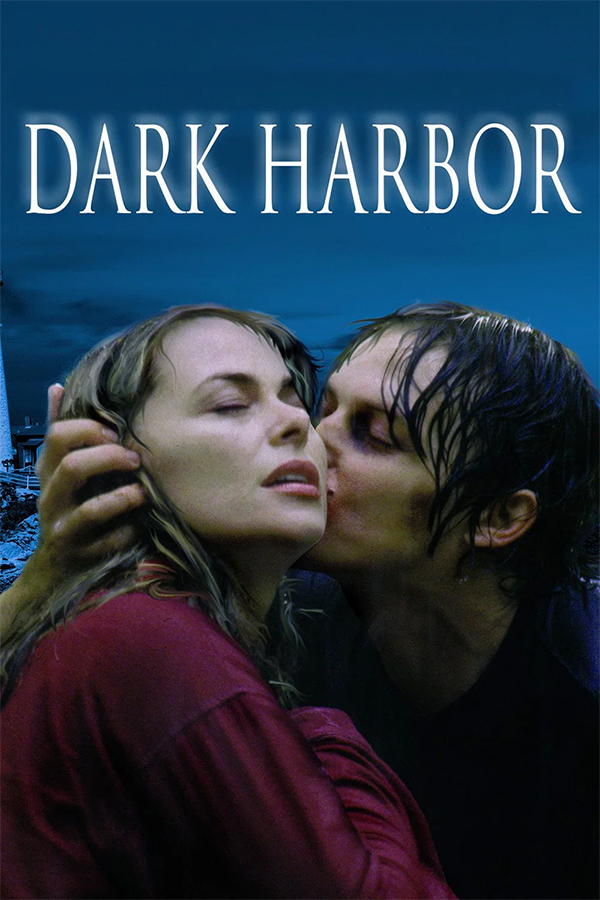
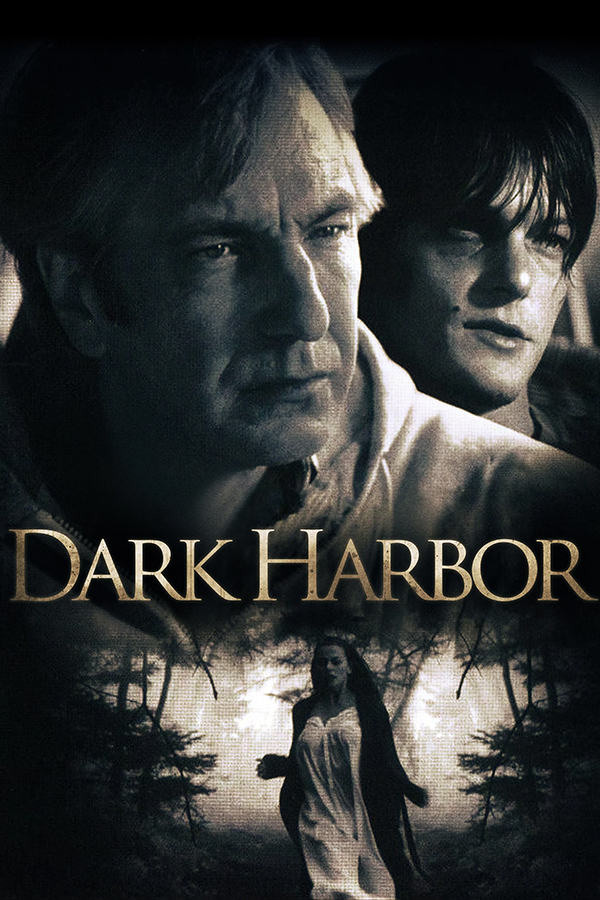
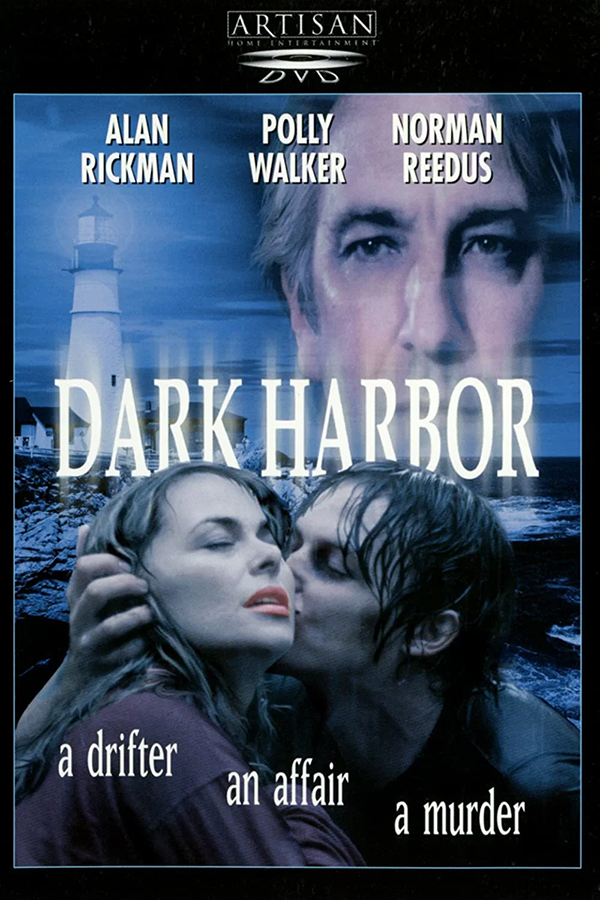
“Dark Harbor” is a 1998 thriller film written and directed by Adam Coleman Howard. It stars Alan Rickman (“An Awfully Big Adventure”, the Harry Potter films, “Perfume: The Story of a Murderer”), Norman Reedus (“Floating”, “The Boondock Saints”, “Beat”, “Luster”) and Polly Walker (“Scenes of a Sexual Nature”, “Caprica”). The aimless story follows David Weinberg (Alan Rickman), a lawyer in his 50s, and his much younger wife Alexis (Polly Walker) when they cross paths with an injured young man (Norman Reedus) at the side of the road, whom they reluctantly drive to the nearest town.

To discuss this film I’ll need to somewhat SPOIL the ending, so be warned.

I’d seen this film once before when I purchased it for my collection, having heard that there was a gay storyline. I remembered being relatively distracted by it, though when I tried to remember anything in detail I could clearly remember the final 5 minutes of the film and little else. Having revisited it, I can see why that is. For most of the film’s runtime, it plays like a timid, well meaning, but rather disjointed television film which leads to a twist ending involving a murder, followed by an unexpected nude scene from Rickman (which works well thematically but feels oddly risqué after the bulk of this prudish tedium), followed by a big gay reveal at the end, which ineffectually attempts to recontextualize much of what we’ve seen up to this point. But even knowing the twist and watching to see how the film played out given these previously hidden details, it still felt scattered and emotionally incoherent – leaving this so-called thriller bereft of any thrills beyond the twist itself, which is too bad. I enjoy all of these performers much more in other pieces and the movie isn’t exactly horrible so much as deeply flawed. But unless you’re a completist I’d suggest skipping this one.

“Nuovo Olimpo” (2023)

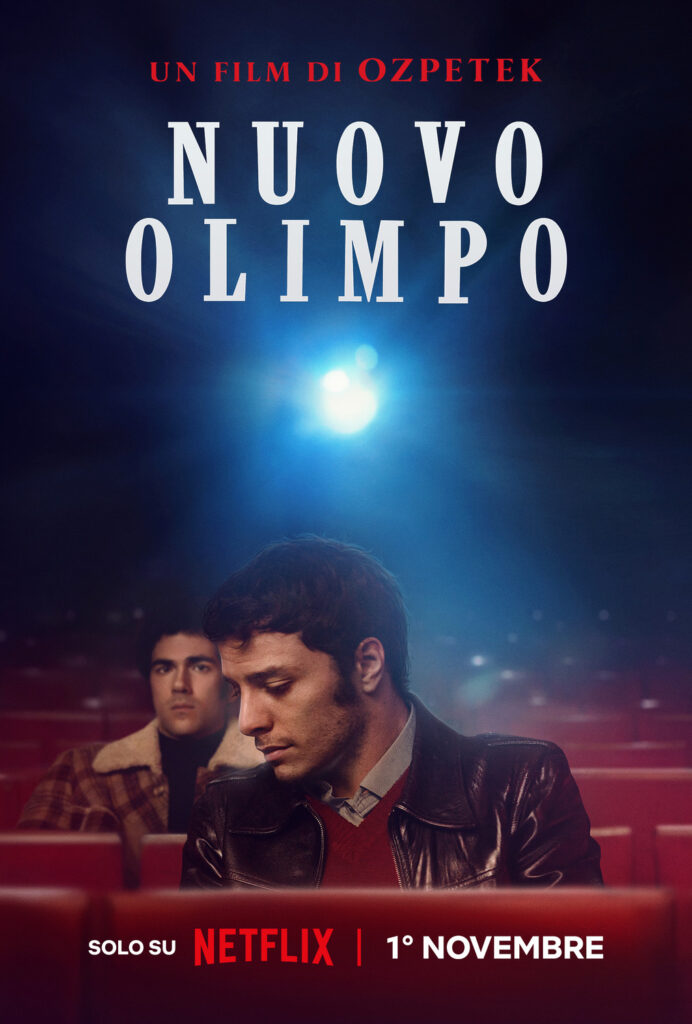
“Nuovo Olimpo” is a 2023 semi-autobiographical Italian romantic drama film by openly gay director Ferzan Özpetek (“Hamam” / “Steam: The Turkish Bath”, “The Ignorant Fairies”, “Facing Windows”, “Saturn in Opposition”, “Loose Cannons”, “Magnificent Presence”, “Fasten Your Seatbelts”, “Red Istanbul”, “The Goddess of Fortune”) who co-wrote the film with Gianni Romoli. The story centers on Andrea Di Luigi as Pietro Gherardi & Damiano Gavino as Enea Monte, two men who meet and fall in love in late-1970s Rome, only to be separated unexpectedly. The film premiered at the Rome Film Festival on October 22, 2023 and was released on Netflix on November 1, 2023. Elements of the film’s story were taken from writer and director Ferzan Özpetek’s own life and career. He stated, “The starting point of the film is a true story that happened to me in the ’70s and that for a long time I wanted to use as an inspiration to make a film.” Nuovo Olimpo was shot entirely in Rome, specifically in Municipio III and Monte Sacro. Principal photography began in November 2022.

I’d previously seen and enjoyed both “Steam: The Turkish Bath” and “Facing Windows”, but until the release of this film in late 2023, I had no idea they shared the same creative team. But when I learned that Özpetek had directed both of those films and this one, I was immediately interested in seeing it.

I liked this though I’m not sure if I enjoyed it as much as his previous work. There are some wonderful sequences here and I adore the music he uses, and many elements of the story resonate for me in interesting ways. But I had a headache when I watched this which got progressively worse throughout, and this affected my experience and how I viewed it. I generally insist on subtitles vs. dubbing when I view foreign films because I love to hear the languages but because of the headache, after the film started and I found it was dubbed, I chose to keep watching because I wanted to see the movie so badly but I thought reading all the subtitles while I was impaired would be painful. I don’t think this choice ruined the movie, but I do feel like it added an extra level of camp, and if I ever view it again, I plan to view it with subtitles on.

The story features two bisexual men, Pietro & Enea, who fall in love with one another but are separated. Throughout their lives they consider one another and are haunted by their past relationship, despite moving on and finding happiness with other people. Their relationship pops up in all sorts of ways in the lives they choose to lead and eventually they are reunited, many years later, but to what end? This resonates with me. I’m demisexual; I form strong emotional bonds with nearly all the people I choose to have sex with, which is why I’m not good at one night stands and I’ve dated most of the people I’ve been with. These people, mostly men, who have been part of my life and drifted apart, I’ve often used their memory to create art (which is something the Enea does here) – and this has led to reunions, however brief, which feature old lovers speaking with some of the same results seen here. The film is a fiction based on real life, and that is exactly what it feels like. There are meta elements which are interesting and add something to the equation, pushing the life as fiction narrative…which border on gimmicky, but are really just another side of the truth. And the film features several supportive female roles that I found quite moving, if a bit underwritten; I liked all of these women but I’m not sure I truly knew them by the end of the film or that I fully understood them – and I wish we got more of that somehow. It’s not a perfect film but it’s a beautiful attempt.

“Nuovo Olimpo” is currently streaming on Netflix.

error: Content is protected !!