

The Marvel Cinematic Universe (aka the MCU) is an American media franchise and shared universe mainly centered on a series of superhero films produced by Marvel Studios but also featuring short films, various series and comics. The original cycle of stories told a unified epic tale known as The Infinity Saga, which is currently made up of 46 installments: that’s 4 series episodes (less than an hour each), 19 shorts & 23 full length films. This is the viewing order for the media portions of that story and how they fit together. All of these stories are set in the same shared reality, often referred to as Earth-616, Earth-199999 and / or The Sacred Timeline.

Eyes of Wakanda (August 1, 2025)
This series is available on Disney+ and can be viewed here.
This miniseries tells of the secret African nation of Wakanda, mainly focused on the Hatut Zaraze, Wakandan warriors, who carry out dangerous missions around the world to retrieve valuable and dangerous vibranium Wakandan artifacts throughout history. The series introduces Wakanda, Black Panther(s), the Dora Milaje & the Iron Fist, while the characters Uatu / The Watcher and N’Jadaka / Erik “Killmonger” Stevens make their first (non-speaking cameo) appearances.
Eyes of Wakanda S01E01
Into the Lion’s Den (29 minutes)
Eyes of Wakanda S01E02
Legends and Lies (29 minutes)
Eyes of Wakanda S01E03
Lost and Found (30 minutes)

The film is on Disney+ and can be found here.
The film is mainly set in 1942-1945, featuring bookends in 2011. Many important characters of the Infinity and Multiverse Sagas are introduced in this film. Additionally, vibranium, introduced in “Eyes of Wakanda” is featured here.
Instead of a credit scene, if you stick around through the end credits there is a trailer for 2012’s “The Avengers”, which at the time, was the next film set to be released.
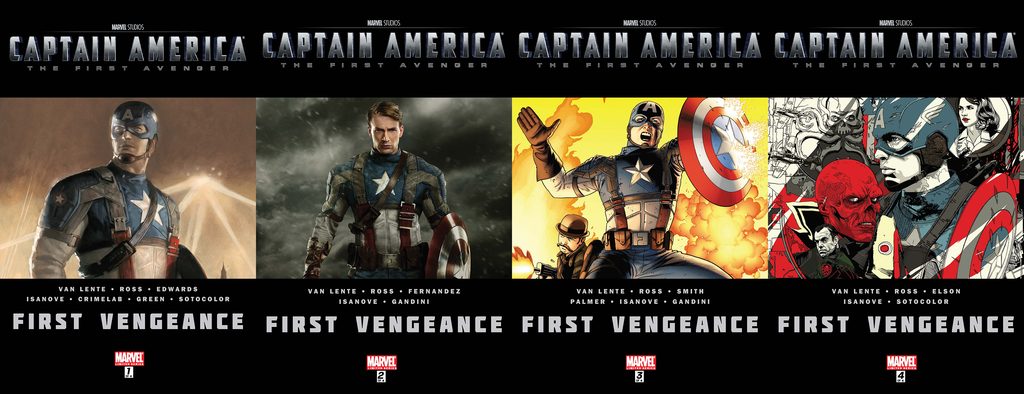
Captain America: First Vengeance
First Vengeance was written by Fred Van Lente, with art for the first half of the comic by Neil Edwards, and by Luke Ross for the rest. The first of eight digital issues was released on February 6, 2011, with the other seven subsequently released on February 16, March 2, March 23, June 8, July 6, July 13, and July 20, respectively. The comic was also published in four issues on May 4, May 18, June 15, and June 29, 2011, respectively.
On what the comic covers, Captain America: The First Avenger co-producer Stephen Broussard explained that there were “lots of little side stories” that they found fascinating but didn’t fit into the story of the film, so the comic allows those to be told. These side stories include some backstory to the film, some action running parallel to the film, and some hints at “things to come”, and are “all sort of jumbled up”. Van Lente read the film’s script, and had his own comic scripts overlooked by Quesada and Broussard, to keep the comic in line with the film. Some of Van Lente’s initial ideas, when he felt that he could do anything because of the comic medium, had to be changed due to not fitting into the realistic world of the MCU, a process Van Lente described as “making comics on a budget”.
Van Lente stated, “What’s neat about the MCU, just like in the comics’ universe, is the interconnections between various movies, particularly Iron Man 2 and Thor. You’ll start to see those coming out in First Vengeance.” On the differences between the MCU and original versions of the characters, Van Lente noted that when Joe Simon and Jack Kirby originally created Captain America, they “didn’t have 20/20 hindsight to see how things would fit together with the Marvel characters to follow. With the MCU, we’re able to make those connections and heighten all of the characters’ weight.”
The story covers a wide swath of time, from 1924 to 1944. In 1944, as he attacks a Hydra base in the Nazi-occupied Danish Straits, Steve Rogers recalls parts of his life that got him to this point: his mother’s blessing to become a soldier; his first meeting with Bucky Barnes*, who protected him from bullies as a boy; the day after Pearl Harbor was bombed, when Barnes and Rogers decided to enlist; Barnes training Rogers to pass the physical; and the point when Barnes passed the physical but Rogers failed. Johann Schmidt watches Rogers fight, and recalls how he got to this point: meeting Adolf Hitler; capturing Arnim Zola to research creating super soldiers; and finding Abraham Erskine and blackmailing him into continuing his super soldier research under the employ of the Nazis. Howard Stark, via radio, assists Rogers, remembering when he was recruited by Colonel Phillips to join the Strategic Scientific Reserve, and when he helped Peggy Carter rescue Erskine from Schmidt. Dum Dum Dugan and the Howling Commandos arrive to assist Rogers, and they remember their formation—thrust together in a Hydra work camp, forming close friendships after a failed escape attempt. After they defeat the Hydra soldiers, Rogers destroys Schmidt’s main weapon at the base, an Asgardian artifact.
* In the first issue there is aa 2 page spread showing the first meeting between Cap & Bucky, which is later contradicted in “Captain America: The Winter Soldier”, which at the time, hadn’t been written. The rest of the story still fits with established continuity.

This short film is available on Disney+ and can be found HERE.
This 15 minute short film sequel to “Captain America: The First Avenger” shows the further adventures of Peggy Carter in 1946.
Stick around through the credits for important bonus scenes.

This film can be viewed on Disney+ and can be found HERE.
Mainly set in 1989 & 1995 – the Mid-Credit Scene is set in 2018 and bridges later entries, “Avengers: Infinity War” & “Avengers: Endgame”. There is also a 1995 set post-credit scene.

This film is viewable on Disney+ and can be found HERE.
Mainly set in 2008. The film has one credit scene.
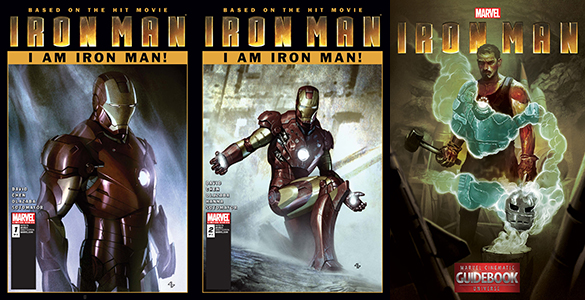
Iron Man: I Am Iron Man #1
Iron Man: I Am Iron Man #2
Comic Adaptation of the first Iron Man film.
Guidebook to the Marvel Cinematic Universe:
Iron Man #1
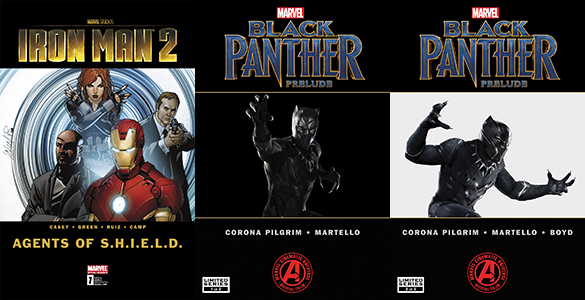
Iron Man 2: Agents of S.H.I.E.L.D. One Shot
Iron Man 2: Agents of S.H.I.E.L.D. was written by Joe Casey and released on September 1, 2010. It consists of three, eight-page stories, each spotlighting a different character: Phil Coulson’s story, “Just Off the Farm”, with art by Felix Ruiz, takes place first. In the Coulson segment, he monitors the first field operation of a S.H.I.E.L.D. recruit who is tasked with taking down a Ten Rings terrorist cell on American soil, which Coulson later reveals was a set up, a common S.H.I.E.L.D. test for new recruits.
Casey said of the short stories, “The movie studio is very aware of what they’re doing, so they paid close attention…It’s not exactly the Marvel Universe I grew up with, [but] it’s not like the Ultimate universe either. It’s a brand new thing, with its own rules and its own continuity.”
Black Panther Prelude #1
Black Panther Prelude #2
This comic tells the story of how T’Challa first became the Black Panther, protector of the isolationist country Wakanda, a story not yet told in the MCU.
The comic is set nearly a decade before the film Black Panther, around the end of the first Iron Man film, and reveals that T’Challa has been acting as the Black Panther since then, making him that hero for almost a decade before his film introduction in Captain America: Civil War.
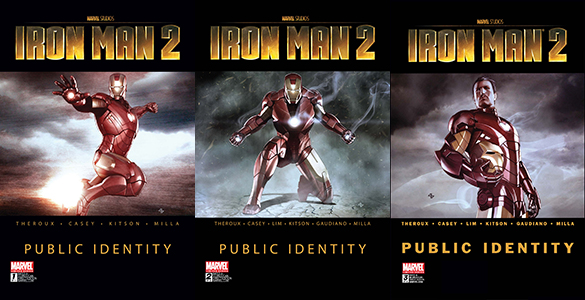
Iron Man 2: Public Identity
The comic, set after Iron Man but before Iron Man 2 and The Incredible Hulk, was conceived to explain the post-credits scenes of Iron Man and The Incredible Hulk, where Tony Stark meets Nick Fury for the first time but General Ross not for the first time, respectively. Arbona said that “when Tony Stark spoke to General Ross at the end of The Incredible Hulk, you could tell they already knew each other; they spoke about some shared history they’d had together. Well in Iron Man 2: Public Identity you see when they first meet, and what that shared history is.” This comic explains that the AI J.A.R.V.I.S. was created in memory of Edwin Jarvis, introduced here as Howard Stark’s butler. James D’Arcy plays a younger version of this character in “Agent Carter” & “Avengers: Endgame”.
The story begins decades ago, as Howard Stark worked with Anton Vanko to build the first arc reactor, but when Howard realized Vanko’s greedy goals, he had him arrested and deported before, at the urging of Obadiah Stane, returning to the business of arms dealing that made him so successful in the past. In the present, Stark’s son Tony uses the arc reactor technology to power his Iron Man armor, and after revealing this identity to the world, becomes a public hero. U.S. General Thaddeus Ross commissions Stark’s business rival Justin Hammer to build a single-pilot vehicle to replace Iron Man, who has been interfering with and causing trouble for the military. When testing the new vehicle, the pilot crash lands in unfriendly territory, under attack from the Congolese army. Tony saves the airman, but, to the chagrin of Ross, refuses to return the Congolese soldiers’ fire. Director Nick Fury and Agent Phil Coulson of S.H.I.E.L.D. later review Stark’s actions.
Public Identity was written by Joe Casey and Justin Theroux, with art by Barry Kitson, and the three issues were published on April 28, May 5, and May 12, 2010, respectively. Theroux, who wrote the screenplay for Iron Man 2, was able to show Casey “a fairly finalized script” before the two began work on the tie-in. In May 2010, Alejandro Arbona, who oversaw the creation of the comic, explained that the story of the tie-ins had to come “organically from the stuff that happened in Iron Man —what would happen to a man who’d just revealed his super hero identity to the world?—and it had to move us toward the stuff we knew was going to be important in Iron Man 2”. In September 2010, Casey noted that writing an MCU tie-in comic required working within the boundaries of the movie continuity and Marvel Studios’ plan, as well as writing the characters as portrayed in the films (the “movie version of Stark has a specific attitude” that Casey tried to put in the comic, for example).
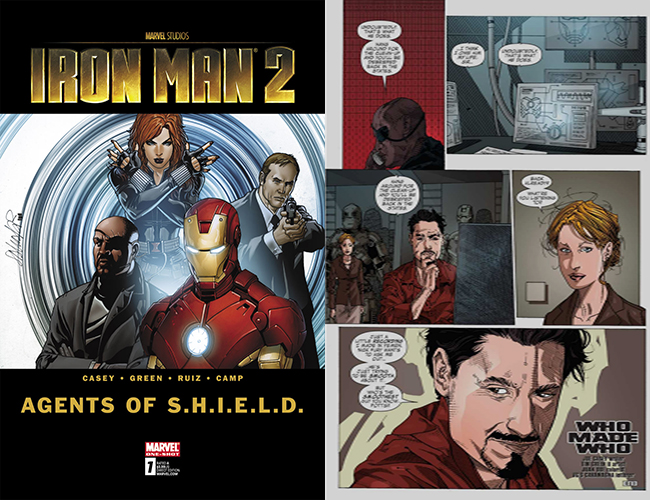
Iron Man 2: Agents of S.H.I.E.L.D. One Shot
Iron Man 2: Agents of S.H.I.E.L.D. was written by Joe Casey and released on September 1, 2010. It consists of three, eight-page stories, each spotlighting a different character: Nick Fury’s story, “Who Made Who”, with art by Tim Green, takes place second. In the Fury segment, he plants a S.H.I.E.L.D. agent aboard a Ten Rings-controlled vessel in the Gulf of Aden in an effort to get a live account of Iron Man in action, while Tony Stark is keeping an eye on S.H.I.E.L.D. himself.
Casey said of the short stories, “The movie studio is very aware of what they’re doing, so they paid close attention…It’s not exactly the Marvel Universe I grew up with, [but] it’s not like the Ultimate universe either. It’s a brand new thing, with its own rules and its own continuity.”

Avengers: Prelude: Fury’s Big Week #1 (Prologue)
Fury’s Big Week was released digitally in eight issues from February to March 2012, to tie-in with the film’s marketing. The comic was then published in hard copy from March to April as four individual chapters. The first digital issue is the prologue, which begins with a flashback to the climactic 1945 events from “Captain America: The First Avenger”, then moves to the present of 2010, before events depicted in “Iron Man 2”, “A Funny Thing Happened on the Way to Thor’s Hammer”, “Thor”, “The Incredible Hulk” & the 2011 epilogue of “Captain America: The First Avenger”. In this timeframe, the World Security Council shuts down S.H.I.E.L.D.’s search for Captain America’s crashed plane in the Arctic, as well as the surveillance of Tony Stark and Bruce Banner / Hulk, in favor of Project Pegasus — S.H.I.E.L.D.’s attempts at exploiting the Tesseract — though Director Fury decides to continue these operations “off the books”.
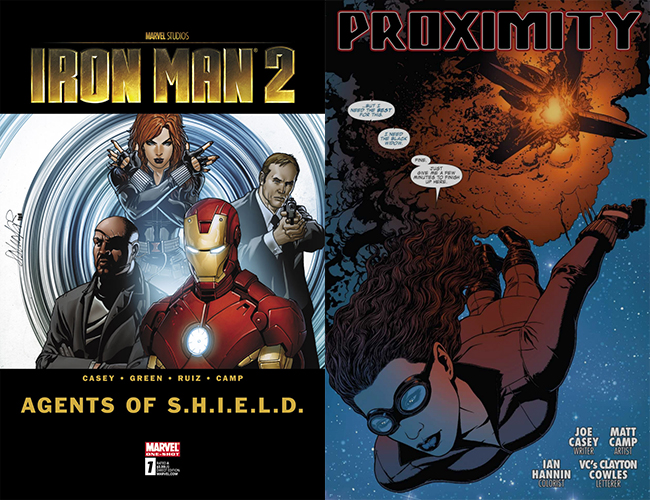
Iron Man 2: Agents of S.H.I.E.L.D. One Shot
Iron Man 2: Agents of S.H.I.E.L.D. was written by Joe Casey and released on September 1, 2010. It consists of three, eight-page stories, each spotlighting a different character: Natasha Romanoff’s story, “Proximity”, with art by Matt Camp, is a direct prequel / parallel story to Iron Man 2 and is appropriately read here. In the Romanoff segment, she infiltrates Stark Industries under the alias of Natalie Rushman, using her spy skills to quickly work her way up the company, working undercover in the legal department and meeting with Tony Stark in his home gym. This scene takes place during Iron Man 2 where the character is introduced, this story therefore acting as a direct prequel / parallel story to the film.
Casey said of the short stories, “The movie studio is very aware of what they’re doing, so they paid close attention…It’s not exactly the Marvel Universe I grew up with, [but] it’s not like the Ultimate universe either. It’s a brand new thing, with its own rules and its own continuity.”

This film is viewable on Disney+ and can be found HERE.
According to The Marvel Cinematic Universe: An Official Timeline, the opening of the film begins in 2008 and features a montage dealing with events between 2008 & 2010, while the main events depicted in the film take place in Spring of 2010.
The film’s post credit scene helps set up (and takes place during) “Thor”.
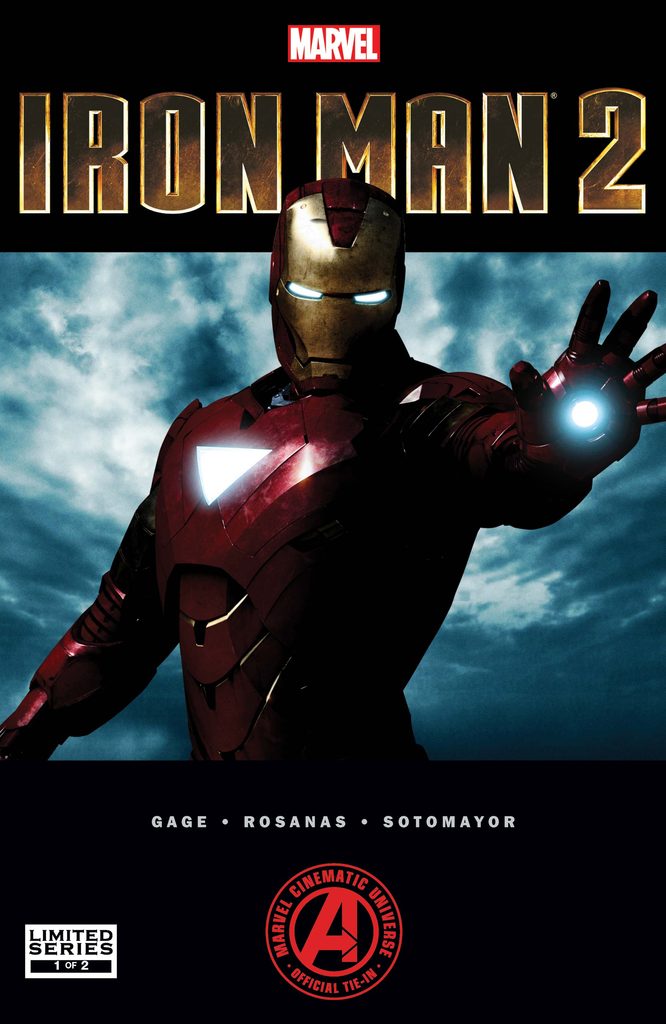
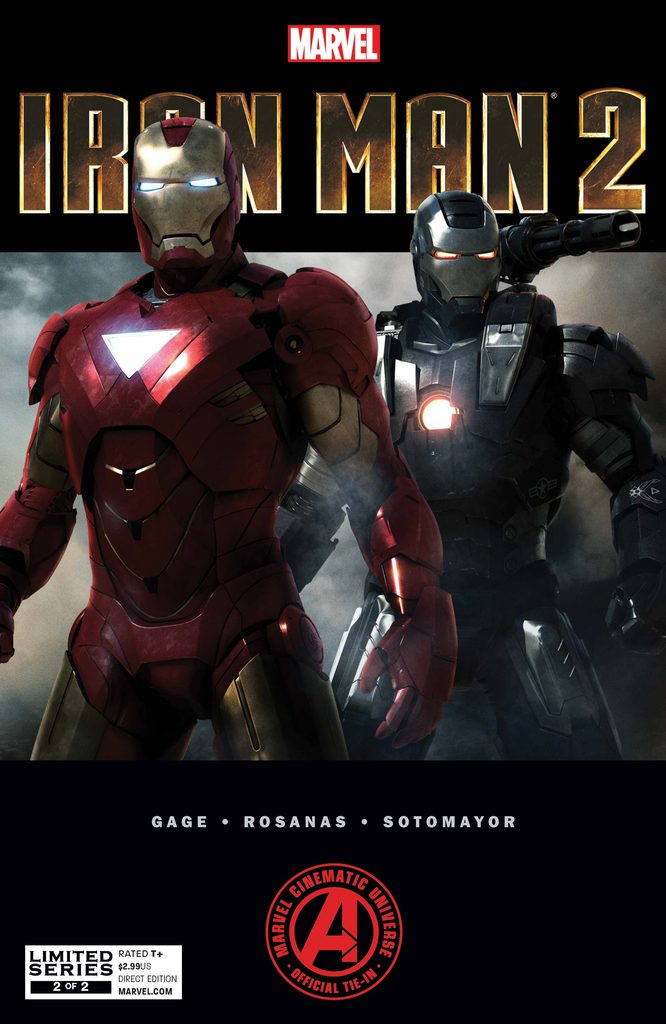
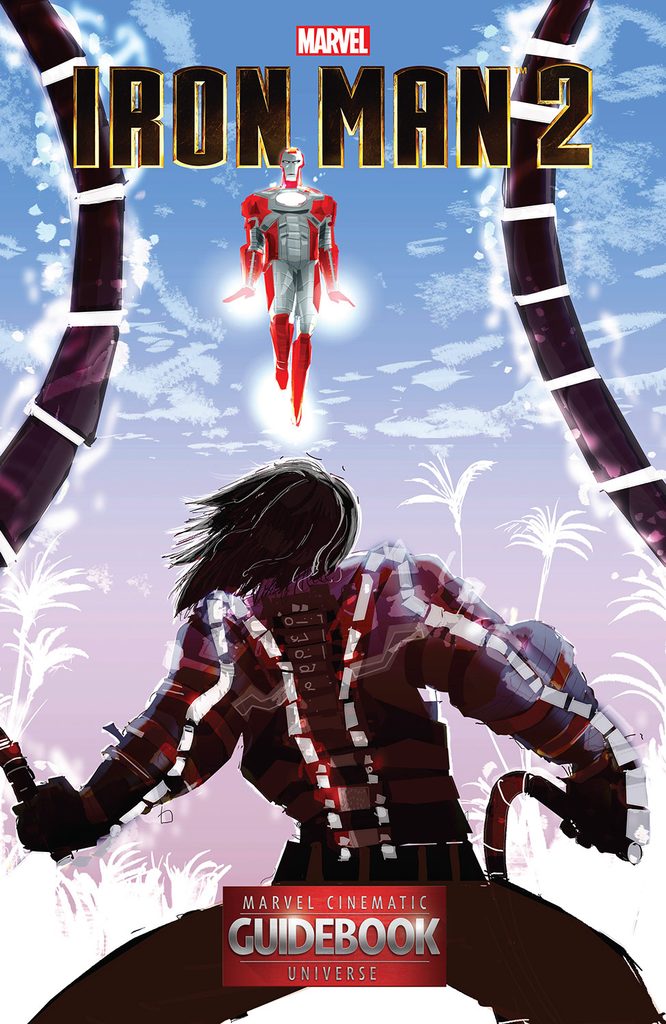
Iron Man 2 #1 (of 2)
Iron Man 2 #2 (of 2)
Guidebook to the Marvel Cinematic Universe: Iron Man 2
“Iron Man 2” comic adaptation + the guidebook to the film.
Avengers Prelude: Fury’s Big Week – Digital Issues / Chapters 2-3
A side story to the Phase 1 M.C.U. films, these 2 issues place the events of “Iron Man 2” in a larger context while setting up events in “A Funny Thing Happened on the Way to Thor’s Hammer” & “Thor”.

This short can be viewed on Disney+ and can be found HERE.
Set in 2010, this 4 minute short bridges Agent Coulson’s exit during the main events of “Iron Man 2” & his return in that film’s post-credit scene.

Thor (May 6, 2011)
This movie can be viewed on Disney+ and can be found HERE.
According to The Marvel Cinematic Universe: An Official Timeline, the main events of “Thor” are set in Spring of 2010 – some of which overlaps with “Iron Man 2”, “Marvel One Shot: A Funny Thing Happened on the Way to Thor’s Hammer” & the upcoming “The Incredible Hulk”. Later sources confirm that many of the events from these installments unfold over a single week.
There is an important credit scene.
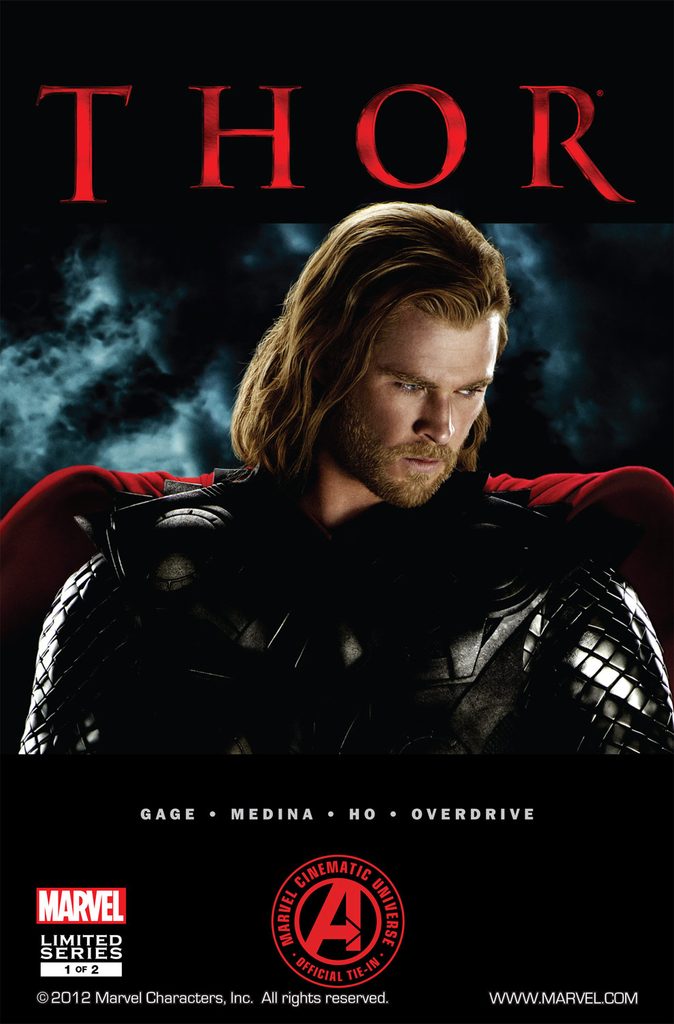
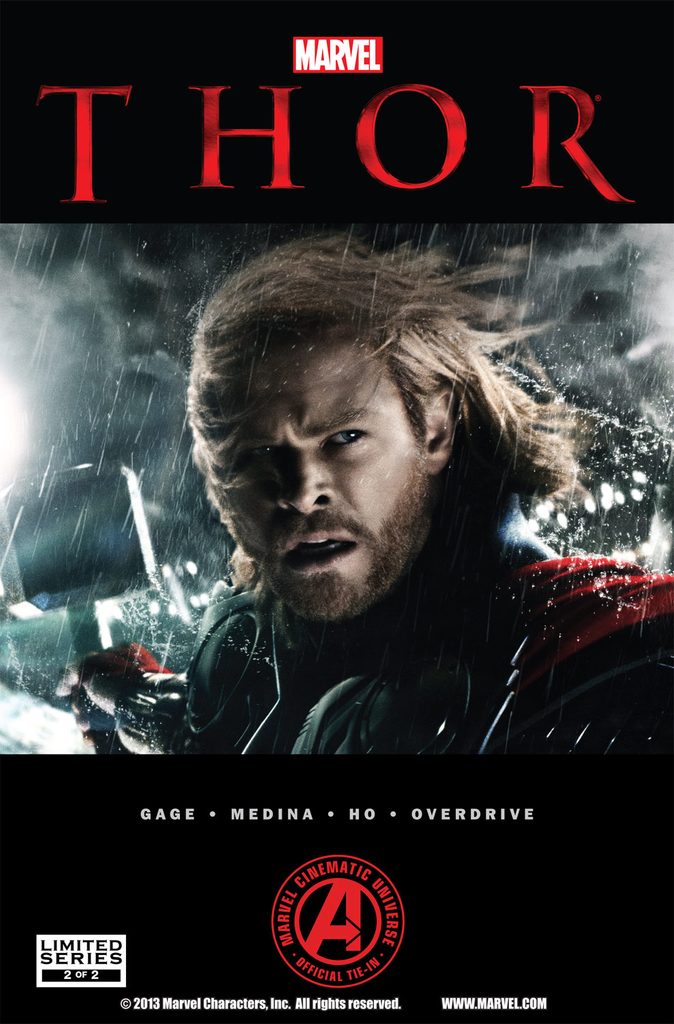
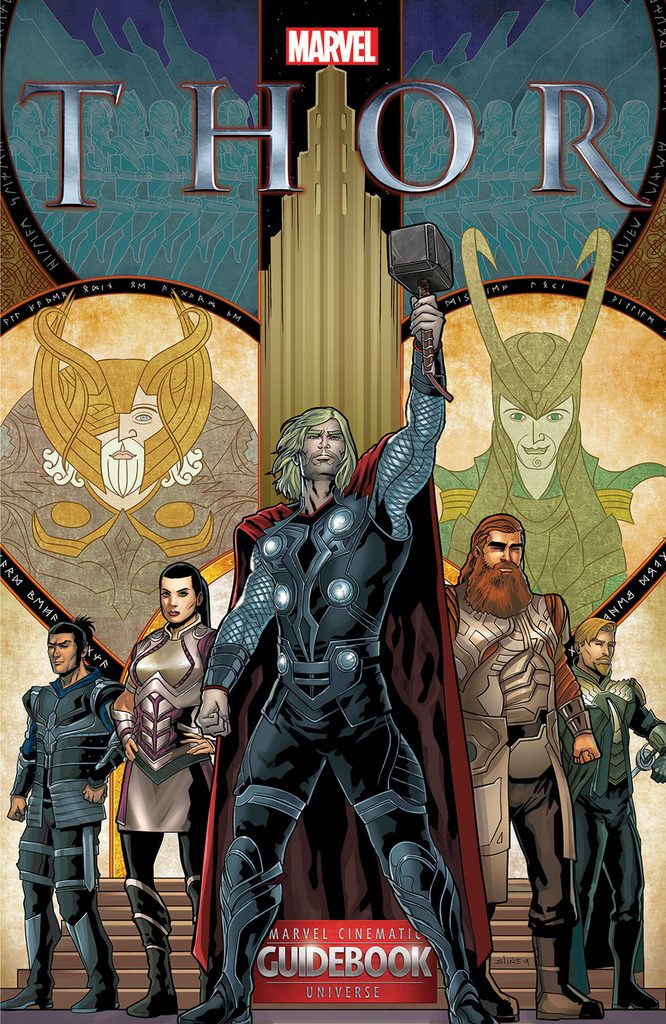
Thor #1 (of 2)
Thor #2 (of 2)
Guidebook to the Marvel Cinematic Universe: Thor
“Thor” comic adaptation + the guidebook to the film.

The Incredible Hulk (June 13, 2008)
This film can be viewed on Disney+ and can be found HERE.
According to The Marvel Cinematic Universe: An Official Timeline, the main events of “The Incredible Hulk” are set between Spring & Summer of 2010. It begins before the main events of “Thor” but ends after it – and the film definitely ends after “Iron Man 2”.
There are no credit scenes.
Thor: Ragnarok Prelude #1 (of 4)
Thor: Ragnarok Prelude #2 (of 4)
Guidebook to the Marvel Cinematic Universe: The Incredible Hulk
The first 2 issues of the Ragnarok Prelude adapt “The Incredible Hulk”.
Avengers Prelude – Fury’s Big Week – Digital Issues / Chapters 4-7
These issues place “Something Happened on the Way to Thor’s Hammer”, “Thor”, “The Incredible Hulk” & “Captain America: The First Avenger” in a larger context. The next issue jumps ahead a year and is an epilogue to the story.

This short can be viewed on Disney+ and can be found HERE.
According to The Marvel Cinematic Universe: An Official Timeline, this Marvel One-Shot, “The Consultant”, is set in Summer of 2010.
The 4 minute story places the ending of “The Incredible Hulk” in a larger context.

The Avengers: The Avengers Initiative #1 (of 1)
Avengers Prelude: Black Widow Strikes #1 (of 1)
Avengers Prelude: Black Widow Strikes #2 (of 2)
Avengers Prelude: Black Widow Strikes #3 (of 3)
These 4 issues also tell side stories to the films and are set in the year before the epilogue of Fury’s Big Week.

Avengers Prelude: Fury’s Big Week – Digital Issue 8 (Epilogue)
A year after the main events of Iron Man 2, Thor, The Incredible Hulk and the rest of Fury’s Big Week, the epilogue shows how progress has been made on various fronts, and ends with a setup for the present day scenes of “Captain America: The First Avenger” & “The Avengers”.
Captain America: The First Avenger Adaptation (2 issues)
Captain America: The First Avenger Guidebook
While the film is mainly set in the 1940s and I feel it should be viewed there, the ending of the film takes place here. Read the comic adaptation as a refresher.

This film is viewable on Disney+ and can be found HERE.
Set between May 1 and 5, 2012, the Marvel Cinematic Universe has its first major crossover event.
There are 2 credit scenes.
The Avengers Adaptation (2 isssues)
The Avengers Guidebook
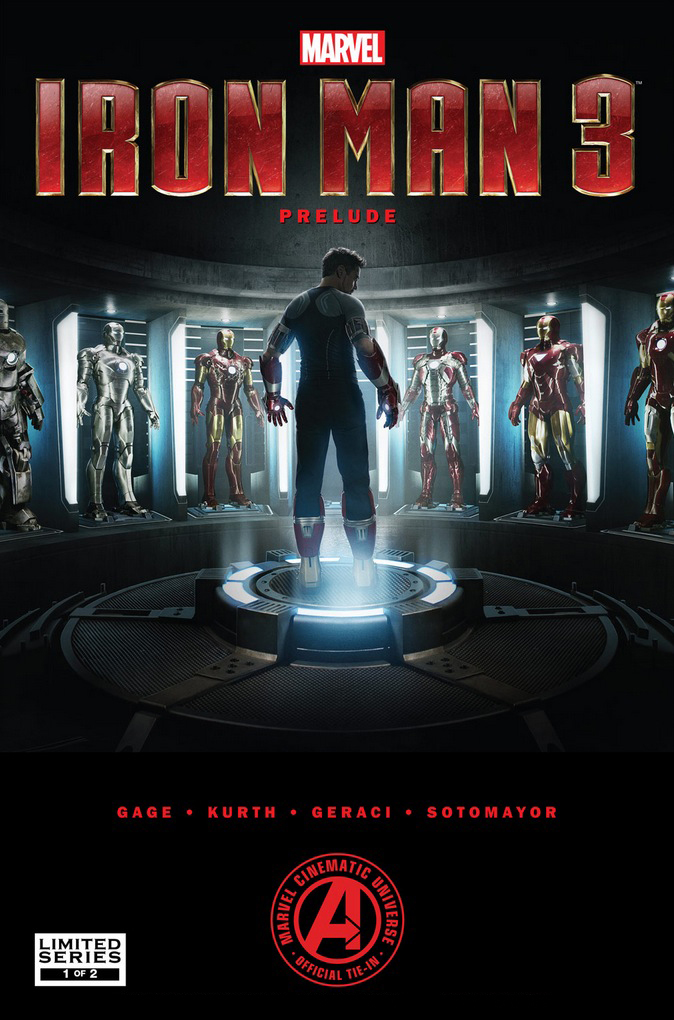
Iron Man 3 Prelude #1 (of 2)
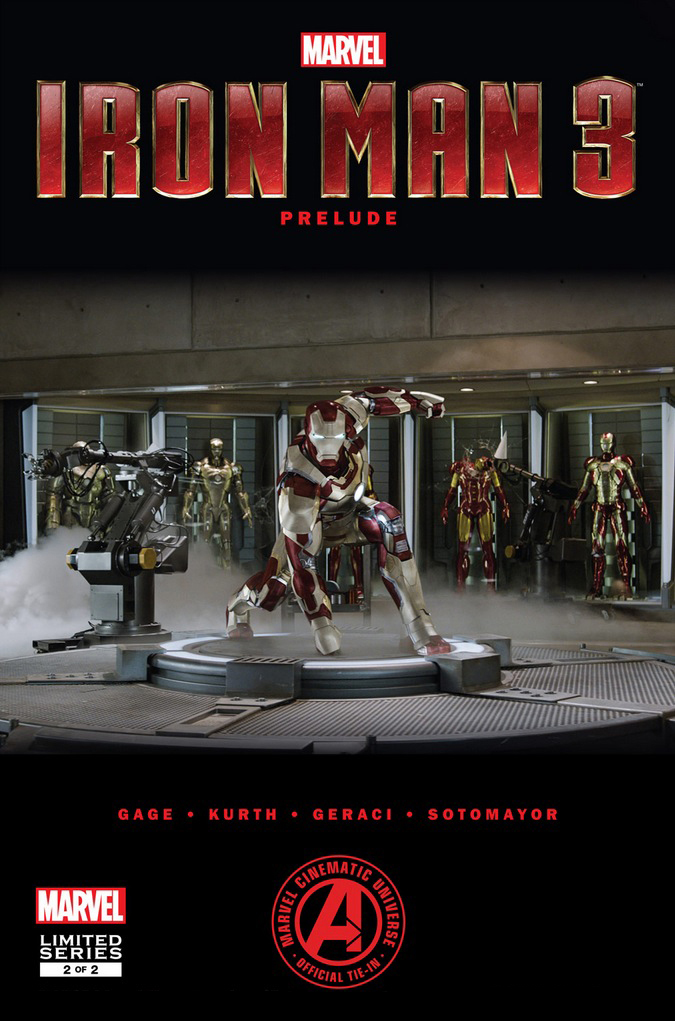
Iron Man 3 Prelude #2 (of 2)
Iron Man 3 Prelude was written by Christos Gage, with art by Steve Kurth, with the first issue released on January 2, 2013, and the second on February 6.
The story is set before, during and a bit after “The Avengers” (2012), placing that story in a larger context, explaining why War Machine was absent from that film and helping to set up “Iron Man 3”:
Tony Stark becomes occupied as he begins construction of Stark Tower in New York, so James Rhodes picks up where Iron Man left off in the fight against the Ten Rings terrorist organization. After 10 months of skirmishes across the world, Rhodes is ambushed in Hong Kong by Ten Rings agents with Hammer Technology, including a nuclear powered tank. Rhodes manages to get the tank out of the city before the insurgents detonate its power source, and returns to America in time to find the aftermath of the Battle of New York. Later, Tony reveals to Rhodes his plans for an Iron Legion, and a Ten Rings operative reports to his master, The Mandarin, informing him that they have full scans of the Stark Technology in Rhodes’s suit.
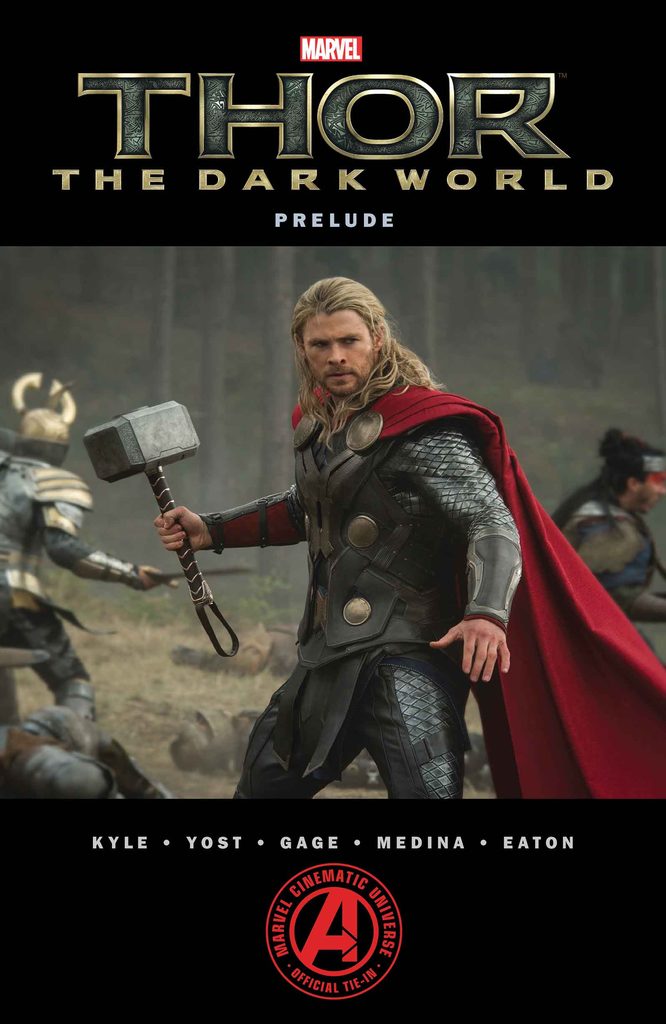
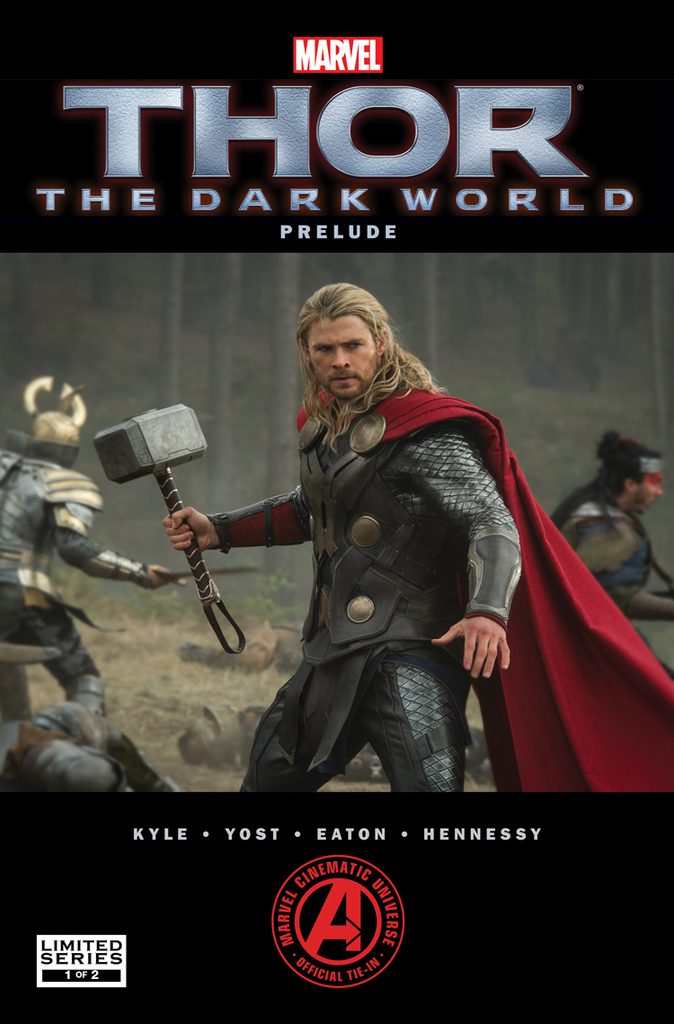
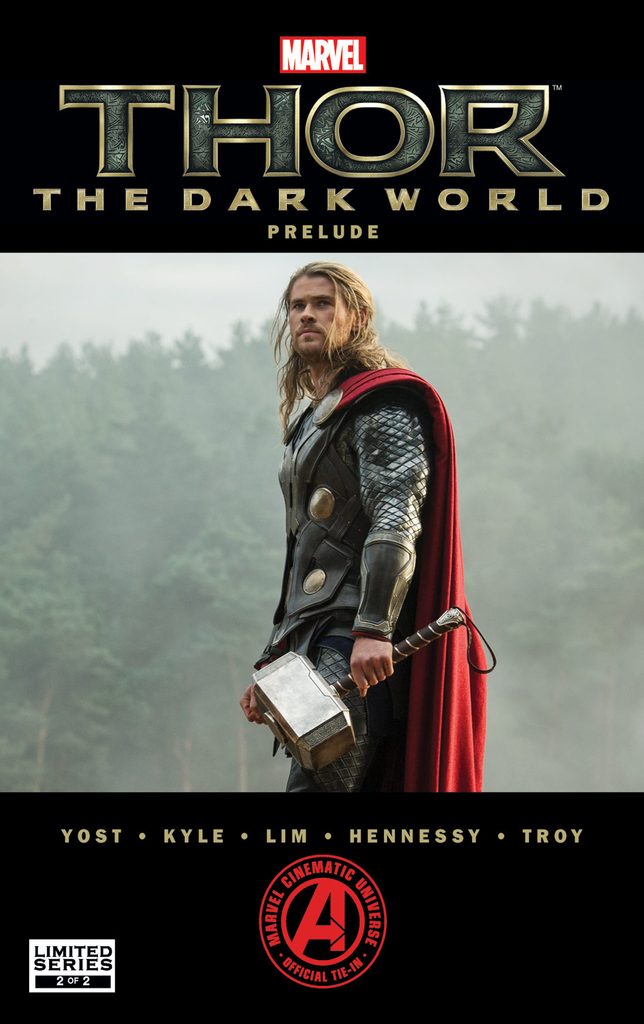
Thor: The Dark World Prelude #1 (of 2)
Thor: The Dark World Prelude #2 (of 2)
Thor: The Dark World Prelude was written by Craig Kyle and Christopher Yost, with the first issue released on June 5, 2013, with art by Scot Eaton, and the second on July 10 with art by Ron Lim.
The story bridges “Thor” with “The Avengers” and retells the latter film, explaining why Jane Foster isn’t in the “The Avengers” and how Thor returned to Earth without the Bifrost Bridge. The story also adapts a few scenes from “Thor: The Dark World” (which take place before a time jump) and then sets the stage for the latter film:
In the year following the destruction of the Bifrost, the Asgardian means of transportation throughout the cosmos, both the nine realms and nearby planets have fallen into chaos, while astrophysicist Jane Foster has failed in her attempts to re-open a wormhole in New Mexico, an action requiring the Bifrost to be functional. When the presumed dead Loki attacks Earth and steals the Tesseract, Odin uses the secret, dangerous power of Dark Energy to send Thor to intervene. Following the Battle of New York, Thor returns to Asgard with Loki and the Tesseract. Loki is imprisoned in the dungeons to serve a life sentence, while Thor uses the Tesseract’s power to repair the Bifrost and allow Asgard to bring order back to the nine realms and beyond.

This short is viewable on Disney+ and can be found HERE.
Set between May 9 – 16, 2012.
The closing credits feature several bonus scenes.
This short is 12 minutes long.
Ant-Man: Scott Lang: Small Time (Infinite Comic #1 of 1)
An infinite comic written by Pilgrim, with art by Wellinton Alves and Daniel Govar, Scott Lang: Small Time was released on March 3, 2015.
After discovering that his employer is illegally overcharging its customers, and failing to expose the crime thanks to his boss’s influence in the media, Scott Lang decides to steal the company’s money and return it to the customers. During the robbery, Lang gets carried away and attempts to steal his boss’s personal property, including his car. After accidentally crashing the car, Lang is caught and eventually imprisoned.

These home media extras can be found on YouTube:
here’s a link to a video featuring all 4.
Rappin’ With Cap is a series of short public service announcements created (in universe) by the Department of Education and hosted by Captain America, aimed at American high school students. Four of the videos can be found as extras on the home release of “Spider-Man: Homecoming” (2017). They feature Cap in his “The Avengers” costume, meaning he recorded them around this time. This has since been confirmed by Marvel Studios’ The Marvel Cinematic Universe: An Official Timeline.
Rappin’ With Cap: Safety First
Rappin’ With Cap: Food For Thought
Rappin’ With Cap: Brain Power
Rappin’ With Cap: Your Changing Body

This film is viewable on Disney+ and can be viewed HERE.
The film’s story is told in flashback from the following year, as explained in the film’s credit scene. The film is mainly set in December 2012.
During the film, it is explicitly shown that the prologue’s events occur on December 31, 1999. During the main events of the film, it is the lead-up to Christmas – December – and it is said that Killian “invited Tony to join AIM 13 years ago”, making it December 2012. It is also stated that Maya Hansen has returned to Stark’s life “13 years later”, and Stark notes that he and Hansen would, if they had a child, have a “12-year-old” – the child would have been born c. September 2000, making it December 2012. Marvel Studios 101: All Your Questions Answered confirmed the events to be “2012”, with Marvel Studios: The First Ten Years: The Official Movie Special further supporting this.
However, as of the release of Marvel Studios’ The Marvel Cinematic Universe: An Official Timeline, the events have been explicitly dated to take place December 22-25, 2013 instead. However, given the number of issues this causes I’ve chosen to ignore that placement, therefore the film, by my reckoning, is told in flashback from early 2013 and the main events are set in late 2012. YMMV.
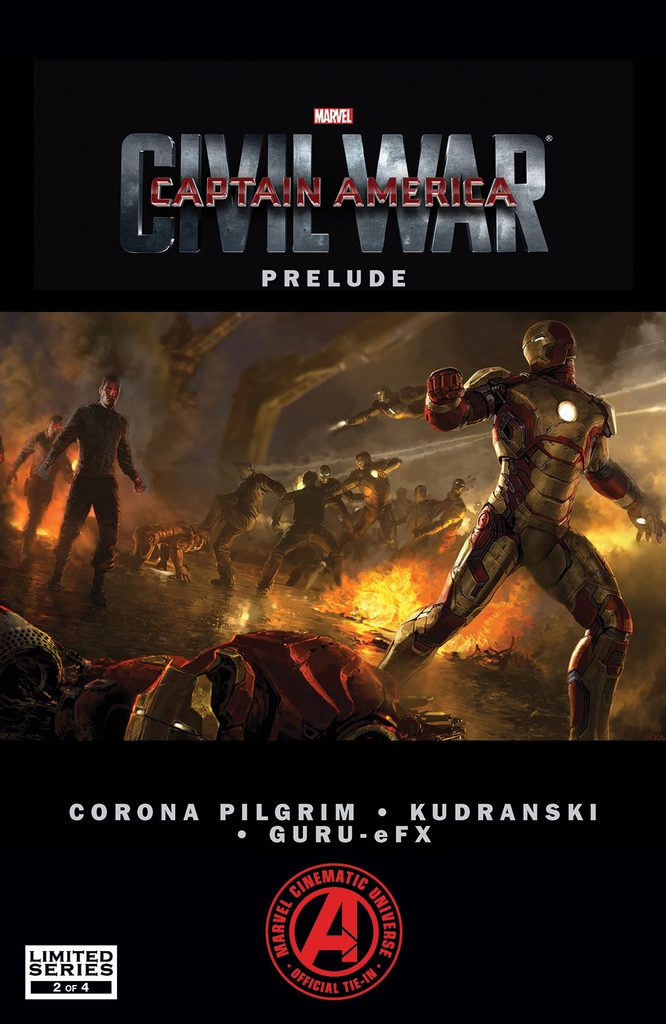
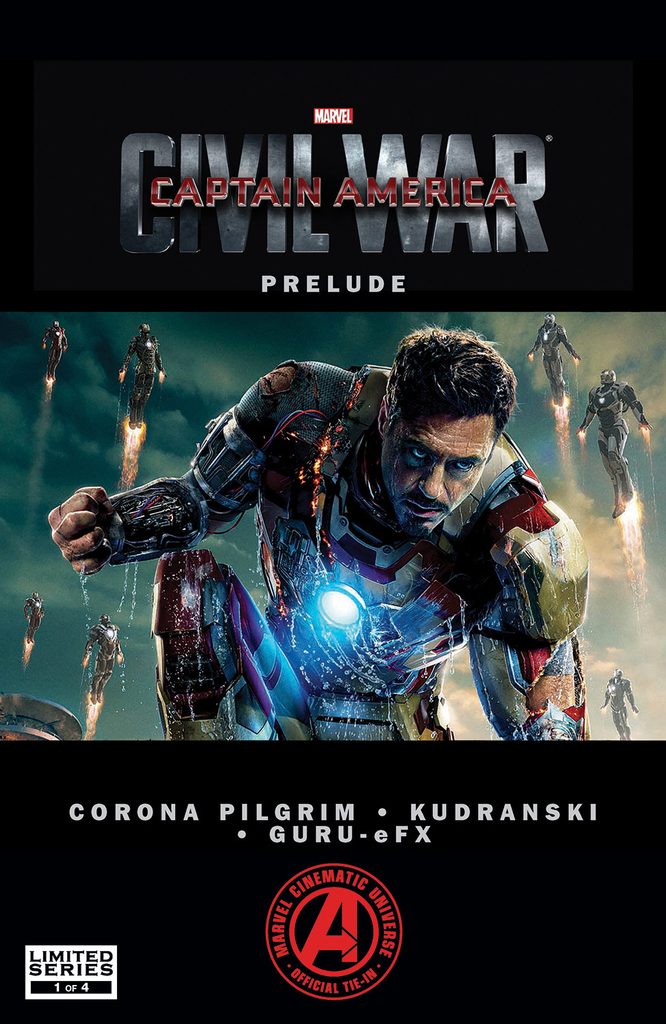
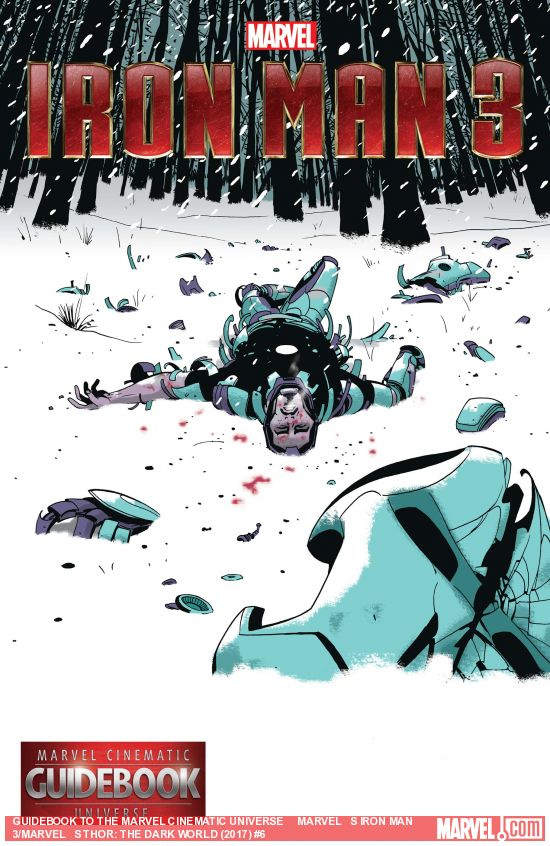
Iron Man 3 Adaptation (2 issues)
Iron Man 3 Guidebook
The Iron Man 3 adaptation are issues 1 & 2 of the Civil War Prelude. Issues 3 & 4 adapt Captain America: The Winter Soldier.

This short is viewable on Disney+ and can be found HERE.
A kind of epilogue to “Iron Man 3”, this short sets up later stories “Luke Cage”, “Shang-Chi & the Legend of the 10 Rings” & “Wonder Man”. Marvel Studios’ The Marvel Cinematic Universe: An Official Timeline places the events of Marvel One-Shot: All Hail the King in “early 2014”, before Steve Rogers trains with Sam Wilson on March 1, 2014. I have moved it up slightly as it plays better (for me) as an actual epilogue to “Iron Man 3” + it flows much better here when viewing other multiverse entries, specifically ABC’s “Agents of S.H.I.E.L.D.” series.
The short is 14 minutes long.
Stick around for fun end credits / bonus scenes.

This film is viewable on Disney+ and can be found HERE.
After the film’s prologue which covers ancient history related to the film, the story continues where “The Avengers” left off in 2012 – before jumping forward a little over a year, to November of 2013, where the main events of the film take place.
Producer Craig Kyle stated that Thor had been fighting for over a year after “The Avengers” when “Thor: The Dark World” picked up. When Foster awaits Thor’s return, a 2013 calendar can be seen behind her. Along with the real time policy, this all fits as being set in November 2013. Plus, Selvig’s release papers state that he was arrested for streaking at Stonehenge on 11/11/13.
There are 2 credit scenes.
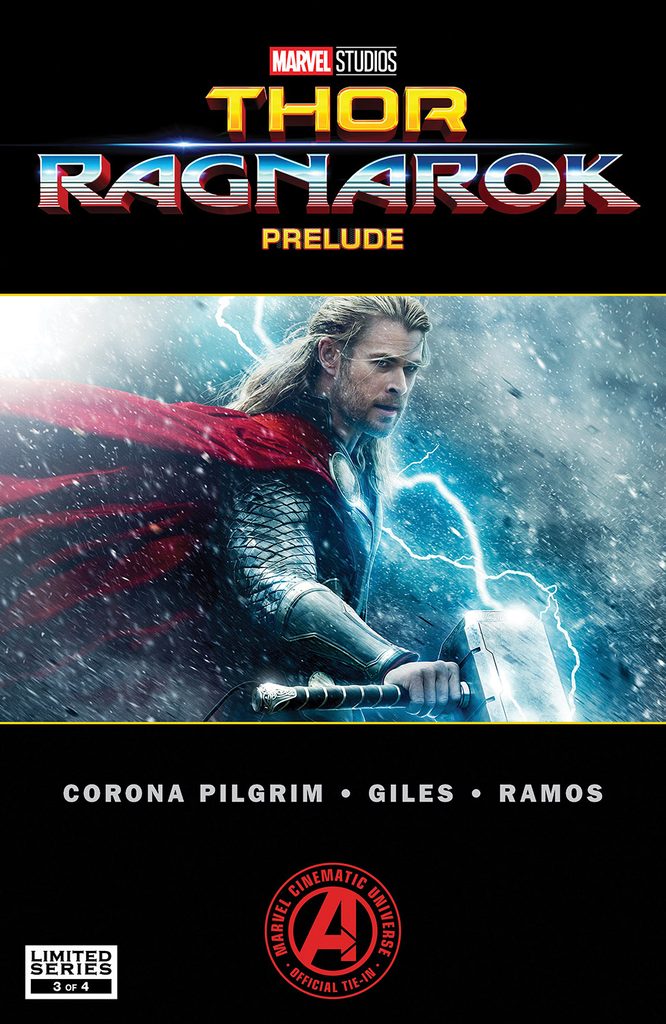
Thor: Ragnarok Prelude #3 (of 4)*
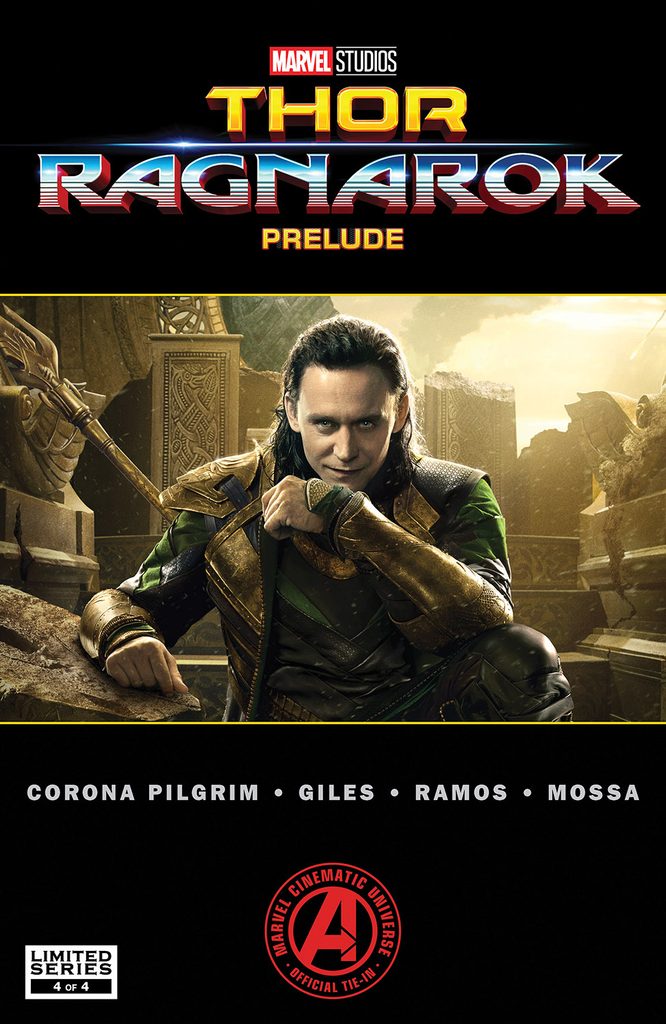
Thor: Ragnarok Prelude #4 (of 4)*
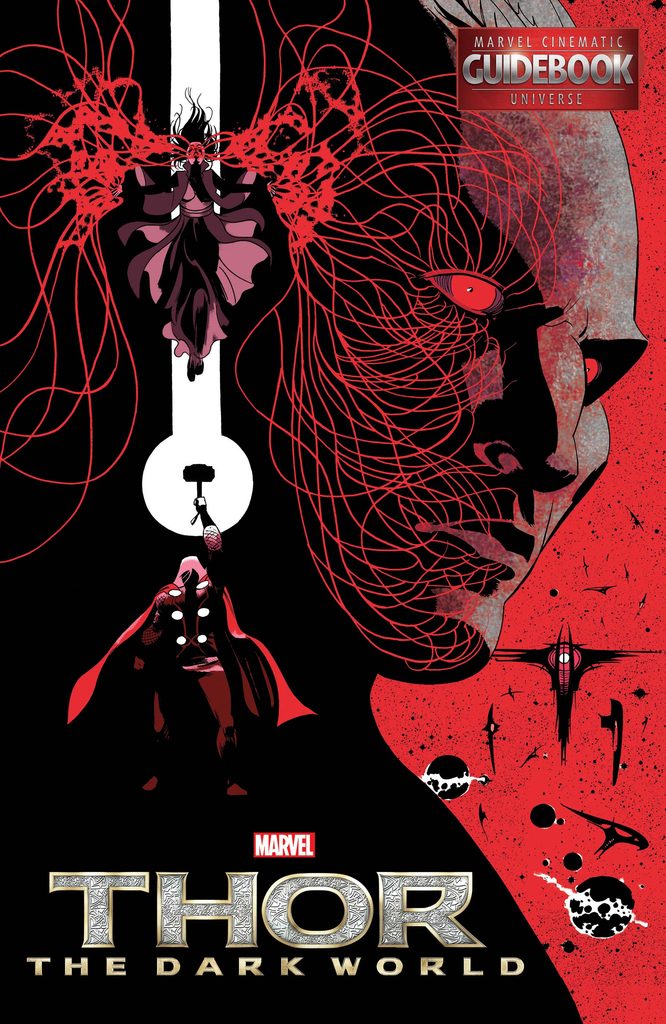
Thor: The Dark World Guide
*Adapts Thor: The Dark World
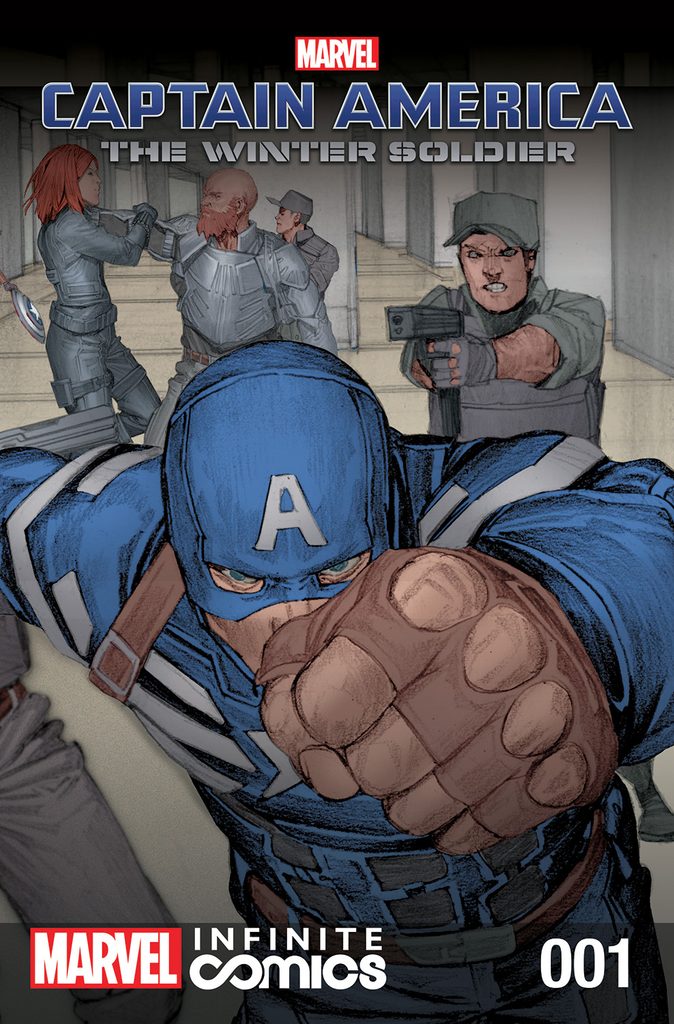
Marvel’s Captain America: The Winter Soldier Infinite Comic (2014)
Following the Battle of New York, Steve Rogers is working with Natasha Romanoff and Brock Rumlow for S.H.I.E.L.D. When a terrorist group steals the Zodiac virus from S.H.I.E.L.D., the team track them to Willis Tower in Chicago where they take them out and recover the virus.
Peter David writes Captain America: The Winter Soldier Infinite Comic, with art by Rock-He Kim. The comic was published on January 28, 2014, and sees David set up key themes for Captain America: The Winter Soldier: “Black Widow and Rumlow…They’re okay with doing what they’re told. Cap, however, is way more suspicious and wants a clearer idea of what’s going on, and is annoyed that S.H.I.E.L.D. isn’t big on being forthcoming.” On Cap’s relationships with new partners Black Widow and Brock Rumlow, “I think he sees her as a valued ally, but [he] tends to be suspicious of the outfit that she works for. He trusts her as someone to have his back in a fight, but I think also believes that if S.H.I.E.L.D. told her to put a knife in his back, she would do so without hesitation, and that can be problematic. Rumlow, meantime, is an eager partner, but Cap doesn’t trust him at all. First, there’s the suspicion aspect. And second, I think Cap is still gun-shy because the last time he had a partner, Bucky wound up dying and he’s not anxious for history to repeat itself.”
The Zodiac virus featured heavily in the comic was first introduced to the MCU in the Marvel One-Shot Agent Carter, where it is recovered by the titular character for the SSR, the precursor to S.H.I.E.L.D.
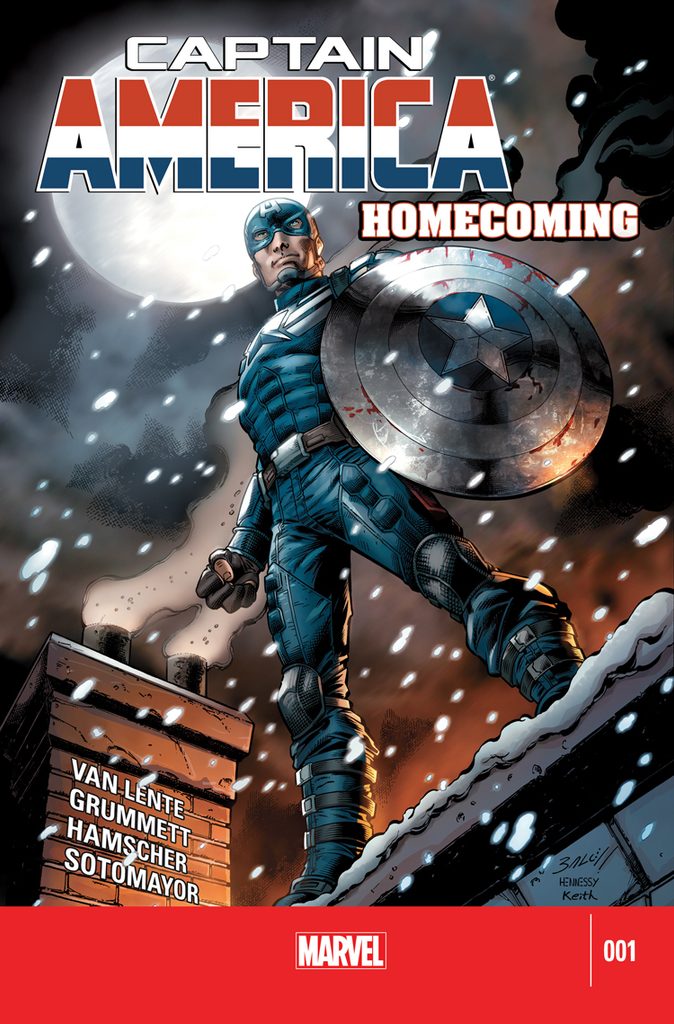
Captain America: Homecoming
Inspired by the MCU films and taking place between The Avengers and Captain America: The Winter Soldier, it follows Steve Rogers / Captain America and Natasha Romanoff / Black Widow as they fight terrorists in New York. The comic was published on March 26, 2014. The issue was written by Fred Van Lente with art by Tom Grummett.

This film is viewable on Disney+ and can be found HERE.
Mainly set in 2014, the film picks up with Steve Rogers adjusting to life after the events of “Captain America: The First Avenger” & “The Avengers”.
There are 2 excellent credit scenes.
Captain America: Civil War Prelude #3 (of 4)*
Captain America: Civil War Prelude #4 (of 4)*
Captain America: The Winter Soldier Guide
*Adaptation of Captain America: The Winter Soldier
Avengers: Age of Ultron Prelude: This Scepter’d Isle 001
Released on February 3, 2015, this comic is written by Pilgrim and illustrated by Wellinton Alves: Following the Battle of New York (in “The Avengers”), a disgruntled S.H.I.E.L.D. scientist studying Loki’s scepter and its connection to the Tesseract is recruited by Hydra to steal the scepter. With it in the possession of high-ranking Hydra member Baron Wolfgang von Strucker, Hydra begins experimenting on the scepter, eventually using it to unlock special abilities within two volunteers, the twins Pietro and Wanda Maximoff.

This behind the scenes documentary is viewable on Disney+ and can be found HERE.
This is something different that you might try.
The documentary explains how they built the Marvel Cinematic Universe (covering everything released before this point – including the shorts) and promotes several projects including “Agents of S.H.I.E.L.D.” (a multiverse series), “Captain America: The Winter Soldier”, “Guardians of the Galaxy”, “Avengers: Age of Ultron” & “Ant-Man”. The doc was released BEFORE all of those films but the Winter Soldier segment features something that might be interpreted as a spoiler, so I’d recommend watching it here instead.
Guardians of the Galaxy Prelude #1 (of 2)
Guardians of the Galaxy Prelude #2 (of 2)
This film prelude was written by Dan Abnett and Andy Lanning, with Lanning writing the plots based on brainstormed ideas, and Abnett writing the final scripts. With art by Wellinton Alves, the issues were published on April 2 and May 28, 2014, respectively. The stories were intended to flesh out the history of the film characters based on the details in Gunn’s script, while Abnett also attempted to bridge the feeling of the film with that of the original comics. Speaking on working with familiar characters, but now the film versions of them, Abnett said, “[It’s] Fun, but a little odd. The characters of the Prelude comics had to fit very cleanly to the movie versions so there wasn’t quite the same opportunity for madcap invention…I had to make sure the tone fitted precisely.” Lanning said, “There’s a definite distinction between the Marvel comic universe and the Marvel Cinematic universe…[but] these characters are not so distant to their comic counterparts as to be unrecognizable, they are more like an alternate version, similar to what the Ultimate Universe did.”
Issue 1 sees Nebula, while searching for the Orb, remembering growing up with Gamora and their father, Thanos, as well as her recent experiences with Ronan the Accuser. Issue 2 follows Rocket and Groot as bounty hunters in the lead-up to Guardians of the Galaxy.
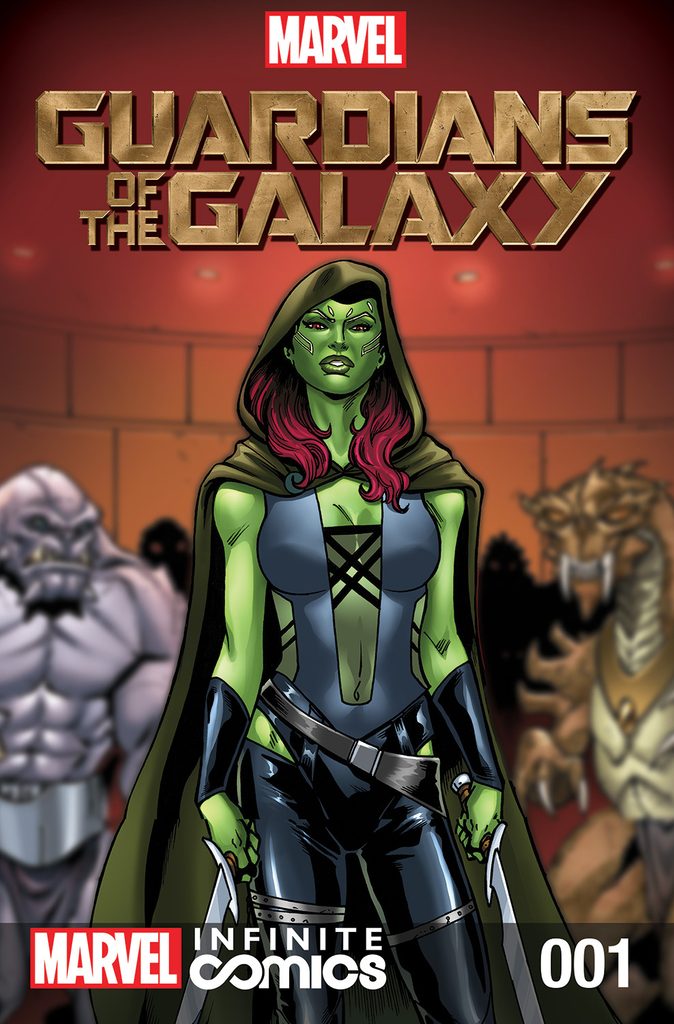
Guardians of the Galaxy Infinite Comics 001
With one Infinity Stone, the Aether, in his possession, the Collector actively searches for the other five, and when he discovers the Orb to be on a desolate planet, he hires the assassin Gamora to retrieve it.
Dan Abnett and Andy Lanning, who revived the Guardians of the Galaxy series in 2008, agreed to write the tie-in comic preludes to the film Guardians of the Galaxy, as a favor to director James Gunn. The Infinite Comic was released on April 1, 2014, and features art by Andrea De Vito.

This film is viewable on Disney+ and can be found HERE.
The film opens with a flashback to 1988 before jumping ahead to present day 2014.
There is a post-credit scene.
Guardians of the Galaxy Vol. 2 Prelude #1 (of 2)*
Guardians of the Galaxy Vol. 2 Prelude #2 (of 2)*
Guardians of the Galaxy Guide
*Adaptation of Guardians of the Galaxy

These 10 shorts are available on Disney+ and can be viewed HERE.
A series of 10 shorts (between 4 & 6 minutes long) following the adventures of Baby Groot. Some of the adventures are set here, while some are likely set during a time jump during the end credits of “Guardians of the Galaxy Vol. 2” – making this the best place to view the entire series.
I Am Groot S01E01
Groot’s First Steps (6 minutes)
I Am Groot S01E02
The Little Guy (6 minutes)
I Am Groot S01E03
Groot’s Pursuit (6 minutes)
I Am Groot S01E04
Groot Takes a Bath (6 minutes)
I Am Groot S01E05
Magnum Opus* (6 minutes)
I Am Groot S02E01
Are You My Groot? (5 minutes)
I Am Groot S02E02
Groot Noses Around (4 minutes)
I Am Groot S02E03
Groot’s Snow Day* (5 minutes)
I Am Groot S02E04
Groot’s Sweet Treat (5 minutes)
I Am Groot S02E05
Groot and the Great Prophecy (6 minutes)

This film is viewable on Disney+ and can be found HERE.
Set in 2014, about 3 months after the first film.
There are several credit scenes set over several gaps in time, and the credits themselves have Easter Eggs for future projects.

This film is viewable on Disney+ and can be found HERE.
Set in 2015. There is a mid-credit scene.
Avengers: Age of Ultron Guidebook

This film is viewable on Disney+ and can be found HERE.
Set in 2015, after the events of “Avengers: Age of Ultron”. There are 2 credit scenes.
Ant-Man and the Wasp Prelude #1 (of 2)*
Ant-Man and the Wasp Prelude #2 (of 2)*
Ant-Man Guide
*Adaptation of “Ant-Man”.

Doctor Strange (November 4, 2016)
This film is viewable on Disney+ and can be found HERE.
Doctor Stephen Strange was previously mentioned in “Captain America: The Winter Soldier” as a target of Hydra.
The film unfolds over a longer period of time than most Marvel films. Stephen Strange’s accident near the beginning of the film has been confirmed as happening on February 2, 2016 (per Strange’s watch, seen in the film, and also per the Official Marvel Timeline).
Also, there’s an early reference in the film which is often mistakenly assumed to be a reaction to events in “Captain America: Civil War” – but placing the movie here prevents that.
From a multiversal standpoint, I also like that placing this story here would introduce the M.C.U. version of Strange before his multiversal counterpart is featured in “Your Friendly Neighborhood Spider-Man”.
There are 2 credit scenes.
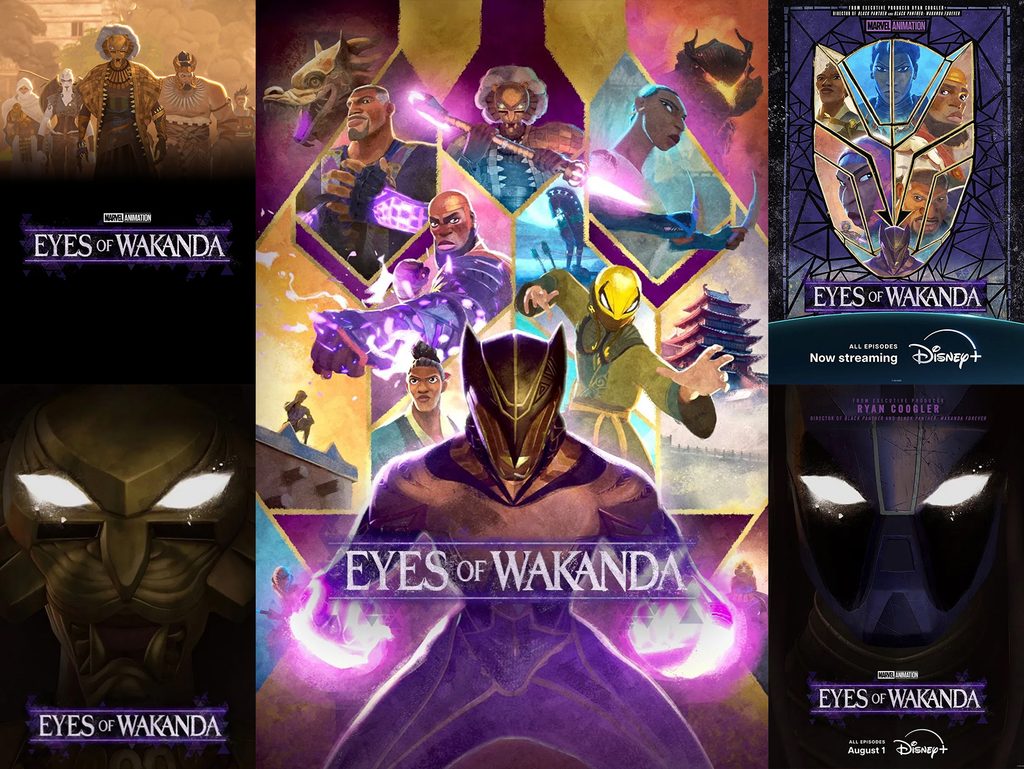
Eyes of Wakanda S01E04
The Last Panther* (27 minutes)
*The first 3 episodes of the series are, chronologically, the first 3 installments of the Marvel Cinematic Universe, with the 4 total episodes set in 1260 & 1194-1184 B.C., 1400, 1896 and an alternate 2396. Episode 4 features the multiverse via that alternate future, seemingly setting the series in the later Multiverse Saga, but the creators have repeatedly stated that this is part of the Infinity Saga and / or the Sacred Timeline, which suggests that while there is an alternate future in one of the episodes, that the series of events depicted in that episode were always meant to have happened – in the same way that the alternate takes in “Avengers: Endgame” were always meant to happen, as explained by the Time Variance Authority in the first episode of “Loki” (S01E01 “Glorious Purpose”).
Originally, I placed this miniseries as the first 4 entries of the Infinity War Saga, but on the advice from friends whose memories don’t work the way that mine does, I’ve moved the final episode much closer to “Black Panther”, which this series sets up with a bit of a cliffhanger. I have still kept it before “Civil War” & “Black Widow”, which are closely tied to “Black Panther” with portions of “Civil War” taking place only a week before those in “Black Panther”, and “Black Widow” takes place between them, ending the day before “Black Panther” begins.

Captain America: Civil War (May 6, 2016)
This film is viewable on Disney+ and can be found HERE.
The main story of the film is set between May 3 & July 10, 2016 (with the final scene set weeks after that main story as revealed in a later film). The post-credits scene is set on June 26, 2016, while the mid-credit scene is set months later.

Black Widow (July 9, 2021)
This film is viewable on Disney+ and can be viewed HERE.
The prologue is set in 1995 with the main events of the film taking place between June 25 & June 28, 2016. The final scene jumps ahead several weeks to July 10, 2016 – but is set before the final scene in “Captain America: Civil War” (set on the same day), revealing a previously unknown time jump during that film.
The post-credit scene is set more than 8 years later, in December of 2024.

Black Panther (February 16, 2018)
This film is viewable on Disney+ and can be found HERE.
The film’s prologue is set in 1992. The main events of the movie are set between June 29 & July 20, 2016, beginning 1 week after the death of King T’Chaka during the events of “Captain America: Civil War”.
The mid-credit scene is set on July 9, 2016. The post-credit scene is set in 2018.
Although the reference that Shuri makes to fixing another white boy seems to reference a credit scene from “Captain America: Civil War”, the new scene takes place before that credit scene. It is likely still a reference to Bucky Barnes as his data is given to Shuri in advance of his journey to Wakanda, as seen in the Infinity War Prelude comics.

This film is viewable on Disney+ and can be found HERE.
The film is mainly set in fall of 2016. The film mistakenly states that this is 8 years after “The Avengers”, but it is actually only 4 years later.

Thor: Ragnarok (November 3, 2017)
This film is viewable on Disney+ and can be found HERE.
The film and its post-credit scene are set in 2017. The mid-credit scene is set in 2018.

Ant-Man and the Wasp (July 6, 2018)
This film is viewable on Disney+ and can be found HERE.
The film is set during 2018. There are 2 credit scenes.

Avengers: Infinity War (April 27, 2018)
This film is viewable on Disney+ and can be found HERE.
“Avengers: Infinity War” begins in 2018. There is a single credit scene.

This film is viewable on Disney+ and can be found HERE.
“Avengers: Endgame” currently has no credit scenes, but the film is due to be re-released in theaters on September 25, 2026 and is rumored to feature a new credit scene that will help set up “Avengers: Doomsday”.
These 2 Avengers films essentially play as a kind of finale to all that has come before on Earth-616 and many characters return.